The Human Body, Head to Toe
Begin with what a bone and a joint are made of and what moves them, then learn the body the way you actually look at a person: from the top down. This track names every part in order — starting at the skull, then the face and its sense organs, down the neck to the chest and belly, out along the arms and hands, and finally down the legs to the feet. Each lesson is one clear figure you label yourself, and the label on every connection tells you what that part is for, not just what it is called. Nothing is memorised out of context: because the order follows the body, each part arrives where you would meet it if you were looking someone over from head to toe. By the end you can point to any part, name it, and say what job it does.
CodePLU Goal
Upgrading Human Mental Models
Learn how to think in Workflows
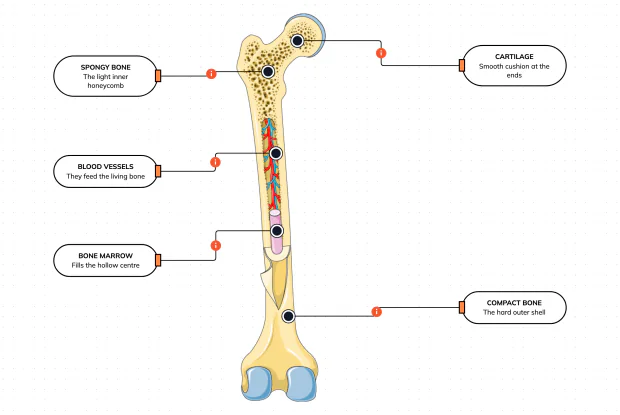
What Is a Bone Made Of?
Cut a bone open and it is nowhere near solid: a hard outer shell, a light honeycomb inside, a hollow centre full of marrow, blood vessels threading through, and a smooth cushion at each end. Learn what each part does — then label them yourself in an interactive playground.
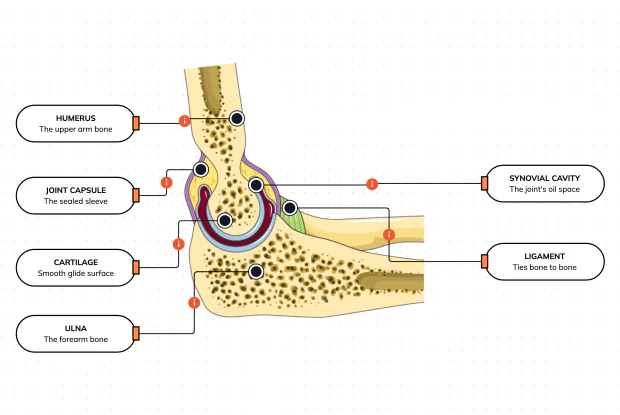
What Is Inside Your Elbow Joint?
A joint is where two bones meet and move — and it is far more than just the bones. Cut open the elbow and you find smooth cartilage caps, a sealed capsule of slippery fluid, and tough ligaments holding it all together. Learn what each part does, then label them yourself in an interactive playground.
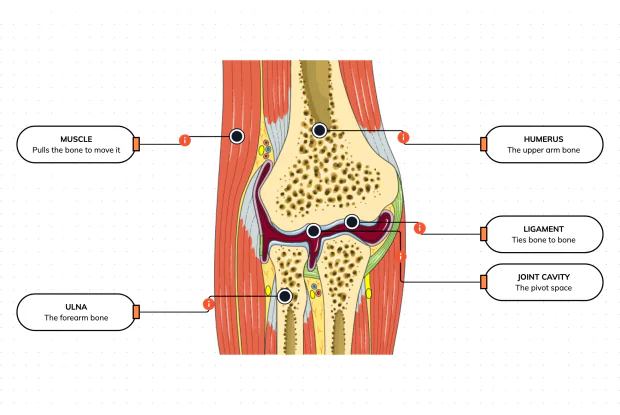
What Makes Your Elbow Bend?
Bones and joints are just the hardware; nothing moves until a muscle pulls. Label the elbow to see the parts that turn a joint into movement — the muscle that pulls, the ligament that holds bone to bone, the two bones it links, and the space they pivot in — then build it yourself in an interactive playground.
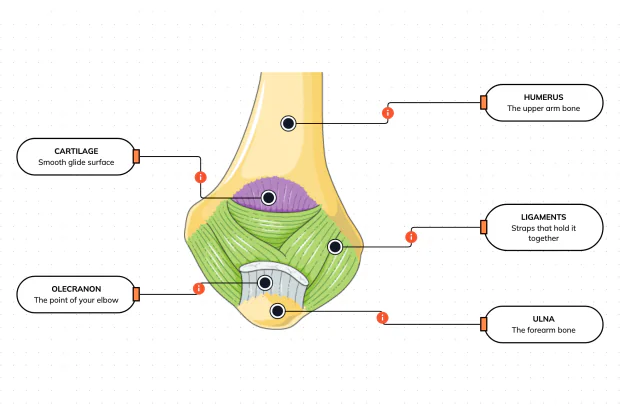
What Holds Your Elbow Together?
Your elbow is pulled on all day — by gravity, by every bag you carry, by every time you hang or push. So what stops the two bones from simply coming apart? Look at the back of the elbow and label the ligaments, the bony point, the cartilage and the two bones — and learn what holds the whole joint together.
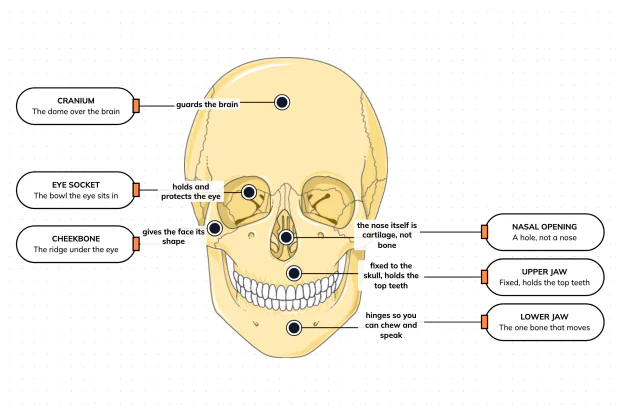
What Are the Main Bones of the Skull?
The skull looks like a single bone, but it is really about twenty-two locked together — with just one left free to move. Learn what each main part does, then label a skull yourself in an interactive playground.
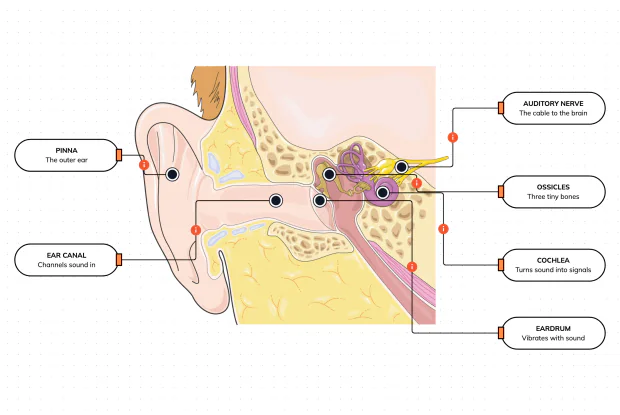
What Are the Parts of Your Ear?
Hearing is a chain of parts passing a sound along, each handing it to the next. Label the pinna, ear canal, eardrum, ossicles, cochlea and auditory nerve, and follow a sound all the way from the air outside to a signal your brain can read — in an interactive playground.
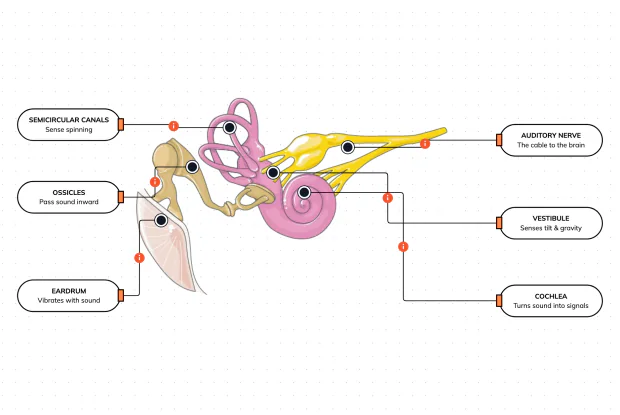
How Does Your Ear Keep You Balanced?
Your ear does a second, hidden job: balance. Inside it sit fluid-filled loops that sense spinning and a chamber that senses tilt and gravity. Label the semicircular canals, vestibule, cochlea, ossicles, eardrum and nerve, and learn how one organ both hears and keeps you upright — in an interactive playground.
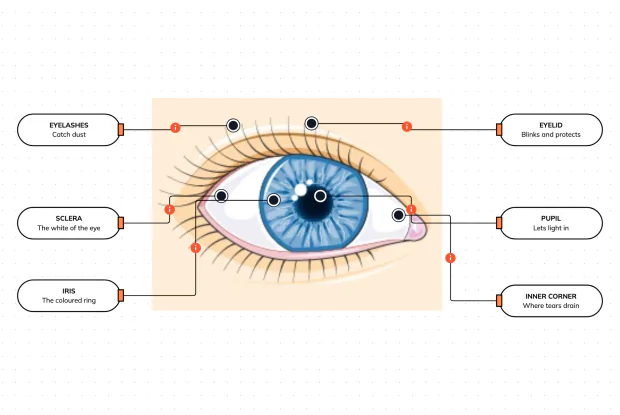
What Are the Parts of the Eye You Can See?
Before you look inside the eye, learn the parts you can already see in a mirror. Label the pupil, iris, sclera, eyelid, eyelashes and the tear-duct corner, and learn what each visible part does to let in light and protect the eye — in an interactive playground.
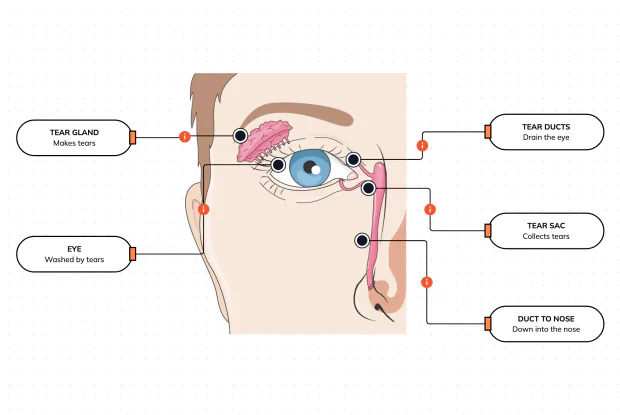
Where Do Your Tears Come From and Go?
Your eyes make and drain tears all day to stay clean and wet. Label the tear gland, the eye, the tear ducts, the tear sac and the duct to the nose, and follow a tear from where it is made to where it drains — in an interactive playground.
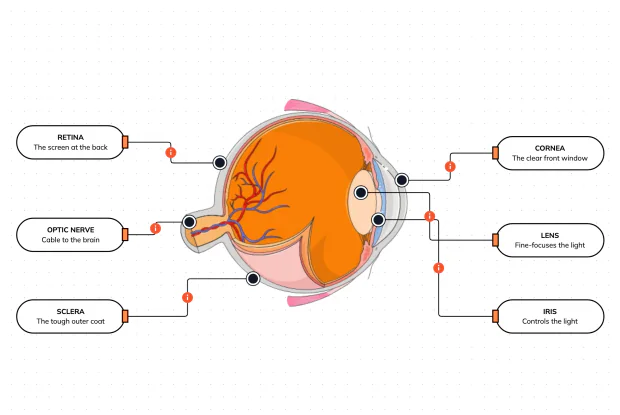
How Does Your Eye Turn Light Into a Picture?
Your eye works like a living camera. Cut it open and label the cornea, lens, iris, retina, optic nerve and sclera, and follow light as it is focused onto a screen at the back of the eye and sent to the brain — in an interactive playground.
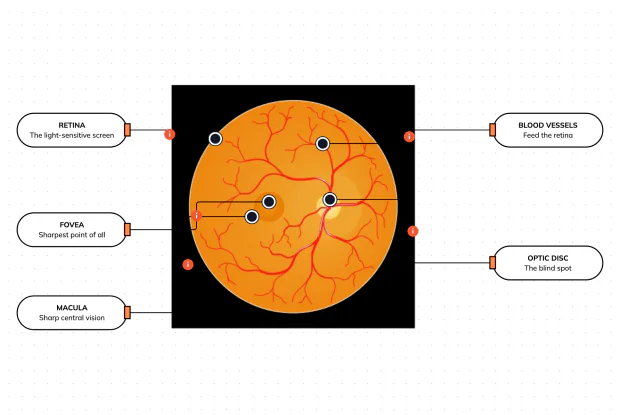
What Does the Back of Your Eye Look Like?
The retina is the screen at the back of your eye — but it is not the same all over. Label the retina, optic disc, macula, fovea and blood vessels on the real view a doctor sees, and learn where your sight is sharpest, where your blind spot is, and how the retina is fed — in an interactive playground.
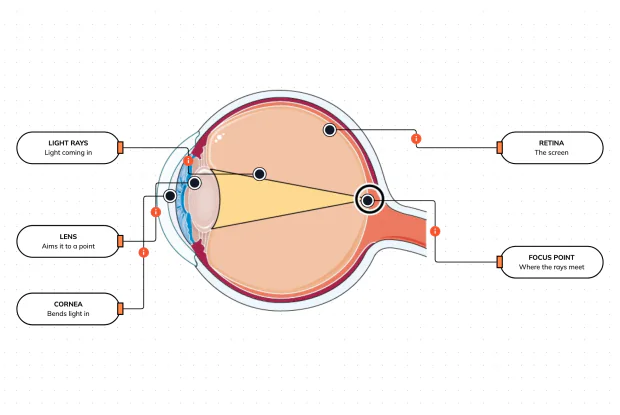
How Does Your Eye Bring the World Into Focus?
Being 'in focus' means the light from what you look at is bent to meet at one sharp point on the retina. Label the cornea, lens, light rays, focus point and retina, and see how the eye focuses light like a camera — in an interactive playground.
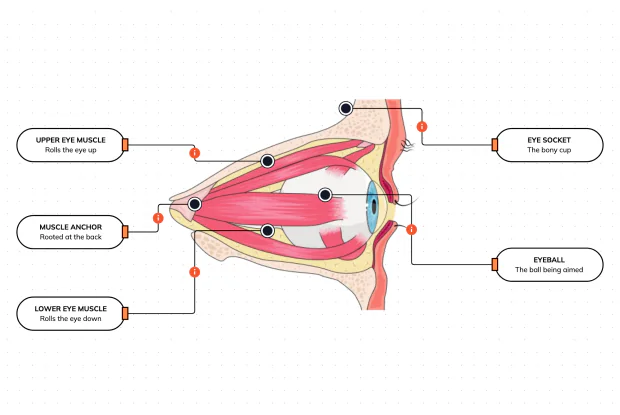
What Muscles Move Your Eyes?
Every glance is a set of muscles at work. Look inside the eye socket and label the eyeball, the muscles that roll it up and down, the point where they anchor, and the bony socket that holds them — and learn how these little straps aim your gaze, in an interactive playground.
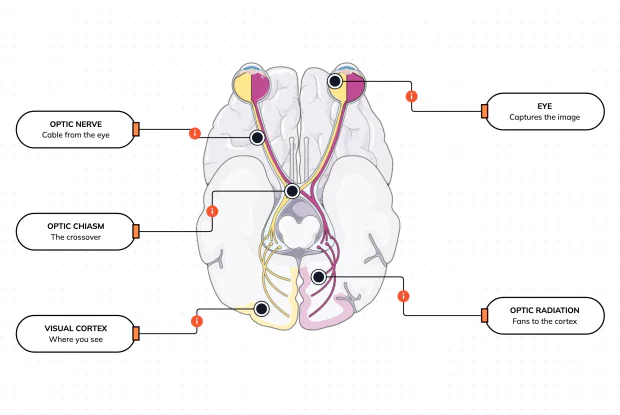
How Do Signals Travel From Your Eyes to Your Brain?
Seeing happens in the brain, not the eye. Label the eye, optic nerve, optic chiasm, optic radiation and visual cortex, and follow the signals from both eyes — through the crossover where they swap sides — all the way to the back of the brain, in an interactive playground.
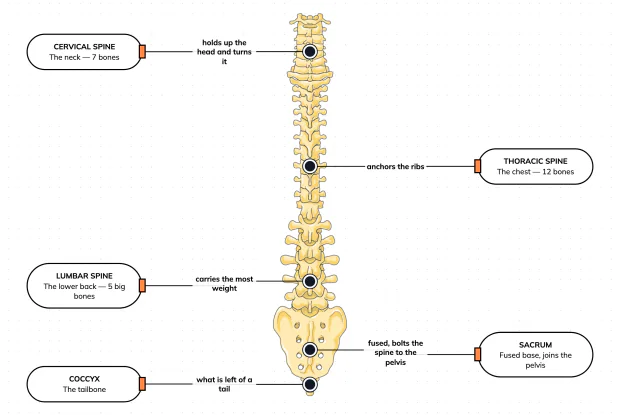
What Are the Main Parts of the Spine?
The spine looks like one bony rod, but it is about thirty-three bones in five regions, each shaped for a different job. Learn the regions of the backbone, then label them yourself in an interactive playground.
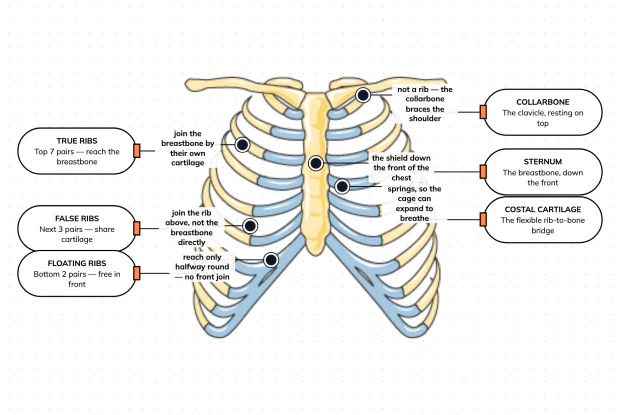
What Are the Parts of the Rib Cage?
The rib cage has to do two opposite jobs: guard the heart and lungs like armour, yet move with every breath. Learn its parts — the breastbone, the springy cartilage, and the true, false and floating ribs — then label them yourself in an interactive playground.
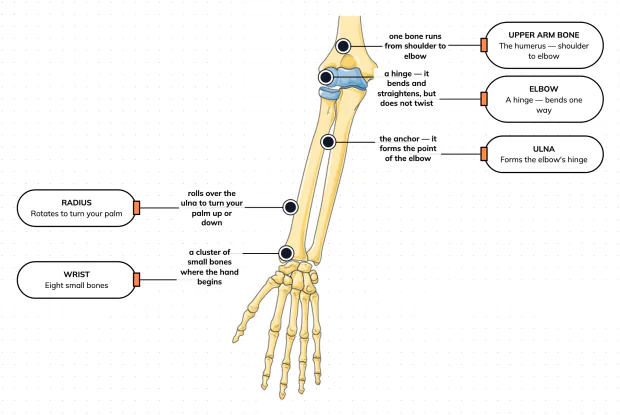
What Are the Bones of the Arm?
The arm is built from one thick bone in the upper arm and two slimmer bones in the forearm, meeting at a hinge. Learn what each bone does — and why the two-bone forearm is what lets you turn your palm — then label them yourself in an interactive playground.
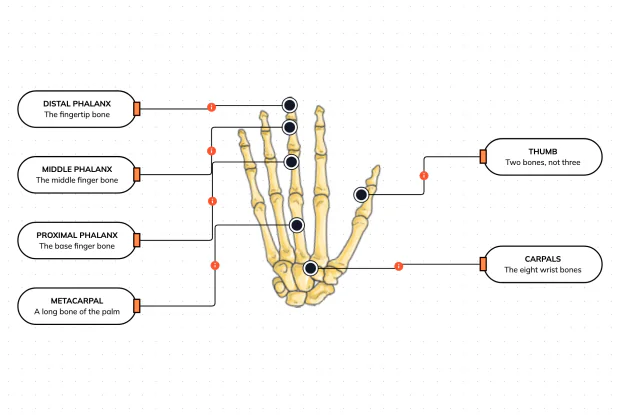
What Are the Bones of the Hand?
The hand packs twenty-seven bones into three neat groups: wrist, palm and fingers. Learn what each group does — and why the thumb has one fewer bone than every finger — then label them yourself in an interactive playground.
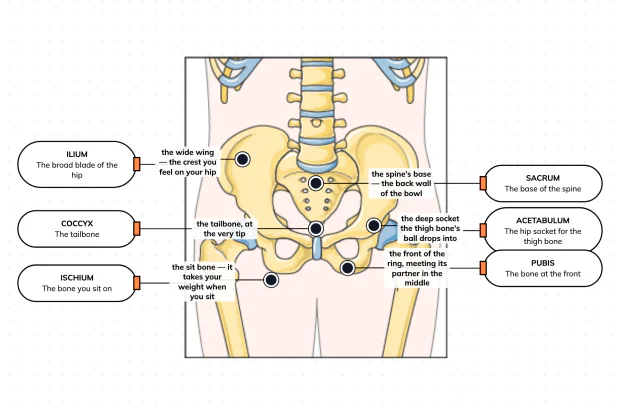
What Are the Parts of the Pelvis?
Each hip bone is really three bones fused into one, meeting at a deep socket. Learn the parts of the pelvis — the blade, the sit bone, the front bone and the hip socket — then label them yourself in an interactive playground.
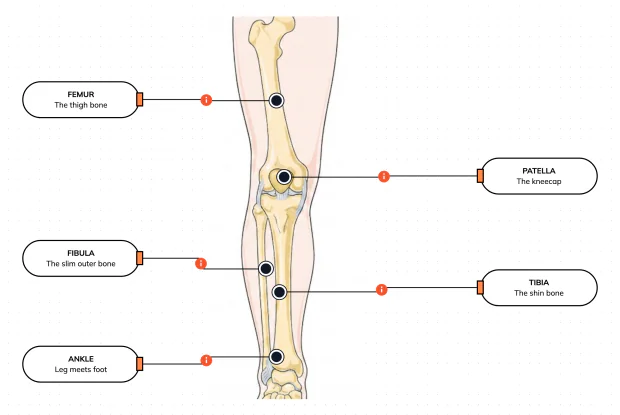
What Are the Bones of the Leg?
The leg is built like the arm turned to a heavier job: one thick bone in the thigh, two below the knee, and a kneecap in front. Learn what each bone does — why the tibia bears the weight and the fibula barely does — then label them yourself in an interactive playground.
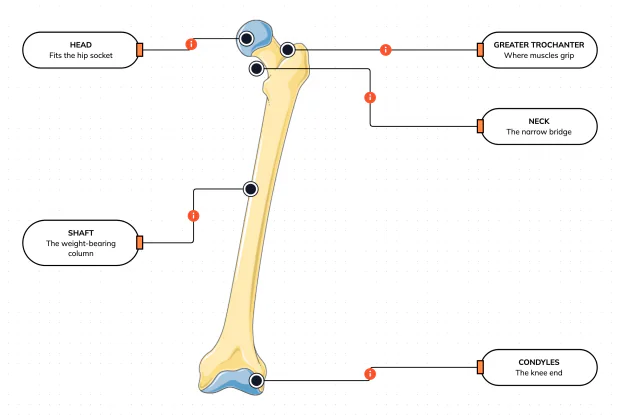
What Are the Parts of the Femur?
The femur is your thigh bone: the longest, strongest, heaviest bone in your body, and the one that carries your whole weight every step. Learn its five key parts — the head, neck, greater trochanter, shaft and condyles — then label them yourself in an interactive playground.
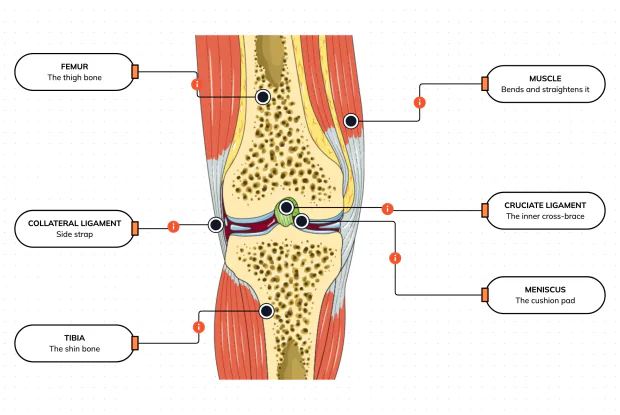
What Are the Parts of Your Knee?
The knee is the largest and most complex joint in your body — and the one people injure most. Cut it open from the front and label its six key parts: the femur and tibia, the muscle that moves it, the collateral and cruciate ligaments that hold it, and the meniscus that cushions it — all in an interactive playground.
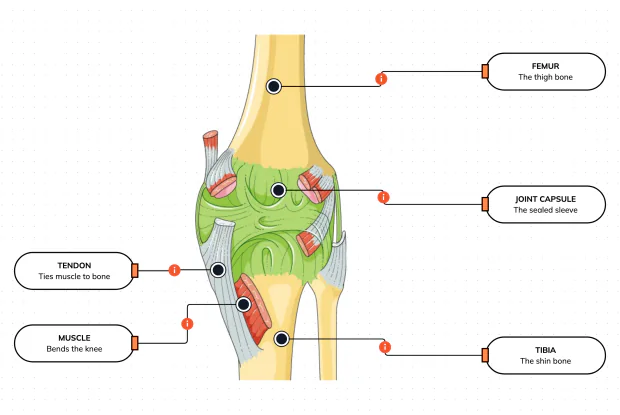
What's at the Back of Your Knee?
The front of the knee shows the bones and ligaments; the back tells the other half of the story. Look behind the knee and label the femur and tibia, the joint capsule that seals the whole joint, and the muscle and tendon that cross behind it to bend your leg — all in an interactive playground.
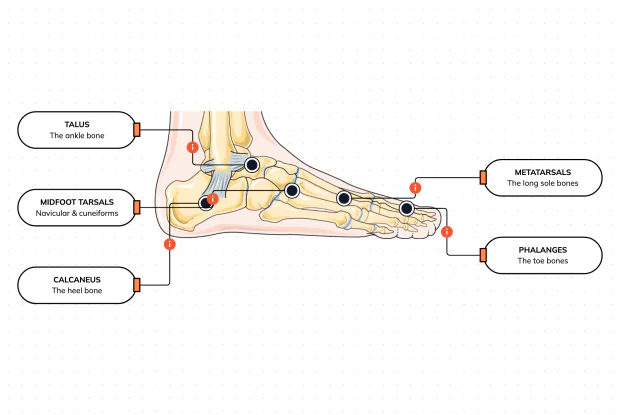
What Are the Bones of the Foot?
The foot packs twenty-six bones into three groups: ankle-and-heel tarsals, the long metatarsals, and the toe phalanges. Learn what each does — how the talus takes your weight and the arch springs you forward — then label them yourself in an interactive playground.
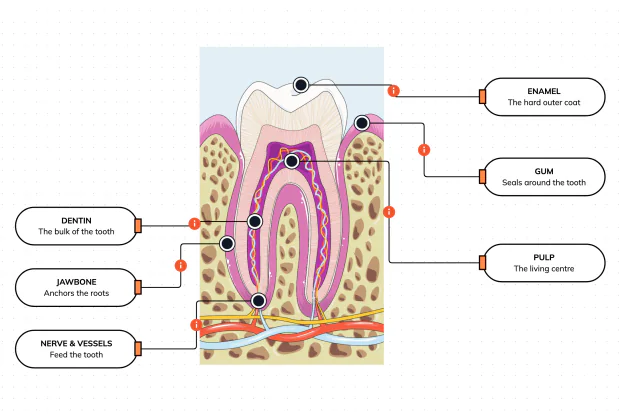
What Are the Parts of a Tooth?
A tooth is far more than the white bit you brush. Cut one open and label the enamel, dentin, pulp, gum, jawbone and the nerve that feeds it — and learn what each part does, and why a cavity starts painless but ends agonising, in an interactive playground.
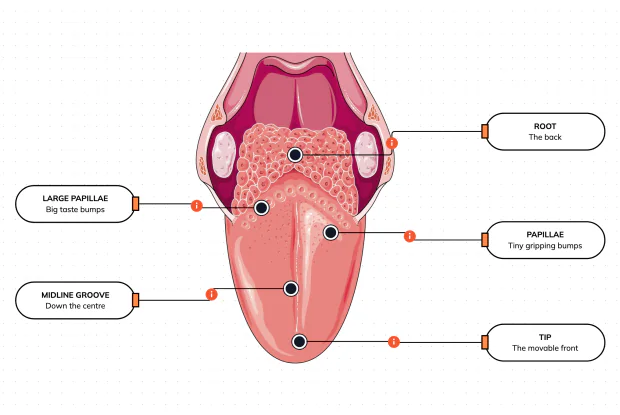
What Are the Parts of the Tongue?
The tongue is a muscle whose surface is covered in tiny bumps that hold your taste buds. Label the tip, root, papillae, the large taste bumps and the midline groove, and learn what each part does, in an interactive playground.
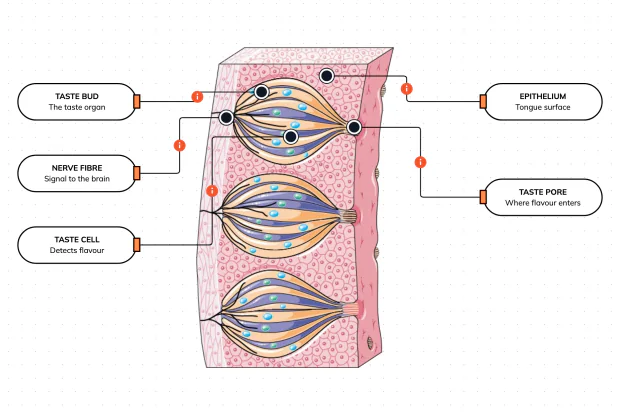
How Do Your Taste Buds Work?
Taste happens inside tiny onion-shaped taste buds packed into the tongue. Label the taste bud, its taste cells, the taste pore, the nerve fibre and the surrounding surface, and learn how dissolved food becomes a flavour signal to the brain, in an interactive playground.
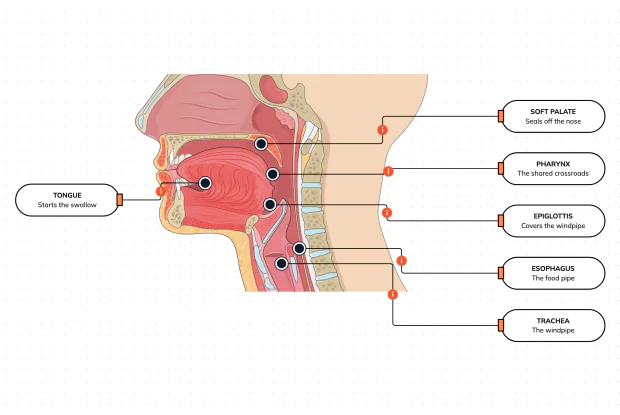
How Do You Swallow Without Choking?
In your throat, the path for food and the path for air cross over — so swallowing has to route food safely past the windpipe. Label the tongue, soft palate, pharynx, epiglottis, windpipe and food pipe, and learn how the swallow protects your airway, in an interactive playground.
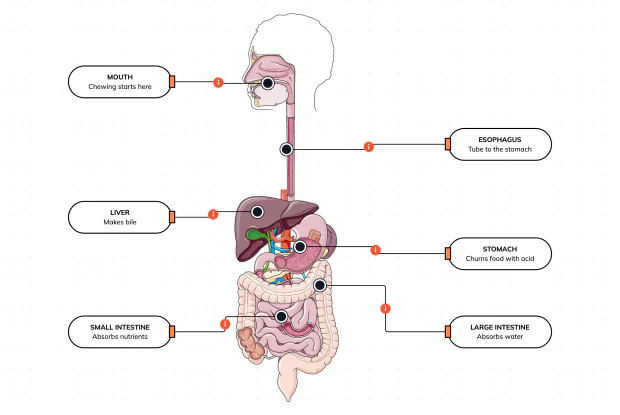
What Are the Main Parts of Your Digestive System?
Your digestive system is a long tube, plus helper organs, that turns food into fuel your body can absorb. Label the mouth, esophagus, stomach, liver, small intestine and large intestine, and follow food's journey from the first bite to the end — in an interactive playground.
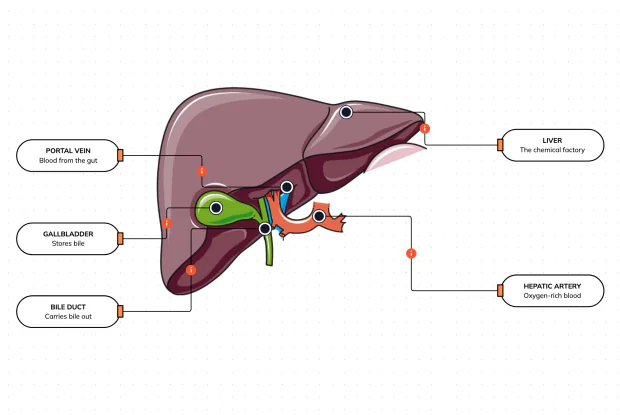
What Are the Parts of Your Liver and Gallbladder?
The liver is the body's largest internal organ and busiest chemical factory. Label the liver, gallbladder, bile duct, portal vein and hepatic artery, and learn how the liver makes bile, cleans your blood, and uniquely gets blood from two sources — in an interactive playground.
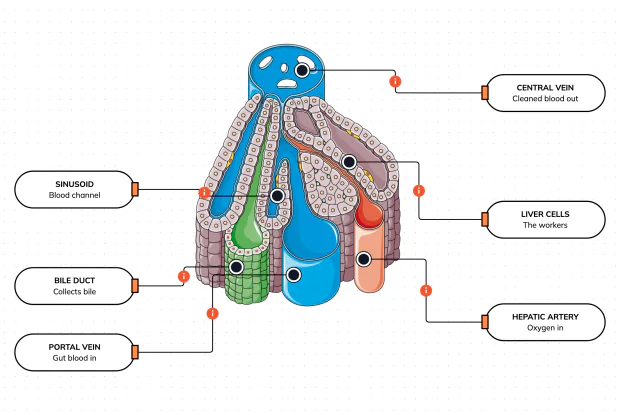
How Does the Liver Work, Up Close?
The liver is built from thousands of tiny repeating units called lobules. Zoom into one and label the liver cells, sinusoid, central vein, portal vein, hepatic artery and bile duct, and see how blood flows slowly past the worker cells to be cleaned — in an interactive playground.
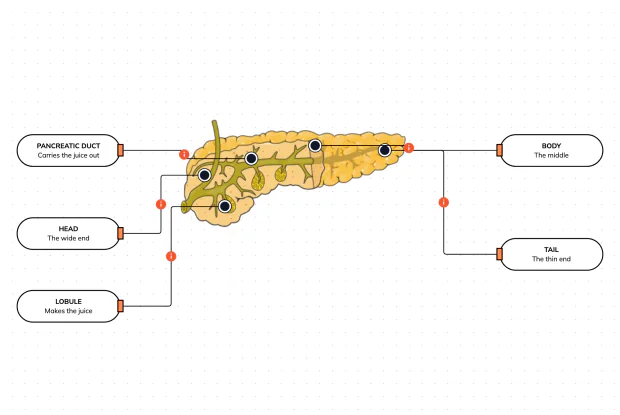
What Are the Parts of Your Pancreas?
The pancreas is a soft gland behind the stomach that both digests your food and controls your blood sugar. Label its head, body, tail, pancreatic duct and lobules, and learn how this two-in-one gland works — in an interactive playground.
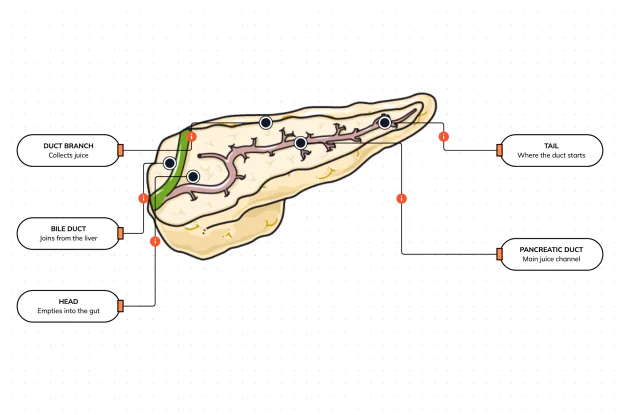
How Does the Pancreas Deliver Its Juice?
The pancreas collects its digestive juice through a branching duct, like a river gathering tributaries, and pipes it to the gut — where it meets the bile duct. Label the pancreatic duct, a branch, the bile duct, the head and the tail, and see how the juice is delivered, in an interactive playground.
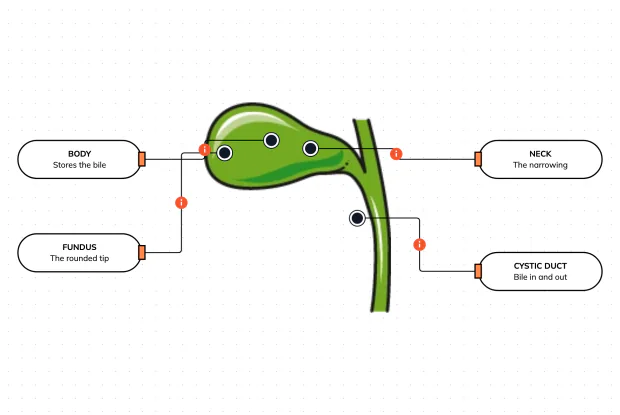
What Are the Parts of Your Gallbladder?
The gallbladder is a small pear-shaped sac that stores and concentrates the liver's bile. Label its fundus, body, neck and cystic duct, and learn how it holds bile between meals and releases it when you eat — and why gallstones cause pain — in an interactive playground.
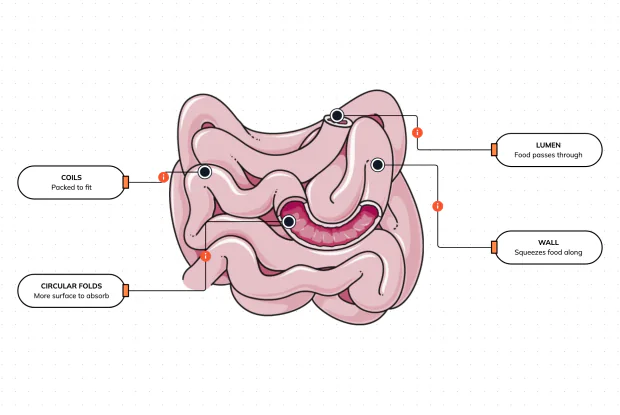
Why Is Your Small Intestine So Long and Folded?
The small intestine is where nutrients are absorbed — and everything about it is built to maximise that. Label the coils, circular folds, lumen and wall, and learn why the small intestine is so long, so coiled and so folded — in an interactive playground.
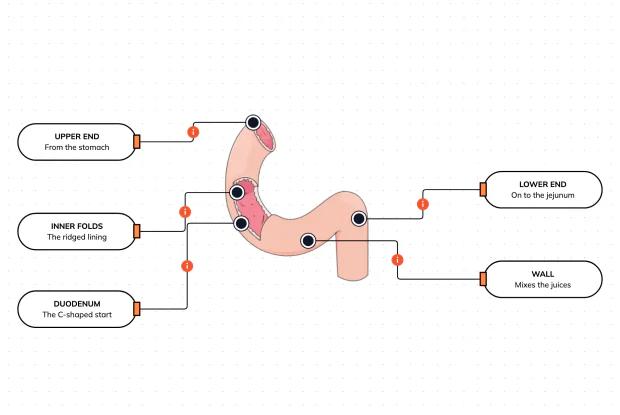
What Is the Duodenum, the Gut's Mixing Bowl?
The duodenum is the C-shaped first part of the small intestine, where stomach acid is neutralised and bile and pancreatic juice go to work. Label the duodenum, its upper end, inner folds, wall and lower end, and learn why this short stretch is digestion's busiest crossroads — in an interactive playground.
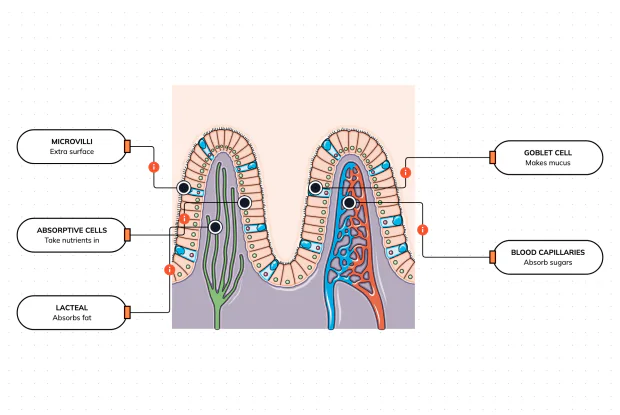
How Does Your Gut Absorb Food Into Your Blood?
The small intestine's lining is carpeted with tiny fingers called villi, where nutrients finally cross into the body. Label the microvilli, absorptive cells, lacteal, blood capillaries and goblet cell, and see how a digested meal is absorbed — in an interactive playground.
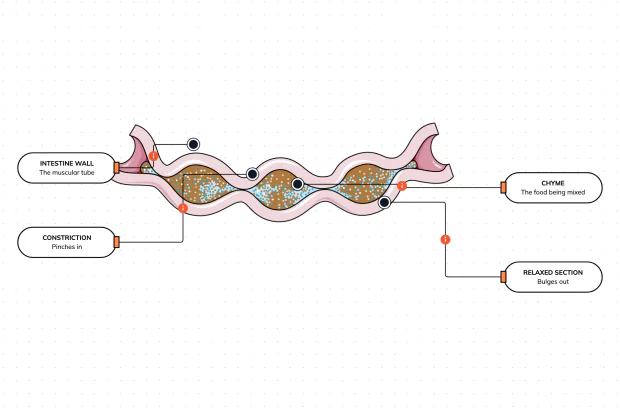
How Does Your Intestine Mix Your Food?
The intestine mixes food with a movement called segmentation — pinching it into pockets and churning it in place. Label the intestine wall, a constriction, a relaxed section and the chyme, and see how the gut mixes a meal rather than just pushing it along — in an interactive playground.
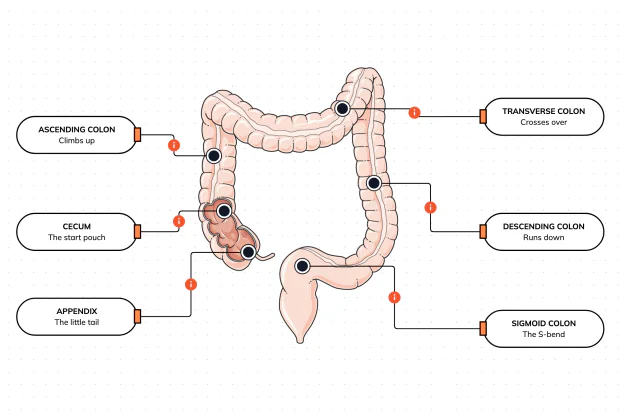
What Are the Parts of Your Large Intestine?
The large intestine, or colon, is the final stretch of the gut — it absorbs water and forms waste. Label the cecum, appendix, ascending, transverse, descending and sigmoid colon, and follow the leftovers around its path — in an interactive playground.
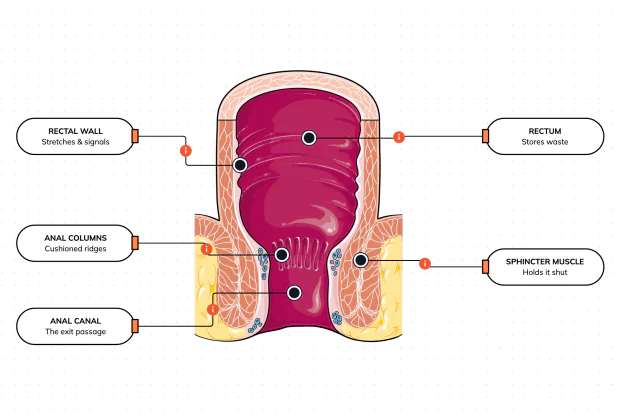
How Does Your Body Hold and Release Waste?
The rectum stores waste, and two sphincter muscles decide when it leaves. Label the rectum, rectal wall, anal columns, anal canal and sphincter muscle, and learn how your body holds and releases waste — in an interactive playground.
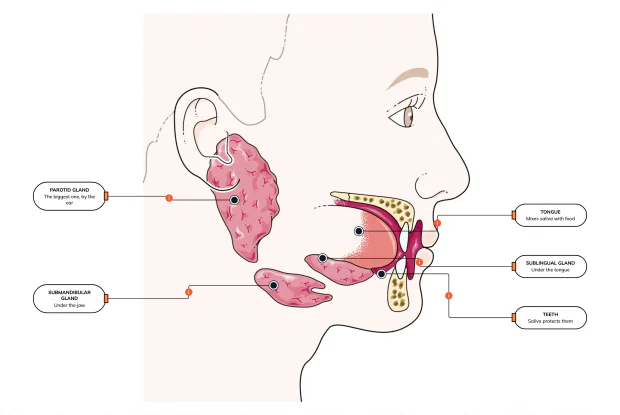
What Are Your Salivary Glands?
Saliva is made by three pairs of salivary glands — parotid, submandibular and sublingual. Label each gland, the tongue and the teeth, and learn what spit does, in an interactive playground.
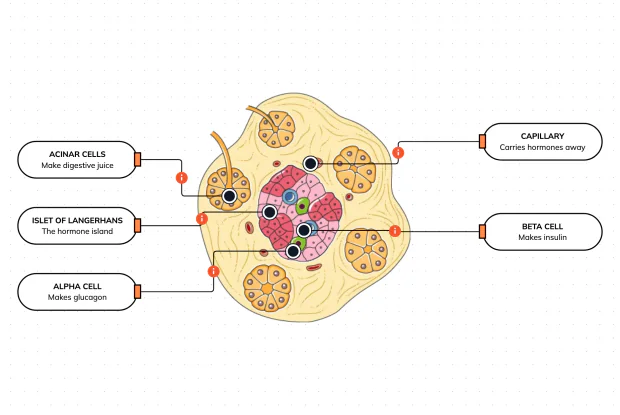
What Is an Islet of Langerhans?
Tiny clusters in the pancreas make insulin and glucagon. Label the islet, its beta and alpha cells, the digestive-juice cells and a capillary, and learn how blood sugar stays balanced.
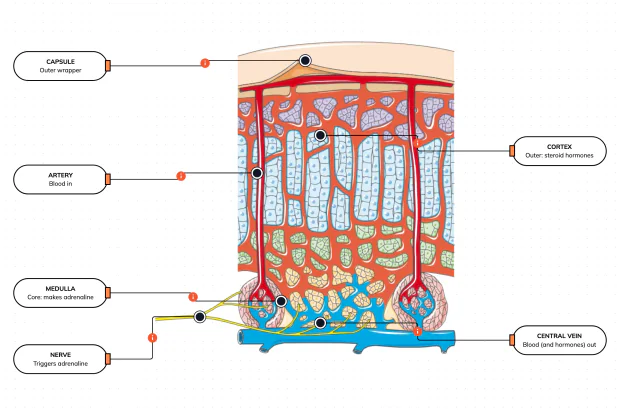
How Is the Adrenal Gland Built?
Each adrenal gland has a capsule, a cortex that makes cortisol and a medulla that makes adrenaline. Label the capsule, cortex, medulla, artery, central vein and nerve.
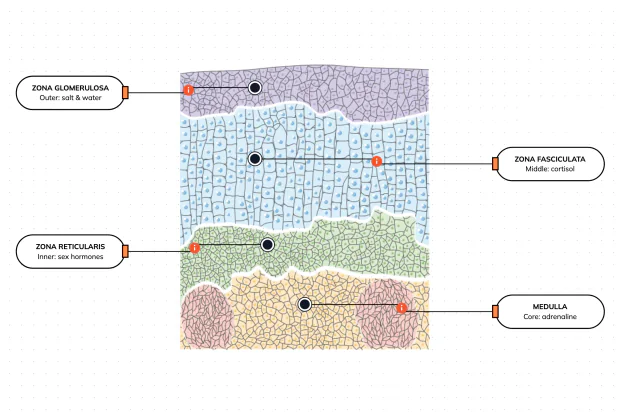
What Are the Layers of the Adrenal Gland?
Up close the adrenal gland is layered: three cortex zones over the medulla, each making a different hormone. Label the four layers and match each to its hormone.
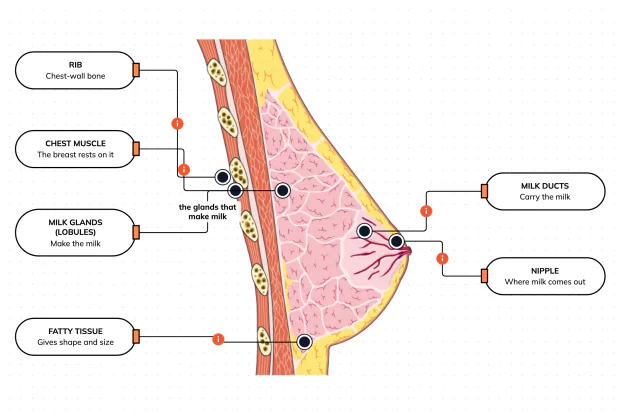
What Are the Parts of the Breast?
The breast is a mammary gland: milk-making lobules, ducts to the nipple, and fat for shape, on the chest muscle and ribs. Label each part and learn how the breast makes milk.
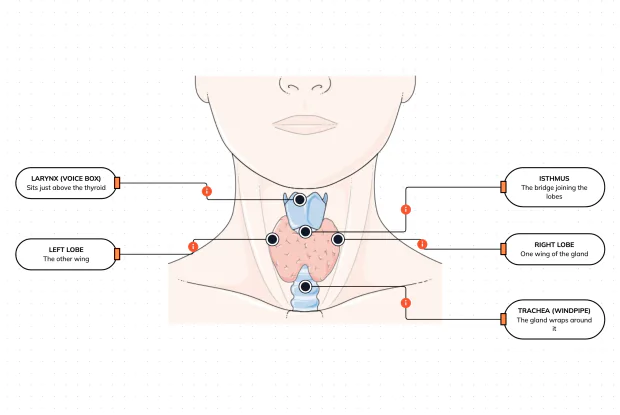
What Does Your Thyroid Gland Do?
The thyroid is a butterfly-shaped neck gland that makes a hormone controlling how fast your body works. Label its two lobes and isthmus, the voice box and the windpipe, in an interactive playground.
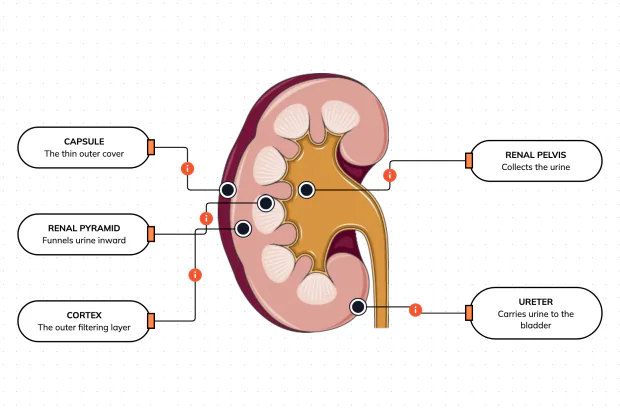
What Are the Parts of a Kidney?
Each kidney filters blood into urine. Label the capsule, cortex, renal pyramid, renal pelvis and ureter on a cut-open kidney, in an interactive playground.
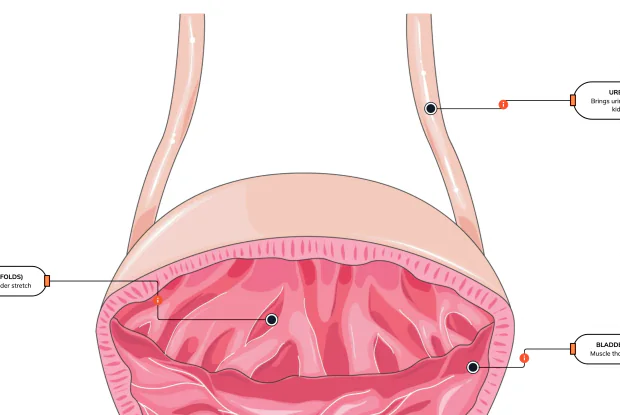
How Does Your Bladder Store Urine?
The bladder is a stretchy muscular bag that stores urine. Label the ureters, ureter opening, muscular wall, the folds (rugae) and the urethra, in an interactive playground.
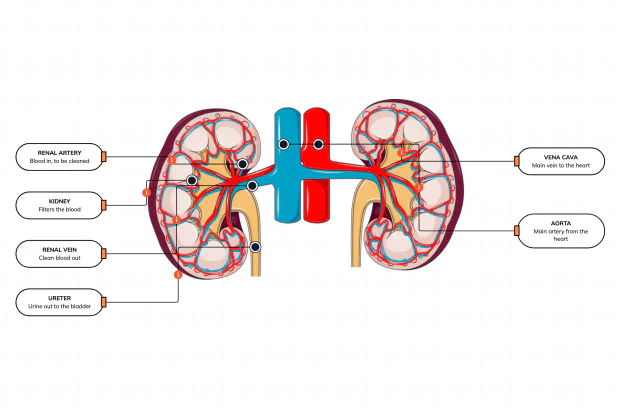
How Does Blood Reach Your Kidneys?
Kidneys clean the blood, so they need a huge blood supply. Label the renal artery, renal vein, aorta, vena cava, kidney and ureter, in an interactive playground.
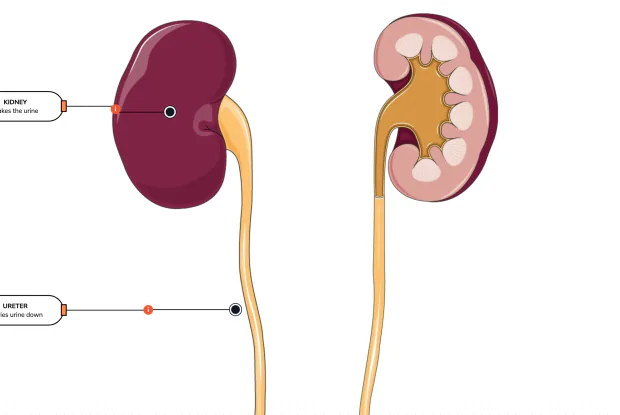
What Is the Urinary System?
The urinary system makes and removes urine along a one-way path: kidney, ureter, bladder, urethra. Label each part in an interactive playground.
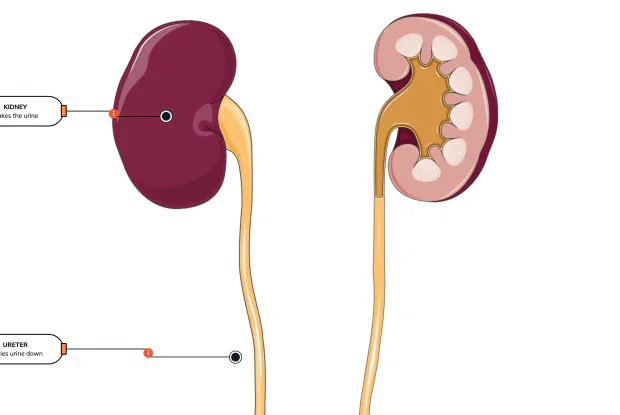
How Is the Male Urinary Tract Different?
The male urinary tract shares the same kidneys, ureters and bladder, but has a longer urethra passing through the prostate. Label each part in an interactive playground.
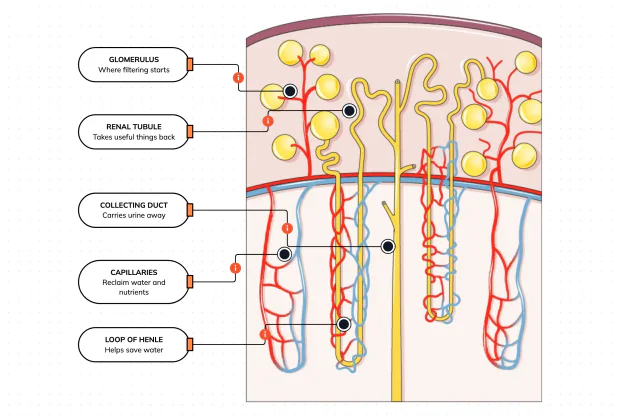
What Is a Nephron?
A nephron is the microscopic unit that does the kidney's filtering. Label the glomerulus, renal tubule, loop of Henle, collecting duct and capillaries in an interactive playground.
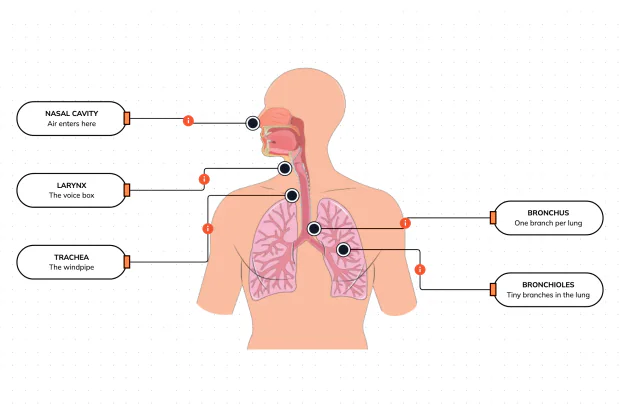
How Does Air Travel to Your Lungs?
Every breath travels down branching airways — nasal cavity, larynx, trachea, bronchi and bronchioles. Label the breathing path in an interactive playground.
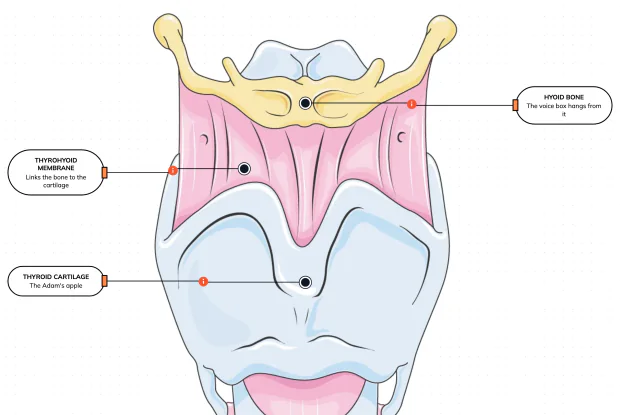
What Is Your Voice Box Made Of?
The larynx is built from cartilage. Label the hyoid bone, thyroid cartilage (Adam's apple), cricoid cartilage and trachea in an interactive playground.
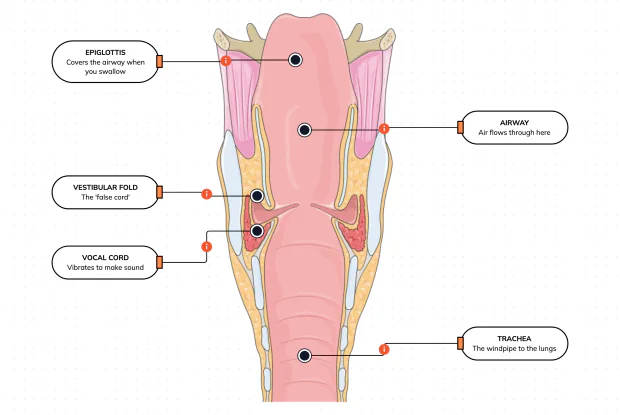
How Does Your Voice Box Make Sound?
Your voice is made by vocal cords vibrating as air passes through the larynx. Label the vocal cords, vestibular fold, epiglottis and airway in an interactive playground.
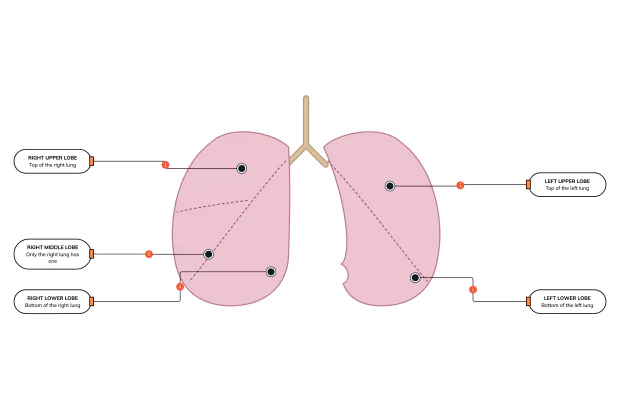
What Are the Lobes of the Lungs?
Each lung is divided by fissures into lobes: the right has three (upper, middle, lower), the left has two (upper, lower). Label all five lobes in an interactive playground.
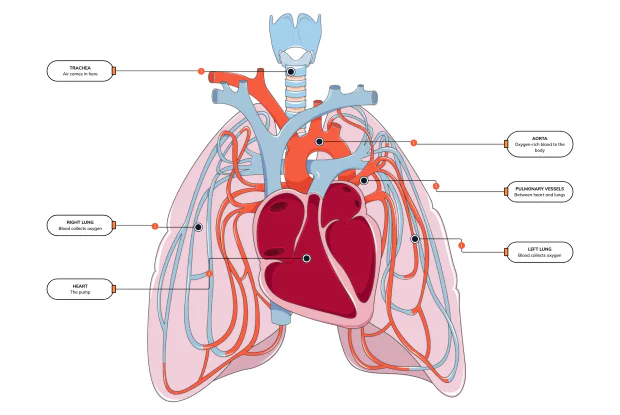
What Is Pulmonary Circulation?
Pulmonary circulation is the loop where the heart pumps blood to the lungs for oxygen and back. Label the heart, lungs, pulmonary vessels, trachea and aorta in an interactive playground.
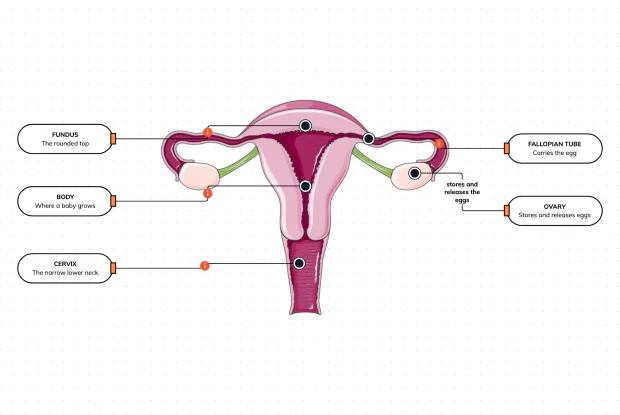
What Are the Parts of the Uterus?
The uterus is the pear-shaped organ where a baby grows. Label its fundus, body, cervix, the fallopian tubes and the ovaries in an interactive playground.
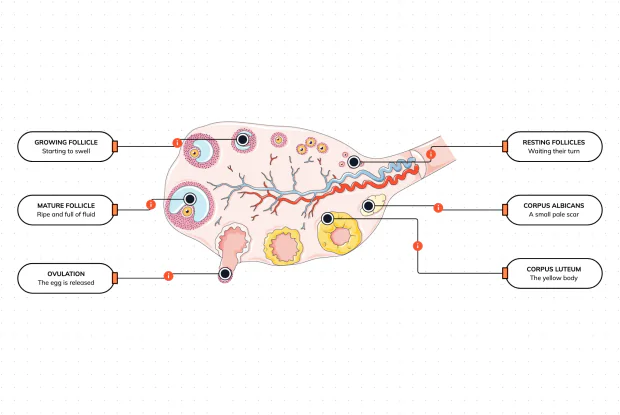
What Does an Ovary Do Each Month?
An ovary is a small organ that holds a lifetime supply of eggs and ripens one of them roughly every month. Label the resting follicles, a growing follicle, the mature follicle, the moment of release, and what is left behind, in an interactive playground.
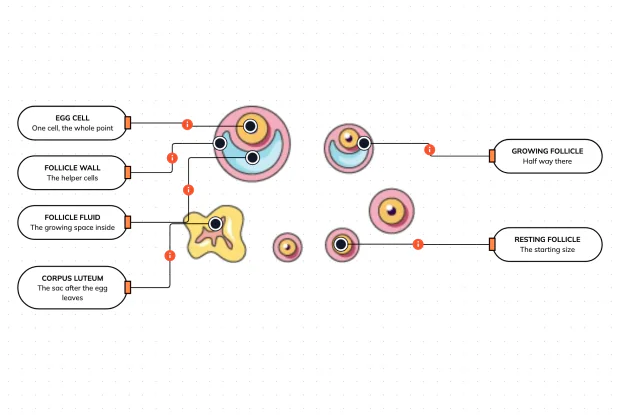
What Is an Ovarian Follicle?
Every egg inside an ovary sits in its own little sac called a follicle. Label the egg cell, the wall of cells around it, the fluid that opens up inside, and the shapes a follicle takes as it grows and empties, in an interactive playground.
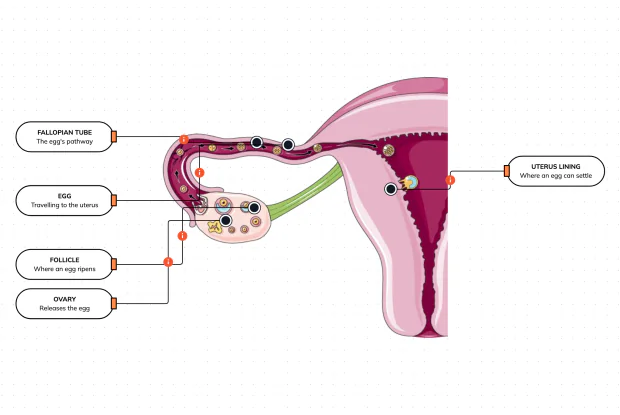
The Journey of an Egg
About once a month an ovary releases an egg that travels down the fallopian tube toward the uterus. Label the ovary, follicle, tube, egg and uterus lining in an interactive playground.
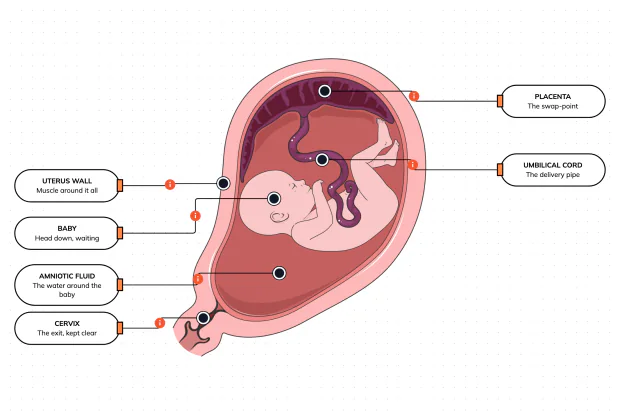
What Does the Placenta Do?
The placenta is an organ grown just for pregnancy. It swaps food and oxygen between mother and baby through the umbilical cord, and normally sits high on the uterus wall, well clear of the way out. Label the placenta, cord, uterus wall, fluid and cervix in an interactive playground.
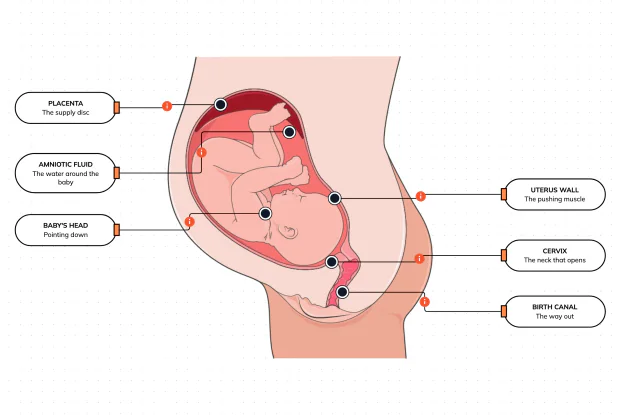
How Does a Baby Lie Before Birth?
In the last weeks of pregnancy most babies settle head-down in the uterus, curled up in a pool of warm fluid with the exit directly below. Label the placenta, the fluid, the baby's head, the uterus wall, the cervix and the birth canal in an interactive playground.