What Is Pulmonary Circulation?
Root Concept
Pulmonary circulation is the loop of blood flow between the heart and the lungs. The heart pumps oxygen-poor blood through the pulmonary vessels to the lungs, where it collects oxygen from the air breathed in through the trachea; the oxygen-rich blood returns to the heart, which then sends it out to the whole body through the aorta.
CodePLU Goal
Upgrading Human Mental Models
Learn how to think in Workflows

Concept Development By codeplu.com
The pulmonary circuit — the heart pumping blood through the pulmonary vessels to both lungs to collect oxygen, with the trachea bringing air and the aorta sending oxygen-rich blood to the body
How Does Your Blood Get Its Oxygen?
Your body runs on oxygen, and it is your blood that carries it to every cell. But blood cannot make oxygen — it has to go and fetch it from the air, and the place it does that is your lungs. The short journey that blood makes from the heart to the lungs and back, just to collect oxygen, is called pulmonary circulation ('pulmonary' means 'to do with the lungs').
It works as a loop. The heart, sitting between the two lungs, pumps oxygen-poor blood out through the pulmonary vessels to both lungs. There, right next to the air you have breathed in through your trachea, the blood picks up a fresh load of oxygen and drops off waste gas. Now oxygen-rich, the blood flows back to the heart along other pulmonary vessels.
Once the oxygen-rich blood is back in the heart, the heart gives it a second push — this time out through the aorta, the body's biggest artery, to deliver oxygen to the rest of you. So the lungs are like a refuelling station: pulmonary circulation is the round trip to the pump's fuel stop. In the playground you will label the heart, both lungs, the pulmonary vessels, the trachea and the aorta.
How Does Pulmonary Circulation Work?
The heart pumps blood to the lungs
The whole loop starts at the heart, the muscular pump in the middle of your chest. Blood returning from the body is low on oxygen and needs topping up, so the heart pushes this oxygen-poor blood out toward the lungs through the pulmonary vessels. Notice something unusual: these are the vessels carrying blood AWAY from the heart to be refreshed, so the blood in them is actually the 'used', oxygen-poor kind. The heart does this without you ever thinking about it, beat after beat, sending a fresh batch of tired blood to the lungs every single time it contracts. This first half of pulmonary circulation — heart out to lungs — is the delivery leg, taking blood to the one place it can pick up oxygen.
The lungs load the blood with oxygen
At the lungs, the blood arrives right beside the air you have breathed in through your trachea and airways. The pulmonary vessels split into tinier and tinier branches until they are wrapped around the lungs' microscopic air sacs, with only the thinnest wall between blood and air. Here the swap happens: oxygen from the air passes into the blood, and waste carbon dioxide passes out of the blood to be breathed away. In just a moment, the blood changes from oxygen-poor to oxygen-rich — which is also why it turns a brighter red. This is the whole point of pulmonary circulation: bringing blood and freshly breathed air close enough together for the blood to grab the oxygen your body needs.
Back to the heart, then out to the body
Now carrying its fresh oxygen, the blood flows back from the lungs to the heart through the returning pulmonary vessels — completing the pulmonary loop. But it does not go straight to the body from the lungs; it returns to the heart first, so the heart can give it a strong second push. That push sends the oxygen-rich blood out through the aorta, the body's main artery, on the much longer journey to every organ, muscle and cell (a separate loop called the systemic circulation). So your heart is really a double pump: one side handles the short trip to the lungs, the other the long trip to the body. Pulmonary circulation is the first, oxygen-collecting half of that partnership.
Real World Example
Pulmonary Circulation in Everyday Life
The trip your blood makes to the lungs shows up in things you experience often. Here are three:
Why blood is brighter in the lungs
Oxygen changes the colour of blood
Blood is not always the same shade of red. Oxygen-poor blood, on its way to the lungs, is a darker, duller red; once it has picked up oxygen in the lungs, it becomes a brighter, cherry red. This colour change happens right there in the pulmonary circulation, as the blood loads up with oxygen beside the air sacs. It is why a diagram often draws the vessels going to the lungs in a duller colour and the ones coming back in bright red. The next time you see blood, its brightness is a clue to how much oxygen it is carrying — and that oxygen was collected on exactly this heart-to-lung round trip.
Getting out of breath
Hard exercise speeds up the whole loop
When you run or climb stairs, your muscles burn oxygen fast and make extra waste gas, so your body has to refresh the blood more quickly. Two things speed up together: you breathe faster, filling your lungs with fresh air, and your heart beats faster, pushing blood through the pulmonary circulation more rapidly. The result is that blood makes its trip to the lungs and back many more times a minute, grabbing oxygen and dumping waste as fast as your muscles demand it. That pounding heart and heaving chest after a sprint are pulmonary circulation working flat out — the heart and lungs teaming up to keep your blood topped up with oxygen.
A double loop, not one big circle
Blood visits the lungs between every body trip
It surprises many people that blood does not do one big lap of the body. Instead it does two loops that share the heart: a short one to the lungs (pulmonary circulation) and a long one to the body (systemic circulation). Every drop of blood alternates — lungs, then body, then lungs again — so it always refuels with oxygen before each trip out to the tissues. This double-loop design, with the heart as a two-sided pump in the middle, is why the aorta (to the body) and the pulmonary vessels (to the lungs) both leave the same heart. Understanding pulmonary circulation is really understanding one half of that clever two-loop system.
FAQs
Final Words
Pulmonary circulation is the blood's short round trip from the heart to the lungs and back, made just to collect oxygen. The heart pumps oxygen-poor blood through the pulmonary vessels to both lungs, where — right beside the air you breathed in through your trachea — it swaps waste carbon dioxide for fresh oxygen, and then returns to the heart oxygen-rich. The heart gives it a second push out through the aorta to the rest of the body.
So the lungs are your blood's refuelling station, and the heart is a double pump: one side for the short lung loop, one for the long body loop. You feel this system speed up whenever you exercise and see it in the brightening colour of oxygen-rich blood. Pulmonary circulation is the first, oxygen-gathering half of how your body keeps every cell supplied.
Continue This Track
This concept is part 57 of The Human Body, Head to Toe.
What Is a Bone Made Of?
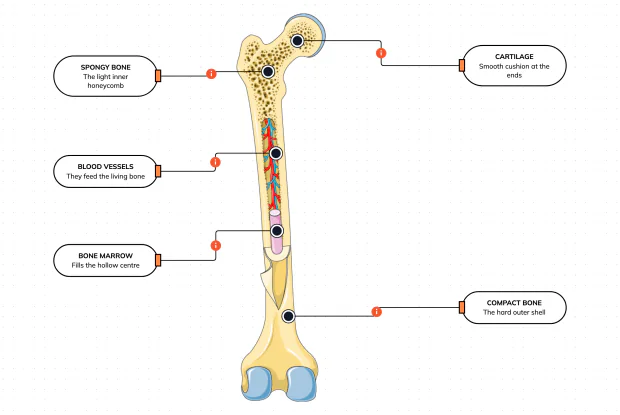
Cut a bone open and it is nowhere near solid: a hard outer shell, a light honeycomb inside, a hollow centre full of marrow, blood vessels threading through, and a smooth cushion at each end. Learn what each part does — then label them yourself in an interactive playground.
What Is Inside Your Elbow Joint?
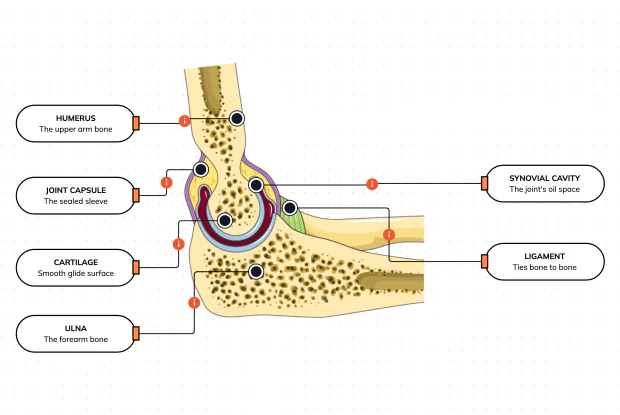
A joint is where two bones meet and move — and it is far more than just the bones. Cut open the elbow and you find smooth cartilage caps, a sealed capsule of slippery fluid, and tough ligaments holding it all together. Learn what each part does, then label them yourself in an interactive playground.
What Makes Your Elbow Bend?
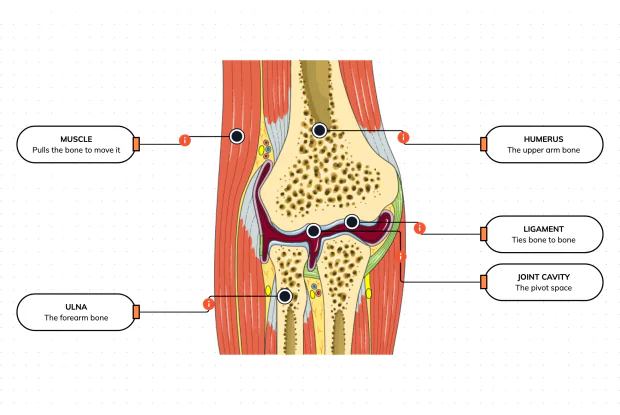
Bones and joints are just the hardware; nothing moves until a muscle pulls. Label the elbow to see the parts that turn a joint into movement — the muscle that pulls, the ligament that holds bone to bone, the two bones it links, and the space they pivot in — then build it yourself in an interactive playground.
What Holds Your Elbow Together?
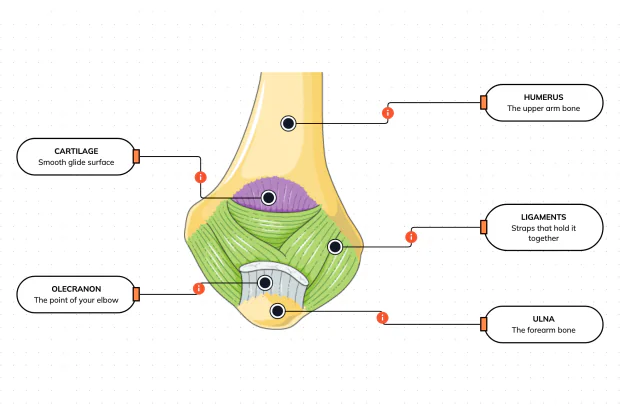
Your elbow is pulled on all day — by gravity, by every bag you carry, by every time you hang or push. So what stops the two bones from simply coming apart? Look at the back of the elbow and label the ligaments, the bony point, the cartilage and the two bones — and learn what holds the whole joint together.
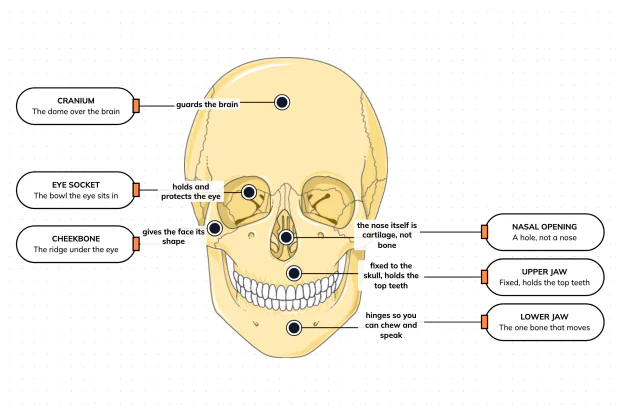
What Are the Main Bones of the Skull?
The skull looks like a single bone, but it is really about twenty-two locked together — with just one left free to move. Learn what each main part does, then label a skull yourself in an interactive playground.
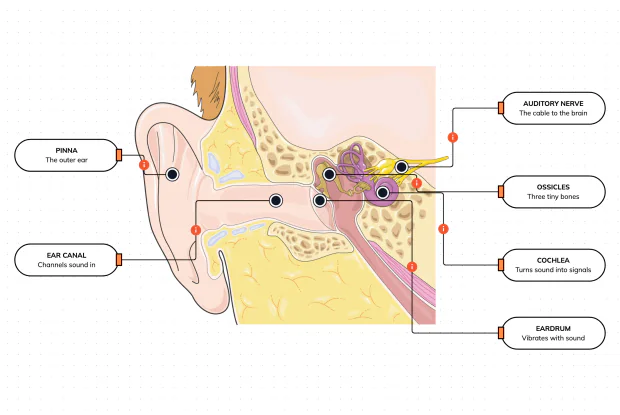
What Are the Parts of Your Ear?
Hearing is a chain of parts passing a sound along, each handing it to the next. Label the pinna, ear canal, eardrum, ossicles, cochlea and auditory nerve, and follow a sound all the way from the air outside to a signal your brain can read — in an interactive playground.
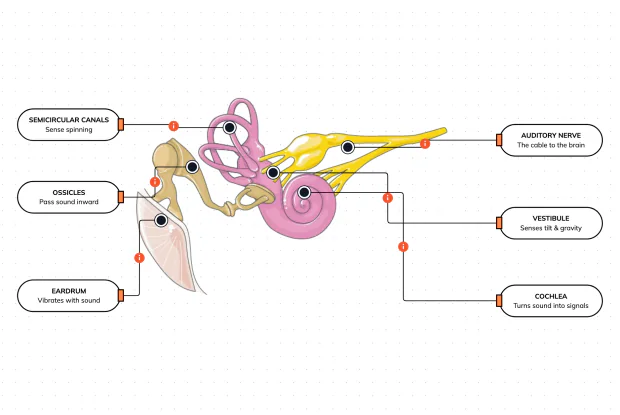
How Does Your Ear Keep You Balanced?
Your ear does a second, hidden job: balance. Inside it sit fluid-filled loops that sense spinning and a chamber that senses tilt and gravity. Label the semicircular canals, vestibule, cochlea, ossicles, eardrum and nerve, and learn how one organ both hears and keeps you upright — in an interactive playground.
What Are the Parts of the Eye You Can See?
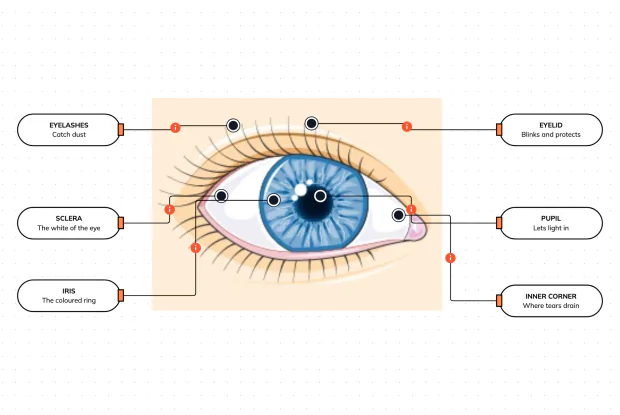
Before you look inside the eye, learn the parts you can already see in a mirror. Label the pupil, iris, sclera, eyelid, eyelashes and the tear-duct corner, and learn what each visible part does to let in light and protect the eye — in an interactive playground.
Where Do Your Tears Come From and Go?
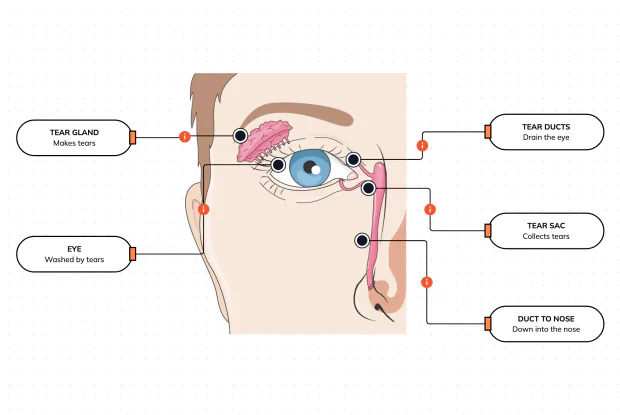
Your eyes make and drain tears all day to stay clean and wet. Label the tear gland, the eye, the tear ducts, the tear sac and the duct to the nose, and follow a tear from where it is made to where it drains — in an interactive playground.
How Does Your Eye Turn Light Into a Picture?
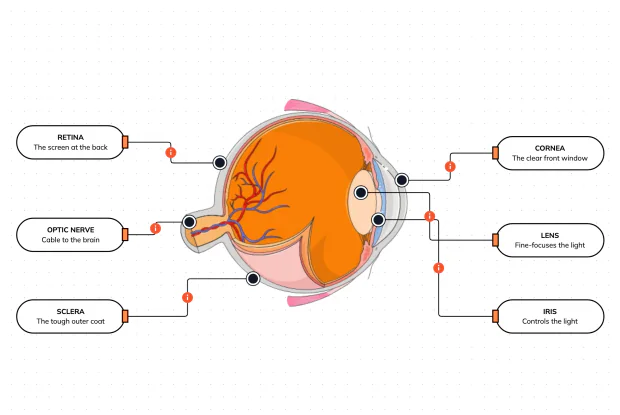
Your eye works like a living camera. Cut it open and label the cornea, lens, iris, retina, optic nerve and sclera, and follow light as it is focused onto a screen at the back of the eye and sent to the brain — in an interactive playground.