How Does Blood Reach Your Kidneys?
Root Concept
Kidneys filter the blood, so they need a large blood supply. Blood arrives from the body's main artery, the aorta, through the renal artery into the kidney, where it is cleaned; the cleaned blood leaves through the renal vein into the body's main vein, the vena cava. The ureter separately carries the finished urine down to the bladder.
CodePLU Goal
Upgrading Human Mental Models
Learn how to think in Workflows

Concept Development By codeplu.com
The kidneys and their blood supply — the renal artery bringing blood in from the aorta, the renal vein carrying cleaned blood out to the vena cava, and the ureter taking urine away
Why Do Your Kidneys Need Such a Big Blood Supply?
Your kidneys have one main job: to clean your blood. But you cannot clean blood that is not there — the blood has to be brought to the kidneys, run through their filters, and then carried away again. So the kidneys are plumbed straight into the body's biggest blood vessels, and a surprisingly large share of all the blood your heart pumps passes through them every single minute.
The route is a neat loop. Blood leaves the heart in the body's main artery, the aorta, a thick red pipe running down the middle of the body. A branch off the aorta, called the renal artery, carries blood into each kidney to be cleaned. Once the kidney has filtered it, the cleaned blood leaves through the renal vein, which empties into the body's main vein, the vena cava, and heads back to the heart.
Meanwhile the waste the kidney has removed leaves by a completely separate exit: the ureter, a tube that carries the finished urine down to the bladder. So two things flow out of a kidney — clean blood back into the circulation, and urine down to be stored. In the playground you will label the kidney, its renal artery and vein, the aorta and vena cava they connect to, and the ureter.
How Does the Kidneys' Blood Supply Work?
Blood in: the renal artery
For a kidney to clean blood, blood must be delivered to it under good pressure, and lots of it. That delivery comes from the aorta, the huge artery that carries freshly pumped blood away from the heart down through the body. Branching sideways off the aorta is the renal artery — 'renal' simply means 'to do with the kidney' — one for each kidney. The renal artery carries a strong flow of blood, still carrying the body's dissolved waste, straight into the kidney. Inside, that blood is spread through millions of tiny filters. Because this incoming pipe is wide and the pressure is high, a kidney receives far more blood for its size than most organs — it has to, to filter the whole bloodstream over and over throughout the day.
Blood out: the renal vein
Once the kidney has done its filtering — pulling waste and extra water out of the blood — the blood is clean and needs to go back into circulation. It leaves the kidney through the renal vein. Veins carry blood back toward the heart, and the renal vein empties into the vena cava, the body's main vein, which runs alongside the aorta and returns blood to the heart to be pumped to the lungs and around again. So each kidney sits between two great vessels: the renal artery bringing blood in from the aorta, and the renal vein taking it back out to the vena cava. It is a clean in-and-out loop — dirty blood in one side, cleaned blood out the other — repeated minute after minute.
Two different exits: blood and urine
It is easy to muddle the tubes leaving a kidney, so here is the key point: they carry two completely different things. The renal vein carries cleaned blood back into the body's circulation. The ureter carries urine — the waste and extra water the kidney removed — down and out to the bladder. One is part of the blood system; the other is part of the waste-removal (urinary) system. This is the whole beauty of the kidney: it takes in one stream of dirty blood and splits it into two — a clean blood stream that goes back to keep you alive, and a small waste stream that becomes the urine you later pass. Blood loops back to the heart; urine heads down to the bladder.
Real World Example
Why the Kidneys' Blood Supply Matters
The kidneys' rich blood supply is not just a detail — it shapes how the body works and what doctors watch for. Here are three:
A quarter of your blood, every minute
Kidneys get a giant share of the blood flow
Although your two kidneys together weigh only about as much as a couple of oranges, they receive roughly a quarter of all the blood your heart pumps every minute — far more than their size would suggest. The reason is their job: to clean blood, they must have blood constantly streaming through them, and the whole bloodstream needs to be filtered many times a day. This enormous flow is why the renal artery is such a wide branch straight off the aorta. It also means the kidneys are excellent at spotting and responding to what is in the blood, because almost all of it passes under their watch again and again throughout the day.
Kidneys and blood pressure
The organ that filters blood also helps control its pressure
Because so much blood flows through them, the kidneys are perfectly placed to help control blood pressure — and they do. They constantly sense the pressure and volume of the blood arriving through the renal artery, and they adjust how much water and salt to keep or remove, which changes how much fluid is in the bloodstream and therefore the pressure. They can also release chemical signals that tighten or relax blood vessels. This close link is why kidney problems and high blood pressure so often go together, and why doctors checking blood pressure are, in a way, also checking on the kidneys. The organ that cleans your blood also helps set how hard it pushes.
Living with one kidney
Each kidney has its own artery and vein, so one can be given
Because each kidney has its own complete plumbing — its own renal artery, renal vein and ureter — a single kidney is a self-contained unit. This is what makes kidney donation possible: a healthy person can give away one whole kidney, with its vessels, and the surgeons connect that renal artery and vein to the recipient's blood supply so it starts filtering in its new home. The donor keeps living a normal life on their remaining kidney, because one healthy kidney can do the work of two. Understanding that each kidney is plumbed in separately by its own artery and vein is exactly what makes this life-saving operation work.
FAQs
Final Words
Your kidneys clean your blood, so they are plumbed straight into the body's biggest vessels. Blood flows from the heart down the aorta, branches into each kidney through the renal artery, gets filtered, and returns as cleaned blood through the renal vein into the vena cava and back to the heart. The waste the kidney removed leaves by a separate route — the ureter — down to the bladder.
That rich blood supply is why the kidneys receive about a quarter of the heart's output every minute, why they help control blood pressure, and why each self-contained kidney — with its own artery, vein and ureter — can even be donated to save a life. The kidney takes one stream of dirty blood and splits it into two: clean blood back to the body, and urine down to be stored.
Continue This Track
This concept is part 49 of The Human Body, Head to Toe.
What Is a Bone Made Of?
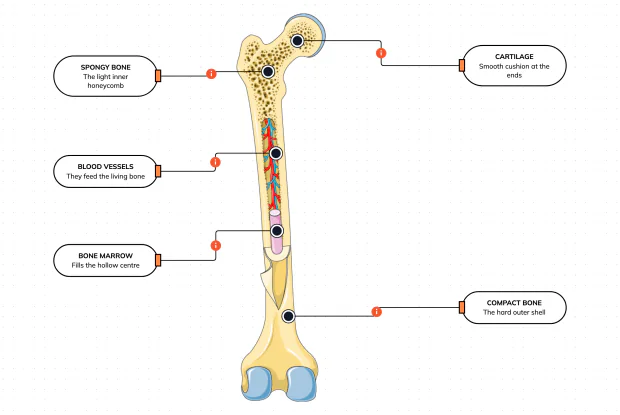
Cut a bone open and it is nowhere near solid: a hard outer shell, a light honeycomb inside, a hollow centre full of marrow, blood vessels threading through, and a smooth cushion at each end. Learn what each part does — then label them yourself in an interactive playground.
What Is Inside Your Elbow Joint?
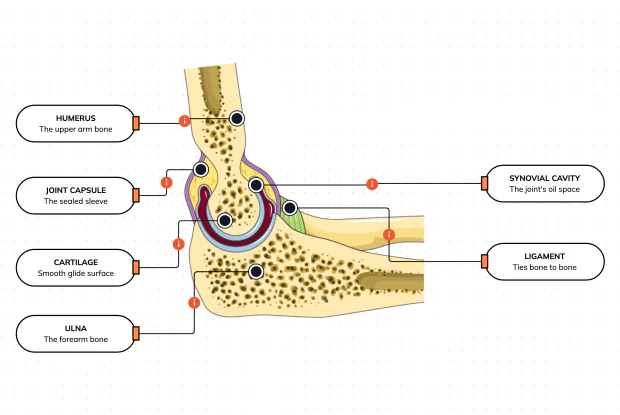
A joint is where two bones meet and move — and it is far more than just the bones. Cut open the elbow and you find smooth cartilage caps, a sealed capsule of slippery fluid, and tough ligaments holding it all together. Learn what each part does, then label them yourself in an interactive playground.
What Makes Your Elbow Bend?
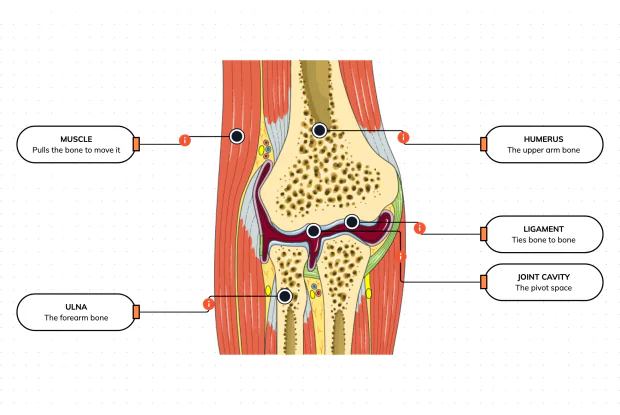
Bones and joints are just the hardware; nothing moves until a muscle pulls. Label the elbow to see the parts that turn a joint into movement — the muscle that pulls, the ligament that holds bone to bone, the two bones it links, and the space they pivot in — then build it yourself in an interactive playground.
What Holds Your Elbow Together?
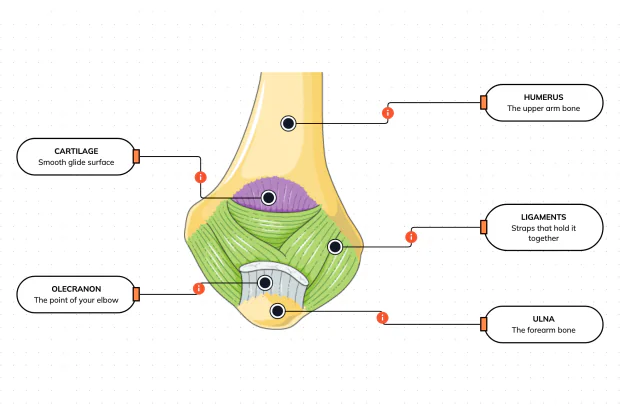
Your elbow is pulled on all day — by gravity, by every bag you carry, by every time you hang or push. So what stops the two bones from simply coming apart? Look at the back of the elbow and label the ligaments, the bony point, the cartilage and the two bones — and learn what holds the whole joint together.
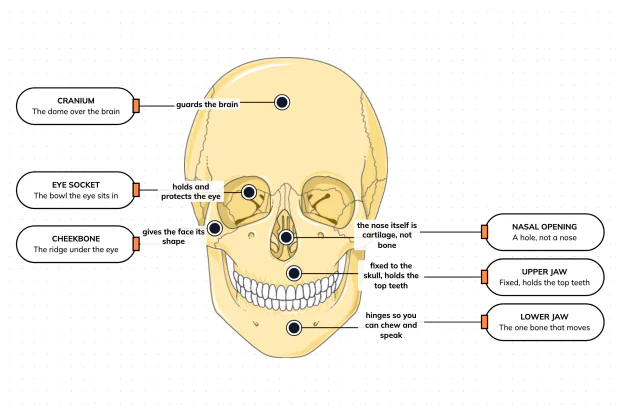
What Are the Main Bones of the Skull?
The skull looks like a single bone, but it is really about twenty-two locked together — with just one left free to move. Learn what each main part does, then label a skull yourself in an interactive playground.
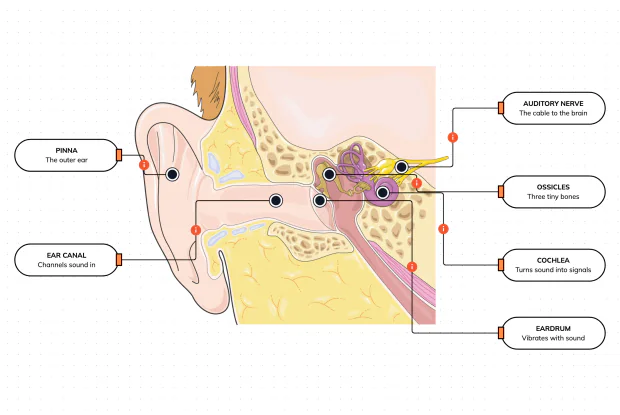
What Are the Parts of Your Ear?
Hearing is a chain of parts passing a sound along, each handing it to the next. Label the pinna, ear canal, eardrum, ossicles, cochlea and auditory nerve, and follow a sound all the way from the air outside to a signal your brain can read — in an interactive playground.
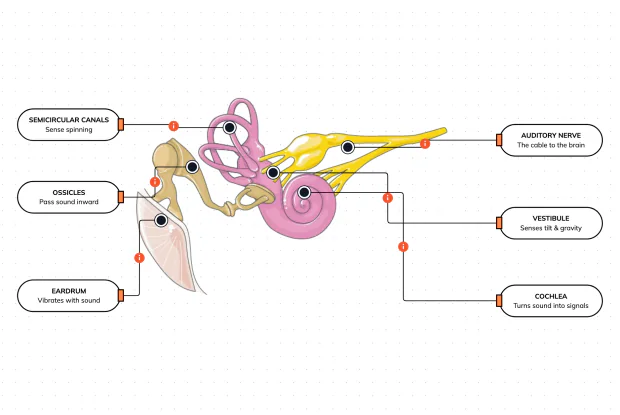
How Does Your Ear Keep You Balanced?
Your ear does a second, hidden job: balance. Inside it sit fluid-filled loops that sense spinning and a chamber that senses tilt and gravity. Label the semicircular canals, vestibule, cochlea, ossicles, eardrum and nerve, and learn how one organ both hears and keeps you upright — in an interactive playground.
What Are the Parts of the Eye You Can See?
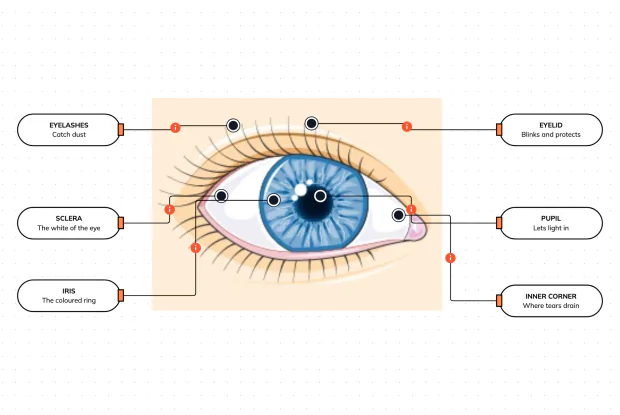
Before you look inside the eye, learn the parts you can already see in a mirror. Label the pupil, iris, sclera, eyelid, eyelashes and the tear-duct corner, and learn what each visible part does to let in light and protect the eye — in an interactive playground.
Where Do Your Tears Come From and Go?
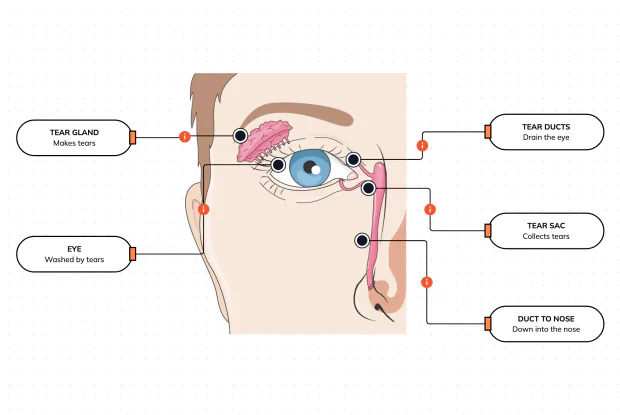
Your eyes make and drain tears all day to stay clean and wet. Label the tear gland, the eye, the tear ducts, the tear sac and the duct to the nose, and follow a tear from where it is made to where it drains — in an interactive playground.
How Does Your Eye Turn Light Into a Picture?
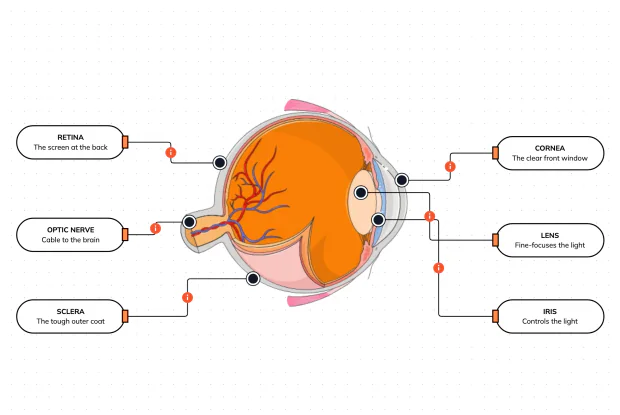
Your eye works like a living camera. Cut it open and label the cornea, lens, iris, retina, optic nerve and sclera, and follow light as it is focused onto a screen at the back of the eye and sent to the brain — in an interactive playground.