What Are the Parts of Your Gallbladder?
Root Concept
The gallbladder is a small pear-shaped sac under the liver that stores and concentrates bile. It has a rounded far end (the fundus), a main body where bile is held, and a narrow neck that tapers to the cystic duct — a two-way tube that carries bile in to be stored and out again when a meal needs it.
CodePLU Goal
Upgrading Human Mental Models
Learn how to think in Workflows

Concept Development By codeplu.com
The gallbladder, each part joined to the job it does — storing bile in the sac and moving it through the cystic duct
What Is the Gallbladder, and Why Is It Shaped Like a Pear?
The gallbladder is a small, soft, pear-shaped bag — only about the size of a small plum — tucked underneath the liver. It has one simple job: to store bile. The liver makes bile all the time, in a slow steady trickle, but you only actually need bile when you eat, and especially when you eat something fatty. So rather than let that steady trickle go to waste, the gallbladder acts as a holding tank, collecting the bile and keeping it ready until a meal calls for it.
Its pear shape has a purpose. The rounded far end is called the fundus, the main middle section is the body, and it tapers at the other end into a narrow neck. This bag shape lets it do two things: hold a useful amount of bile, and squeeze that bile out quickly when needed, like squeezing a soft plastic bottle. While the bile sits inside, the gallbladder also concentrates it — drawing out water so the stored bile becomes stronger and more effective than the fresh bile from the liver.
Leading out of the neck is the cystic duct, a single tube that is the gallbladder's only way in and out. Bile flows in through this duct to be stored, and when you eat, the gallbladder squeezes and pushes the bile back out through the very same duct, on its way to the intestine. In the playground above you will label the fundus, body, neck and cystic duct — and the label on each connection tells you the job that part does.
What Are the Parts of the Gallbladder?
What does the gallbladder do?
The gallbladder stores and concentrates bile. Bile is the greenish juice the liver makes to help digest fat — it breaks large blobs of fat into tiny droplets so they can be absorbed. The catch is that the liver makes bile continuously, but you only need it in bursts, when there is food to digest. The gallbladder solves this timing problem: between meals it collects the liver's steady drip of bile and holds onto it, and while it holds it, it removes water to make the bile more concentrated and powerful. Then, when you eat, it contracts and delivers a strong squirt of bile to the intestine exactly when it is needed. It is essentially a smart storage tank — saving up a slowly-made resource so it can be released all at once on demand.
What are the fundus, body and neck?
These are just the names for the three regions of the pear-shaped sac, from the wide end to the narrow end. The fundus is the rounded, closed far tip — the bottom of the 'pear' — and it is the part that would bulge and be felt through the belly wall if the gallbladder became swollen. The body is the main, widest middle section, and it is where most of the bile is actually stored. The neck is where the sac narrows down at the far end, funnelling toward the exit. Like the head, body and tail of the pancreas, these are not different structures doing different jobs — they are simply handy names for where along the gallbladder you are, from the rounded blind end to the narrow spout.
What is the cystic duct, and why is it a two-way street?
The cystic duct is the narrow tube leading out of the neck of the gallbladder — and it is the gallbladder's only connection to the rest of the bile system. What makes it unusual is that it carries traffic both ways through the same pipe. When bile is being stored, it flows from the liver's ducts backwards up the cystic duct into the gallbladder. Later, when you eat and the gallbladder squeezes, the bile flows back down the cystic duct and onward to the intestine. Most tubes in the body carry flow one way, but the cystic duct is a genuine two-way street, because the gallbladder is a dead-end pouch with a single opening. This also means that if the cystic duct is blocked, the gallbladder is completely cut off — it can neither fill nor empty.
Why do gallstones cause trouble here?
Because the gallbladder concentrates bile, and concentrated bile can sometimes crystallise into hard lumps called gallstones. Often they sit quietly in the body of the gallbladder and cause no problems at all. Trouble starts when the gallbladder contracts after a meal and a stone is pushed toward the exit and jams in the narrow neck or the cystic duct. Now the gallbladder is trying to squeeze but cannot empty, and the pressure builds — causing the intense, gripping pain known as biliary colic, classically felt after a fatty meal (which is exactly when the gallbladder squeezes hardest). This is why the neck and cystic duct are the danger zone: they are the narrowest part of the system, the natural place for a stone to get stuck. A gallbladder that keeps causing this is often simply removed.
Real World Example
Why Do Gallstones Hurt After a Fatty Meal?
The gallbladder is one of the simplest organs, but its shape explains a very common and painful problem. Three features tell the story:
A collapsible storage bag
The body of the gallbladder
The gallbladder's whole usefulness comes from being a soft, squeezable bag. Between meals it relaxes and fills, collecting the liver's steady trickle of bile and concentrating it by drawing out water, so a small bag can hold the useful essence of hours of bile production. Then, when a meal arrives — signalled by hormones released as fatty food enters the intestine — the muscular wall of the bag contracts and squeezes the stored bile out in a strong burst, exactly when it is needed to digest the fat. It is the same principle as a squeezable sauce bottle: store a lot, then deliver a controlled squirt on demand. This fill-and-squeeze cycle is why the gallbladder is most active right after you eat, which becomes important for the next part.
The two-way pipe
The cystic duct
Because the gallbladder is a dead-end pouch, everything must go in and out through the single cystic duct at its neck. When storing, bile backs up this duct into the bag; when emptying, bile is squeezed back down it toward the intestine. This one narrow tube is therefore the busiest and tightest point of the whole gallbladder — and being the narrowest exit, it is exactly where anything solid is most likely to get stuck. A duct that works both ways is elegant for a storage pouch, but it means there is no alternative route: if this single pipe is blocked, the gallbladder is sealed off entirely, unable to fill or empty. That single-exit design sets up the classic gallstone problem.
When a stone jams the neck
The neck and gallstones
Concentrated bile can crystallise into gallstones, which often sit harmlessly in the body of the gallbladder. The pain comes at a very predictable moment: after a fatty meal. That is because a fatty meal is the strongest trigger for the gallbladder to contract — and when it squeezes hard, it can drive a stone into the narrow neck or cystic duct, where it jams. Now the gallbladder is contracting against a blocked exit, pressure builds inside the sealed bag, and the result is the intense, gripping pain of biliary colic, often felt in the upper-right belly and lasting until the stone falls back or passes through. It is a perfect example of anatomy explaining symptoms: the pain's timing, location and character all follow directly from a squeezable bag with one narrow, blockable exit.
FAQs
Final Words
The gallbladder is a small pear-shaped bag under the liver with one clever job: storing bile between meals and squeezing it out when you eat. Its rounded fundus, wide body and narrowing neck make it a collapsible tank, and its single cystic duct is a two-way pipe that lets bile flow in to be stored and back out to be used. While the bile waits inside, the gallbladder concentrates it, so a small bag delivers a powerful, well-timed burst.
That simple design also explains its most common problem: concentrated bile can form gallstones, and the narrow neck and cystic duct are exactly where a stone jams when the bag squeezes after a fatty meal — the cause of biliary colic. The gallbladder rounds out the accessory organs of digestion alongside the liver and pancreas; next the tour follows the food itself onward, into the long and busy small intestine.
Continue This Track
This concept is part 34 of The Human Body, Head to Toe.
What Is a Bone Made Of?
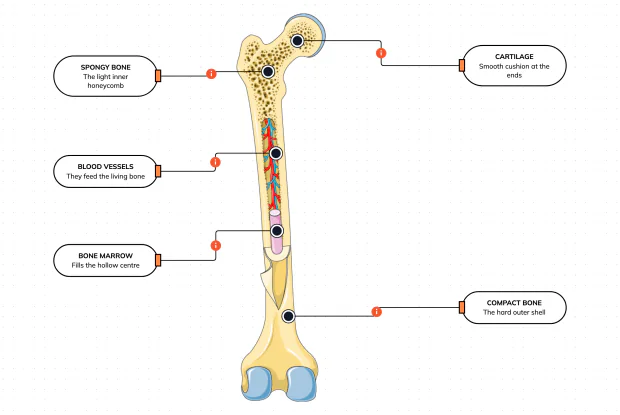
Cut a bone open and it is nowhere near solid: a hard outer shell, a light honeycomb inside, a hollow centre full of marrow, blood vessels threading through, and a smooth cushion at each end. Learn what each part does — then label them yourself in an interactive playground.
What Is Inside Your Elbow Joint?
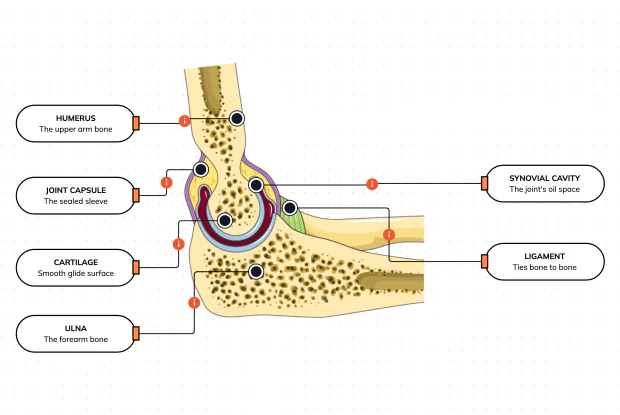
A joint is where two bones meet and move — and it is far more than just the bones. Cut open the elbow and you find smooth cartilage caps, a sealed capsule of slippery fluid, and tough ligaments holding it all together. Learn what each part does, then label them yourself in an interactive playground.
What Makes Your Elbow Bend?
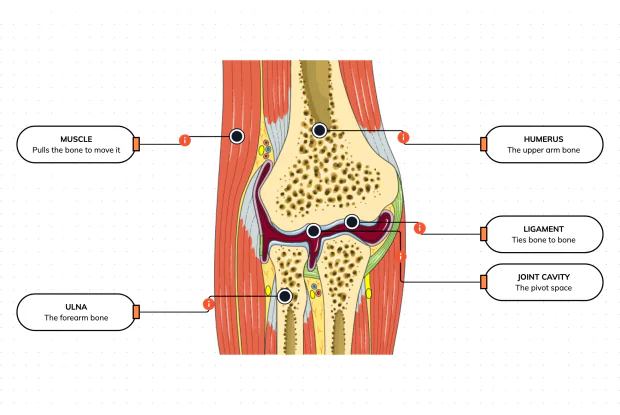
Bones and joints are just the hardware; nothing moves until a muscle pulls. Label the elbow to see the parts that turn a joint into movement — the muscle that pulls, the ligament that holds bone to bone, the two bones it links, and the space they pivot in — then build it yourself in an interactive playground.
What Holds Your Elbow Together?
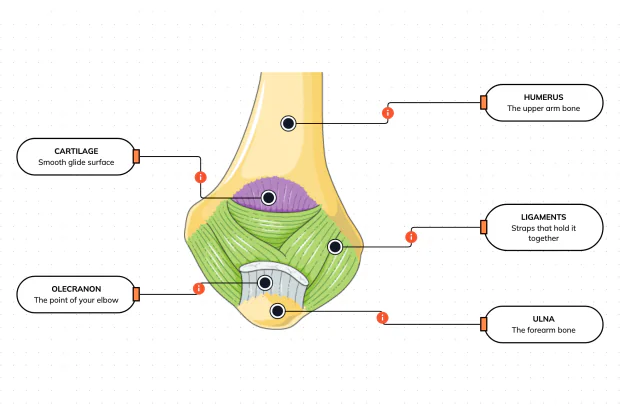
Your elbow is pulled on all day — by gravity, by every bag you carry, by every time you hang or push. So what stops the two bones from simply coming apart? Look at the back of the elbow and label the ligaments, the bony point, the cartilage and the two bones — and learn what holds the whole joint together.
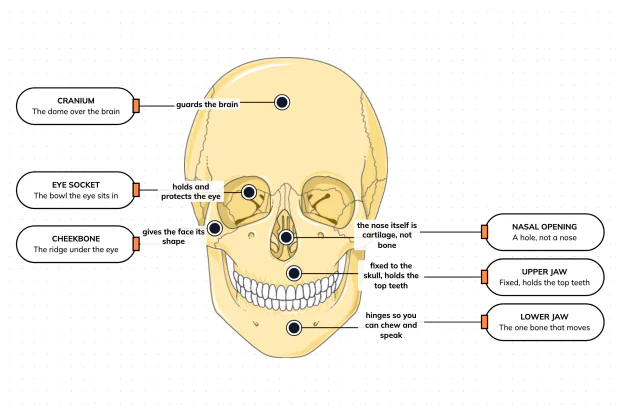
What Are the Main Bones of the Skull?
The skull looks like a single bone, but it is really about twenty-two locked together — with just one left free to move. Learn what each main part does, then label a skull yourself in an interactive playground.
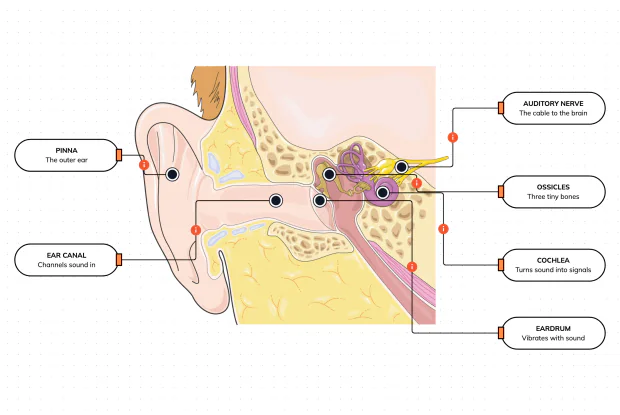
What Are the Parts of Your Ear?
Hearing is a chain of parts passing a sound along, each handing it to the next. Label the pinna, ear canal, eardrum, ossicles, cochlea and auditory nerve, and follow a sound all the way from the air outside to a signal your brain can read — in an interactive playground.
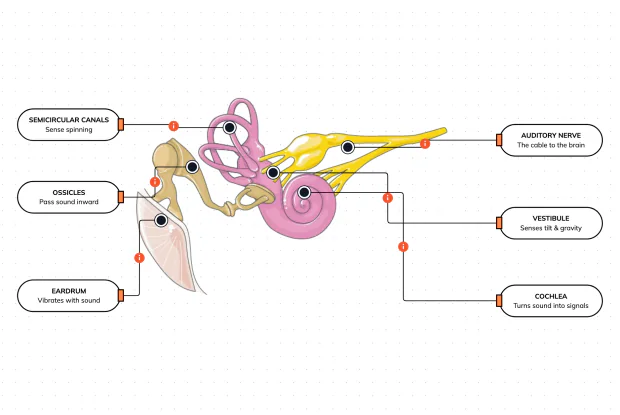
How Does Your Ear Keep You Balanced?
Your ear does a second, hidden job: balance. Inside it sit fluid-filled loops that sense spinning and a chamber that senses tilt and gravity. Label the semicircular canals, vestibule, cochlea, ossicles, eardrum and nerve, and learn how one organ both hears and keeps you upright — in an interactive playground.
What Are the Parts of the Eye You Can See?
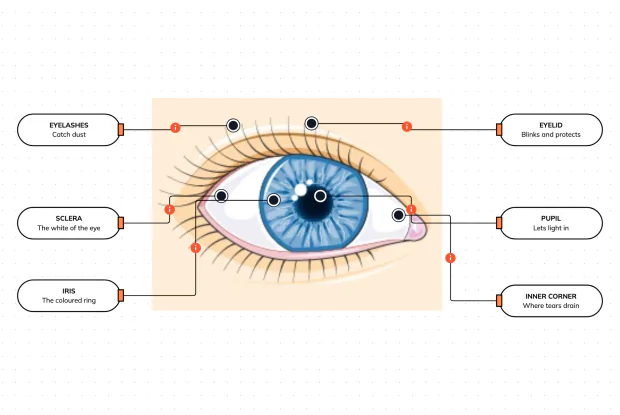
Before you look inside the eye, learn the parts you can already see in a mirror. Label the pupil, iris, sclera, eyelid, eyelashes and the tear-duct corner, and learn what each visible part does to let in light and protect the eye — in an interactive playground.
Where Do Your Tears Come From and Go?
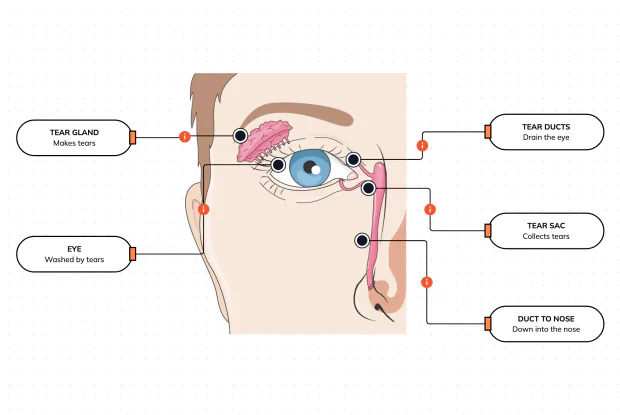
Your eyes make and drain tears all day to stay clean and wet. Label the tear gland, the eye, the tear ducts, the tear sac and the duct to the nose, and follow a tear from where it is made to where it drains — in an interactive playground.
How Does Your Eye Turn Light Into a Picture?
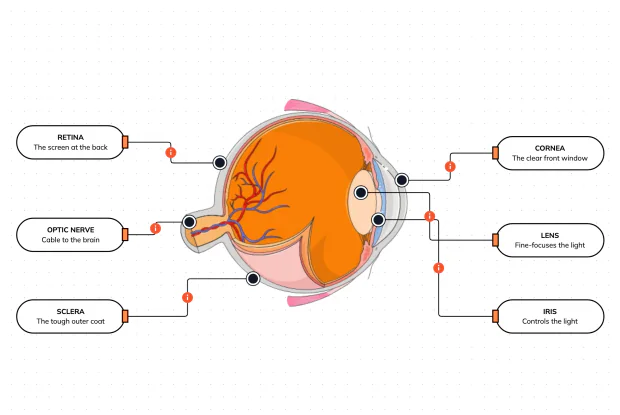
Your eye works like a living camera. Cut it open and label the cornea, lens, iris, retina, optic nerve and sclera, and follow light as it is focused onto a screen at the back of the eye and sent to the brain — in an interactive playground.