What Is an Islet of Langerhans?
Root Concept
An islet of Langerhans is a small ball of hormone-making cells scattered among the pancreas's digestive-juice cells. Its beta cells make insulin, which lowers blood sugar, and its alpha cells make glucagon, which raises it; tiny capillaries carry these hormones into the blood so they can control sugar levels throughout the body.
CodePLU Goal
Upgrading Human Mental Models
Learn how to think in Workflows

Concept Development By codeplu.com
One islet of Langerhans among the pancreas's digestive cells — the hormone island joined to its beta and alpha cells and the blood vessel that carries their hormones away
How Does Your Body Keep Its Blood Sugar Just Right?
Your blood always carries a small amount of sugar, called blood sugar, which your cells burn for energy. After a meal it climbs, because you have just taken in food; between meals it falls, because your body is using it up. Yet it never gets wildly high or dangerously low — something keeps quietly adjusting it, meal after meal, all day and all night. That something lives inside your pancreas.
The pancreas is a long organ behind your stomach, and most of it is busy making digestive juice. But sprinkled all through it are about a million tiny clusters of a completely different kind of cell. Each cluster is called an islet of Langerhans — an 'island' of hormone-making cells surrounded by the sea of digestive cells. These islets are the part of the pancreas that controls your blood sugar.
Inside each islet are two important cell types that work against each other, like a heater and a cooler keeping a room comfortable. Beta cells make insulin, which lowers blood sugar, and alpha cells make glucagon, which raises it. Tiny blood vessels run right through each islet to carry these hormones out to the rest of the body. In the playground you will label the islet, its beta and alpha cells, the digestive cells around it and one of those blood vessels.
How Does an Islet of Langerhans Work?
What is an islet of Langerhans?
The pancreas really does two separate jobs, and it uses two separate kinds of cell to do them. Most of the pancreas is made of acinar cells, arranged in little flower-shaped clusters, and their job is to make digestive juice that flows into the gut to help break down food. Scattered among them are the islets of Langerhans: small round clusters of hormone-making cells, named after the scientist who first spotted them. An islet does not make digestive juice at all. Instead it makes hormones — chemical messengers — and releases them straight into the blood. So the pancreas is really two organs in one place: a digestive-juice factory (the acinar cells) and a hormone factory (the islets), sitting side by side in the same organ.
Insulin and glucagon: two opposite hormones
An islet contains two star players. Beta cells, the most common, make a hormone called insulin. When you eat and your blood sugar rises, insulin is released and tells the body's cells to take sugar out of the blood and store it — so blood sugar comes back down. Alpha cells make the opposite hormone, glucagon. When you have not eaten for a while and blood sugar drops too low, glucagon is released and tells the body to put stored sugar back into the blood — so blood sugar goes back up. Insulin lowers, glucagon raises; between them they keep your blood sugar in a safe, steady range, adjusting it up or down as your day goes on.
How the hormones reach the whole body
A hormone is only useful if it can travel to where it is needed, and blood sugar needs controlling everywhere at once. That is why each islet is threaded with tiny blood vessels called capillaries. When beta cells release insulin or alpha cells release glucagon, the hormone seeps straight into these capillaries and is swept away into the bloodstream, which carries it to every part of the body within minutes. This is the difference between the islets and the digestive cells around them: digestive juice is poured into tubes that lead to the gut, but hormones are poured into the blood. That is why islets sit so close to blood vessels — the blood is their delivery system.
Real World Example
Your Islets at Work Across a Day
The islets are always adjusting your blood sugar behind the scenes. Here are three moments when it matters:
Straight after a big meal
Beta cells release insulin to bring sugar down
When you finish a plate of pasta or a sugary drink, a wave of sugar enters your blood from the food, and your blood sugar shoots up. Your beta cells sense this and release insulin into the blood. Insulin travels around the body and tells your muscles, liver and other cells to soak up the extra sugar and store it away for later. Within an hour or two, your blood sugar has come back down to normal. Without this, the sugar would stay dangerously high in your blood. So that comfortable, satisfied feeling after eating is partly your islets quietly doing their job, tidying away the flood of sugar the meal brought in.
Before breakfast, hours since you last ate
Alpha cells release glucagon to bring sugar up
Overnight, while you sleep, you go many hours without eating, yet your brain and body still need a steady supply of sugar for energy. As your blood sugar starts to dip, your alpha cells step in and release glucagon. Glucagon travels to the liver and tells it to release some of the sugar it stored earlier, topping your blood sugar back up. This is why you can sleep for eight hours and wake up without your blood sugar crashing. Insulin and glucagon are a team of opposites: one puts sugar away when there is too much, the other brings it back out when there is too little, keeping the level steady around the clock.
When the islets need help: diabetes
Too little insulin lets blood sugar stay too high
Diabetes is what happens when this system stops working properly — usually because the beta cells cannot make enough insulin, or the body stops listening to it. Without enough working insulin, sugar cannot be cleared from the blood after meals, so blood sugar stays too high, which over time harms the body. This is why many people with diabetes check their blood sugar and take insulin, either as injections or through a small pump: they are supplying the very hormone that their islets can no longer make in the right amount. Understanding the islets of Langerhans is really understanding what goes wrong in one of the most common diseases in the world.
FAQs
Final Words
An islet of Langerhans is a tiny island of hormone-making cells scattered through the pancreas, separate from the digestive-juice cells around it. Its beta cells make insulin, which lowers blood sugar, and its alpha cells make glucagon, which raises it, while capillaries running through the islet carry those hormones into the blood. Together, working as opposites, they keep your blood sugar steady whether you have just eaten a huge meal or not eaten for hours.
So the pancreas is really two organs sharing one body: a digestive gland and a blood-sugar controller. These little islets are also where one of the world's most common diseases begins — when they cannot make enough insulin, blood sugar climbs too high, and that is diabetes. Tiny as they are, the islets of Langerhans are one of the most important control centres in your whole body.
Continue This Track
This concept is part 42 of The Human Body, Head to Toe.
What Is a Bone Made Of?
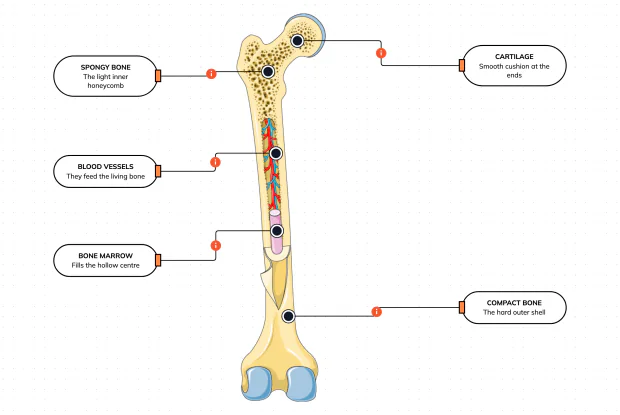
Cut a bone open and it is nowhere near solid: a hard outer shell, a light honeycomb inside, a hollow centre full of marrow, blood vessels threading through, and a smooth cushion at each end. Learn what each part does — then label them yourself in an interactive playground.
What Is Inside Your Elbow Joint?
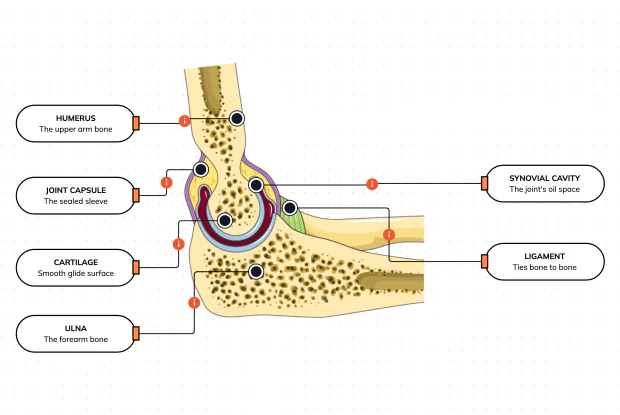
A joint is where two bones meet and move — and it is far more than just the bones. Cut open the elbow and you find smooth cartilage caps, a sealed capsule of slippery fluid, and tough ligaments holding it all together. Learn what each part does, then label them yourself in an interactive playground.
What Makes Your Elbow Bend?
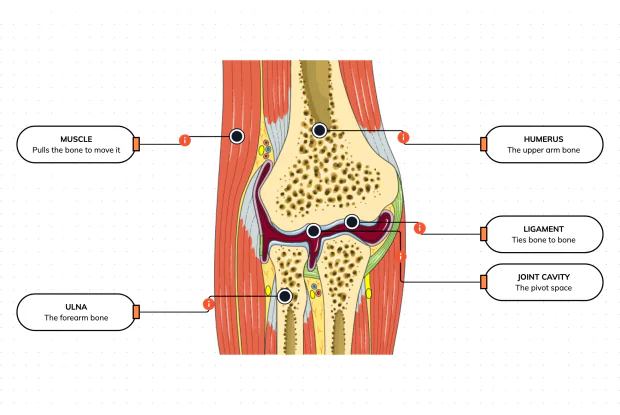
Bones and joints are just the hardware; nothing moves until a muscle pulls. Label the elbow to see the parts that turn a joint into movement — the muscle that pulls, the ligament that holds bone to bone, the two bones it links, and the space they pivot in — then build it yourself in an interactive playground.
What Holds Your Elbow Together?
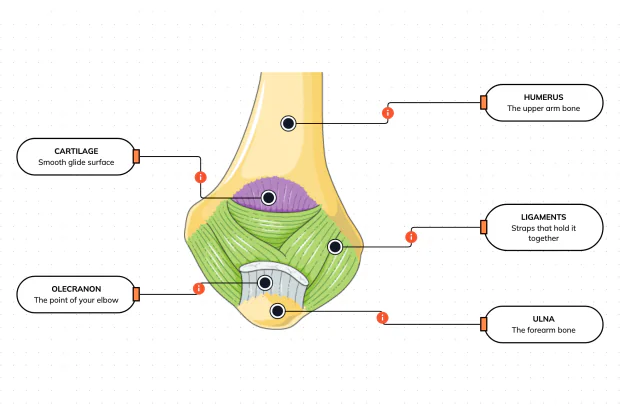
Your elbow is pulled on all day — by gravity, by every bag you carry, by every time you hang or push. So what stops the two bones from simply coming apart? Look at the back of the elbow and label the ligaments, the bony point, the cartilage and the two bones — and learn what holds the whole joint together.
What Are the Main Bones of the Skull?
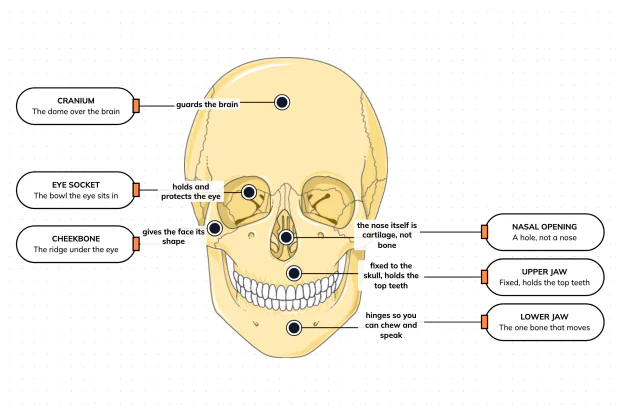
The skull looks like a single bone, but it is really about twenty-two locked together — with just one left free to move. Learn what each main part does, then label a skull yourself in an interactive playground.
What Are the Parts of Your Ear?
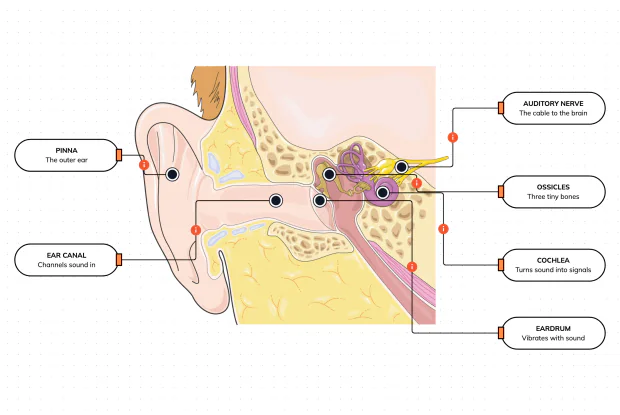
Hearing is a chain of parts passing a sound along, each handing it to the next. Label the pinna, ear canal, eardrum, ossicles, cochlea and auditory nerve, and follow a sound all the way from the air outside to a signal your brain can read — in an interactive playground.
How Does Your Ear Keep You Balanced?
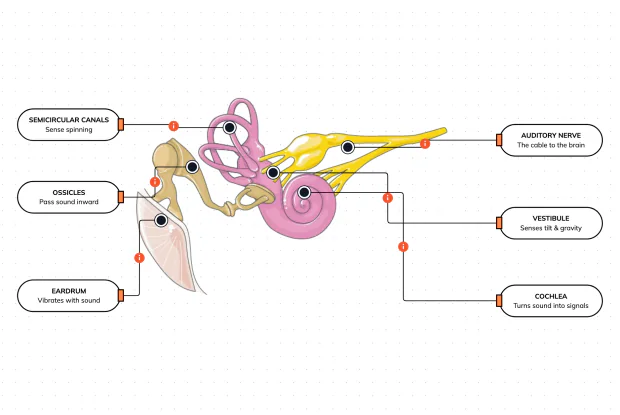
Your ear does a second, hidden job: balance. Inside it sit fluid-filled loops that sense spinning and a chamber that senses tilt and gravity. Label the semicircular canals, vestibule, cochlea, ossicles, eardrum and nerve, and learn how one organ both hears and keeps you upright — in an interactive playground.
What Are the Parts of the Eye You Can See?
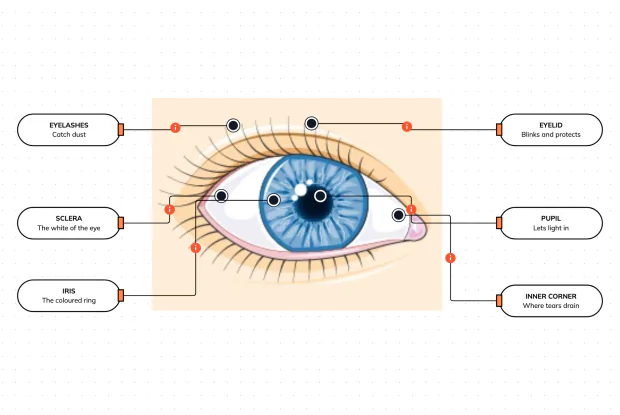
Before you look inside the eye, learn the parts you can already see in a mirror. Label the pupil, iris, sclera, eyelid, eyelashes and the tear-duct corner, and learn what each visible part does to let in light and protect the eye — in an interactive playground.
Where Do Your Tears Come From and Go?
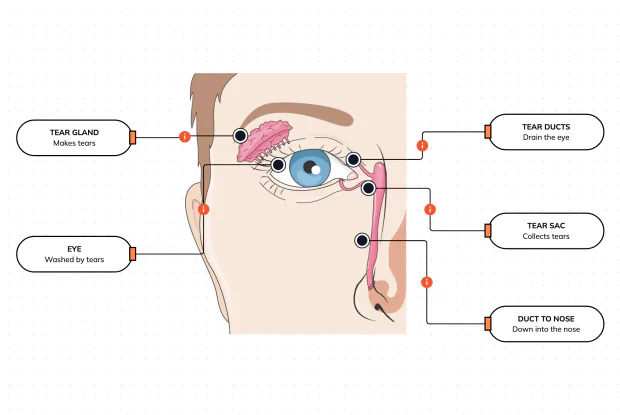
Your eyes make and drain tears all day to stay clean and wet. Label the tear gland, the eye, the tear ducts, the tear sac and the duct to the nose, and follow a tear from where it is made to where it drains — in an interactive playground.
How Does Your Eye Turn Light Into a Picture?
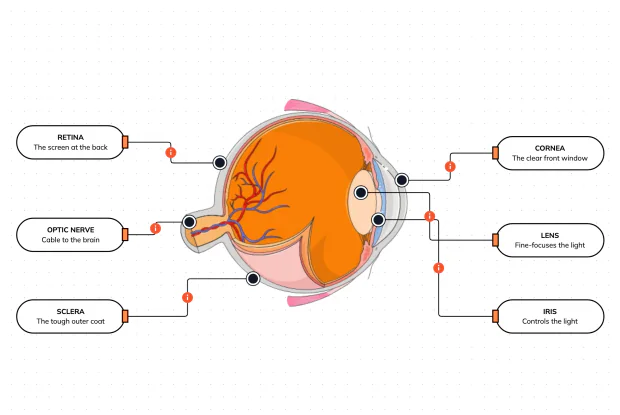
Your eye works like a living camera. Cut it open and label the cornea, lens, iris, retina, optic nerve and sclera, and follow light as it is focused onto a screen at the back of the eye and sent to the brain — in an interactive playground.