How Does a Baby Lie Before Birth?
Root Concept
In late pregnancy a baby usually turns so that its head points down toward the cervix, curled up tightly in a bag of warm fluid inside the muscular uterus. That position lines the widest, firmest part of the baby up with the exit, so that when the cervix opens the head leads the way and the rest of the body follows easily.
CodePLU Goal
Upgrading Human Mental Models
Learn how to think in Workflows

Concept Development By codeplu.com
A baby in the last weeks — head down toward the cervix, curled in fluid, with the placenta high above and the birth canal below
Why Is a Baby Usually Upside Down at the End?
By the last weeks of pregnancy a baby has run out of room. It is curled up tightly — knees drawn in, arms folded, chin tucked toward its chest — floating in a bag of warm fluid inside the uterus. And in about nineteen out of twenty pregnancies it has settled into one particular position: head down, with the top of its skull resting just above the cervix.
That looks upside down to us, but it is the position that makes birth work. The head is the biggest and firmest part of a baby, so if it goes through first it opens the way for the softer, narrower body behind it. Head-first also means the head presses steadily on the cervix, and that pressure is part of what encourages the cervix to open when labour begins.
The side view in the playground shows the whole arrangement at once: the placenta attached high on the uterus wall, the pool of fluid the baby floats in, the thick muscular wall around everything, and below the baby's head the cervix and the birth canal leading out. In the playground you will label each of them and see how the pieces line up for the journey out.
How Does a Baby End Up in This Position?
Does a baby stay head-down the whole time?
No — and this is the misconception worth clearing up first. For most of pregnancy a baby is small compared with the space it has, and it tumbles, rolls and changes position constantly, floating in fluid that makes it nearly weightless. Head-down is not a starting position, it is a finishing one. Somewhere around the end of the seventh or eighth month the baby has grown large enough that turning becomes difficult, and most babies settle head-first at that point, partly because the head is heavy and partly because the curved, roomier top of the uterus suits the bottom and legs better. Once settled, a baby usually stays that way, because there is simply no longer room to turn around.
What is the fluid for?
The baby floats inside a thin bag filled with amniotic fluid — a warm, water-like liquid that does several jobs at once. It cushions bumps, so a knock to the mother's abdomen is absorbed before it reaches the baby. It keeps the temperature even. It gives the baby a frictionless space to kick and stretch in, which is how muscles and joints develop properly. The baby also breathes it in and out and swallows it, which helps the lungs and gut mature. When people say someone's 'waters have broken', this is the bag they mean: it tears at the start of labour and the fluid drains away, a sign that the birth has begun.
What has to happen for the baby to come out?
Two different things, in order. First the cervix — the firm, closed neck at the bottom of the uterus — has to soften and open. Through pregnancy it has stayed shut, sealed with a plug of thick mucus, holding everything in. In labour, waves of contraction from the thick muscular wall of the uterus pull that neck open until it is wide enough for the head. Only then does the second part begin: the same contractions push the baby down through the cervix and along the birth canal, the stretchy passage to the outside. This is why labour feels like two stages — a long one that opens the door, then a shorter one that does the pushing.
Real World Example
Why Midwives Care Which Way Up the Baby Is
The baby's position is felt through the abdomen at every late appointment. Here is what that check is for:
Feeling for the head
Hands on the abdomen, low down
Late in pregnancy a midwife presses gently around the lower abdomen, just above the pubic bone, feeling for something firm and round — the baby's head. A head feels hard and smooth and can be rocked slightly; a bottom feels softer and more irregular, and moves together with the rest of the body. From this alone an experienced midwife can usually tell which way up the baby is lying and how far down it has settled. It costs nothing, takes a minute, needs no machine, and answers the single most important question about how this birth is likely to go. A scan is used only if the feel is unclear.
When the baby is the other way up
Bottom first is called breech
About three or four babies in a hundred are still bottom-first or feet-first at the end, a position called breech. It matters because the widest, firmest part no longer leads: the softer bottom goes through first and may not open the way properly for the head that follows, which makes the birth riskier. So a breech baby changes the plan. Sometimes a doctor will try to turn the baby gently from the outside by pressing on the abdomen, and if that does not work a caesarean birth is often planned instead. None of this is an emergency — it is simply why the position is checked in good time rather than discovered on the day.
What this tells you
Position decides the route
Everything about the end of pregnancy comes back to how the pieces line up: a baby head-down, a placenta high and clear of the exit, a cervix closed but ready to open, and a birth canal below. When all four are as they should be, birth can follow its usual route. When one is not — a breech baby, or a placenta sitting over the cervix — the plan changes to suit it. That is what the late scans and the hands-on checks are really for: not to find something wrong, but to see which route is the safe one for this particular baby.
FAQs
Final Words
By the end of pregnancy a baby is curled up tightly in a bag of warm fluid, and in almost all pregnancies it has turned so its head points down at the cervix. That is not how it spent the whole nine months — it turned late, once it had grown too big to tumble freely — and the position matters because the head is the biggest, firmest part and opening the way with it makes everything that follows easier.
Around the baby, each piece has its place: the placenta high on the wall and clear of the exit, the fluid cushioning every movement, the thick muscular wall ready to contract, and below, the cervix that must open before the birth canal can be used. Seeing how they line up is the clearest way to picture what birth actually involves — and it is why a midwife's hands on the abdomen can tell so much.
Continue This Track
This concept is part 63 of The Human Body, Head to Toe.
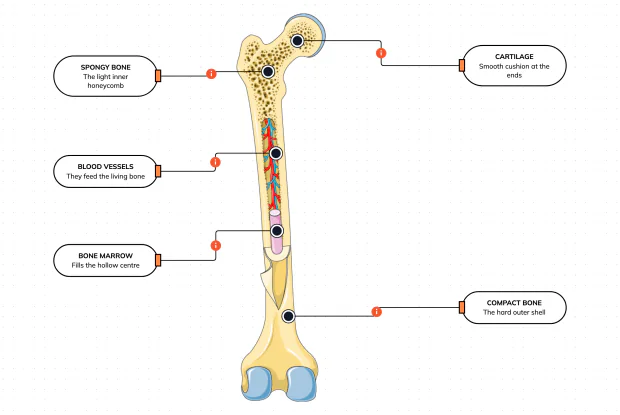
What Is a Bone Made Of?
Cut a bone open and it is nowhere near solid: a hard outer shell, a light honeycomb inside, a hollow centre full of marrow, blood vessels threading through, and a smooth cushion at each end. Learn what each part does — then label them yourself in an interactive playground.
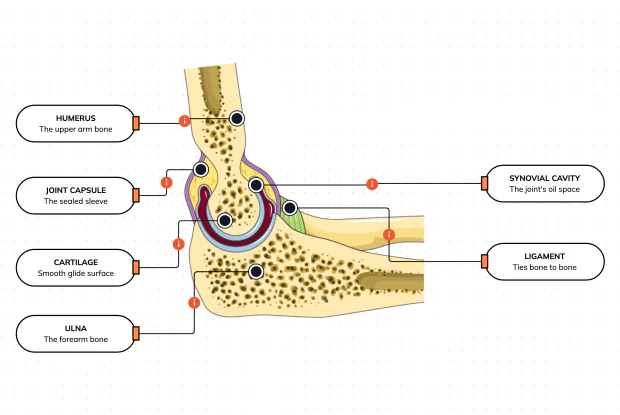
What Is Inside Your Elbow Joint?
A joint is where two bones meet and move — and it is far more than just the bones. Cut open the elbow and you find smooth cartilage caps, a sealed capsule of slippery fluid, and tough ligaments holding it all together. Learn what each part does, then label them yourself in an interactive playground.
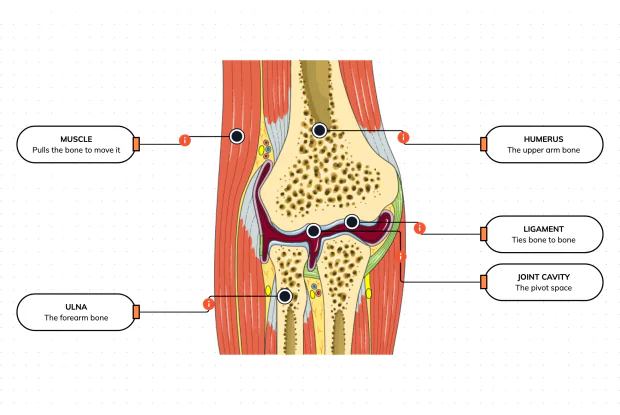
What Makes Your Elbow Bend?
Bones and joints are just the hardware; nothing moves until a muscle pulls. Label the elbow to see the parts that turn a joint into movement — the muscle that pulls, the ligament that holds bone to bone, the two bones it links, and the space they pivot in — then build it yourself in an interactive playground.
What Holds Your Elbow Together?
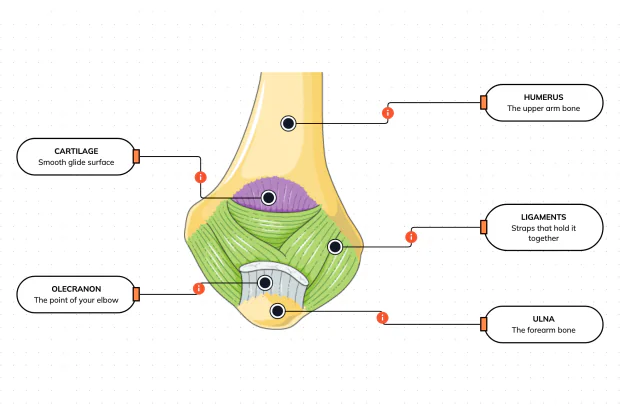
Your elbow is pulled on all day — by gravity, by every bag you carry, by every time you hang or push. So what stops the two bones from simply coming apart? Look at the back of the elbow and label the ligaments, the bony point, the cartilage and the two bones — and learn what holds the whole joint together.
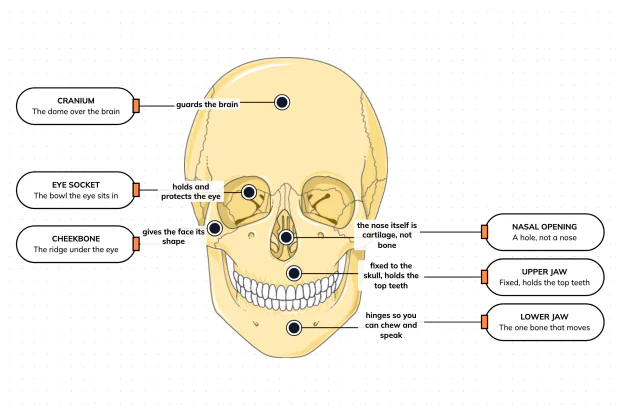
What Are the Main Bones of the Skull?
The skull looks like a single bone, but it is really about twenty-two locked together — with just one left free to move. Learn what each main part does, then label a skull yourself in an interactive playground.
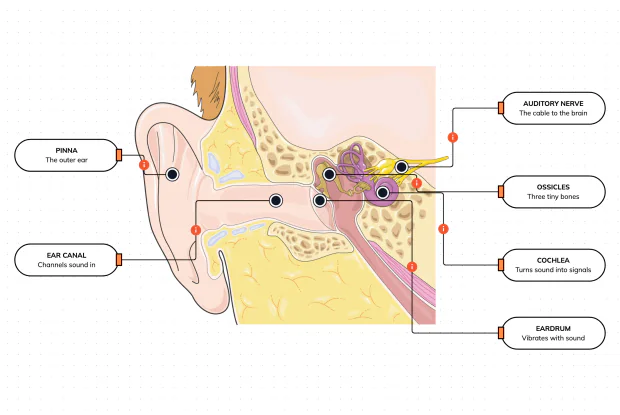
What Are the Parts of Your Ear?
Hearing is a chain of parts passing a sound along, each handing it to the next. Label the pinna, ear canal, eardrum, ossicles, cochlea and auditory nerve, and follow a sound all the way from the air outside to a signal your brain can read — in an interactive playground.
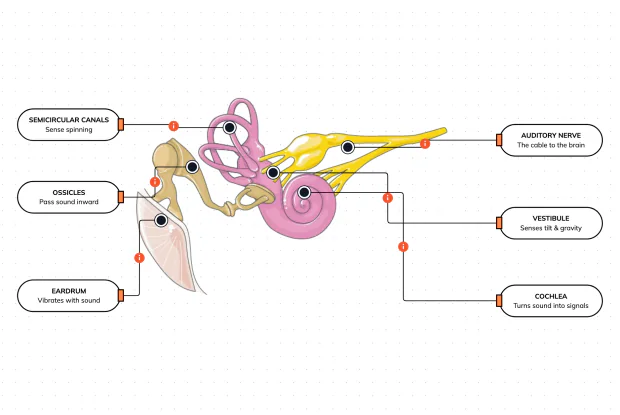
How Does Your Ear Keep You Balanced?
Your ear does a second, hidden job: balance. Inside it sit fluid-filled loops that sense spinning and a chamber that senses tilt and gravity. Label the semicircular canals, vestibule, cochlea, ossicles, eardrum and nerve, and learn how one organ both hears and keeps you upright — in an interactive playground.
What Are the Parts of the Eye You Can See?
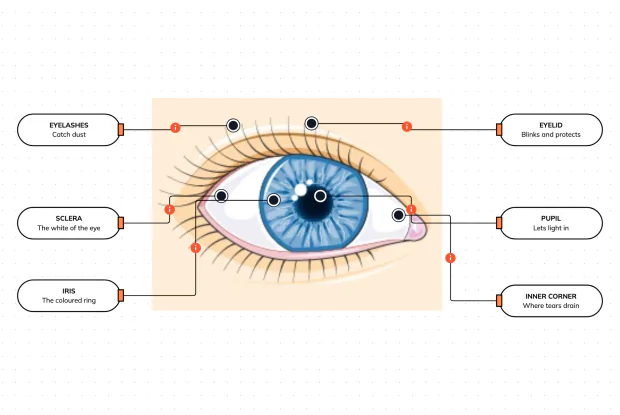
Before you look inside the eye, learn the parts you can already see in a mirror. Label the pupil, iris, sclera, eyelid, eyelashes and the tear-duct corner, and learn what each visible part does to let in light and protect the eye — in an interactive playground.
Where Do Your Tears Come From and Go?
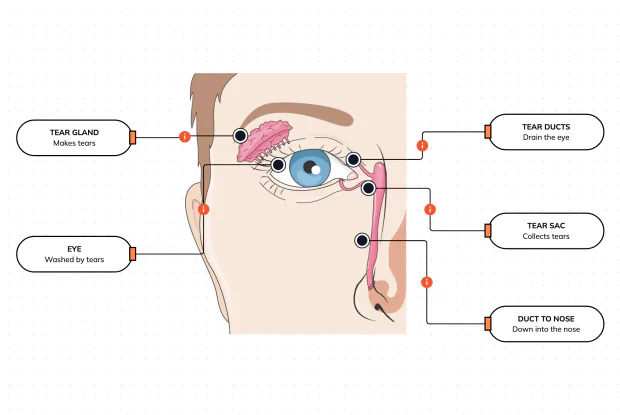
Your eyes make and drain tears all day to stay clean and wet. Label the tear gland, the eye, the tear ducts, the tear sac and the duct to the nose, and follow a tear from where it is made to where it drains — in an interactive playground.
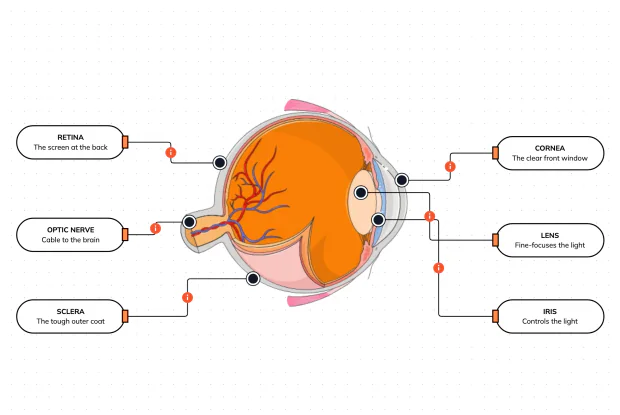
How Does Your Eye Turn Light Into a Picture?
Your eye works like a living camera. Cut it open and label the cornea, lens, iris, retina, optic nerve and sclera, and follow light as it is focused onto a screen at the back of the eye and sent to the brain — in an interactive playground.