What Are the Layers of the Adrenal Gland?
Root Concept
Seen up close, the adrenal gland is built in stacked layers, and each layer makes its own hormone. The cortex has three zones from outside in — glomerulosa (salt and water balance), fasciculata (cortisol, for stress and energy) and reticularis (small amounts of sex hormones) — and beneath them the medulla makes adrenaline.
CodePLU Goal
Upgrading Human Mental Models
Learn how to think in Workflows

Concept Development By codeplu.com
The adrenal gland's stacked layers, each joined to the hormone it makes — from the salt-controlling outer zone to the adrenaline-making core
Why Is the Adrenal Gland Built in Layers?
From a distance, the adrenal gland is a small cap on top of the kidney with an outer cortex and an inner medulla. But zoom in with a microscope and the cortex is not one thing — it is three separate layers, stacked one on top of another like the coats of an onion, each a different colour and, remarkably, each making a different hormone. Below them lies the medulla, a fourth layer with a job of its own.
Working from the outside in, the three cortex layers are the zona glomerulosa, the zona fasciculata and the zona reticularis. The outer glomerulosa controls the balance of salt and water in your body. The thick middle fasciculata makes cortisol, the main stress and energy hormone. The inner reticularis makes small amounts of sex hormones. Then comes the medulla at the core, which makes adrenaline.
So the adrenal gland is really a stack of tiny hormone factories, each layer specialising in its own product. This is a lovely example of how the body organises different jobs into different tissues, right down to the microscopic scale. In the playground you will label the three cortex zones and the medulla, and match each layer to the hormone it makes.
How Are the Layers Arranged?
A gland built in layers
The adrenal gland divides into two big regions — the cortex on the outside and the medulla in the middle — but the cortex itself is split into three thinner layers, called zones. Under a microscope you can actually see them as distinct bands, because the cells in each zone are packed in different patterns: the outer zone in little round clumps, the middle zone in long straight columns, and the inner zone in a criss-cross network. Those patterns even give the zones their Latin names ('glomerulosa' from little balls, 'fasciculata' from bundles or columns, 'reticularis' from a net). What makes this more than a curiosity is that each band makes a different hormone. The gland has sorted its jobs by layer, so where a cell sits decides what it produces.
The three cortex zones
Start at the outside. The zona glomerulosa is the thin outer layer, and it makes a hormone that controls the balance of salt and water in your body, which in turn helps set your blood pressure. Next in is the zona fasciculata, the thickest of the three, made of neat columns of cells; it makes cortisol, the body's main stress-and-energy hormone that helps you wake up, handle pressure and manage how you use fuel. The innermost cortex layer is the zona reticularis, which makes small amounts of sex hormones that add to those made by the other glands. Three layers, three products: salt-and-water balance on the outside, cortisol in the middle, a little of the sex hormones on the inside.
The medulla at the core
Beneath all three cortex zones lies the medulla, the very centre of the gland. It is not part of the cortex and does not make steroid hormones at all; instead it makes adrenaline, the fast 'fight or flight' hormone. The medulla is also controlled differently: while the cortex zones are switched on by slow chemical signals from other glands, the medulla is wired directly to the nervous system, so it can fire adrenaline in a flash. This is why it makes sense to think of the adrenal gland as a slow outer shell wrapped around a fast inner core. Four layers in all — three steady cortex zones and one lightning-fast medulla — each doing its own job in its own way.
Real World Example
What Each Layer Does for You
Each layer's hormone has a real, everyday effect. Here is what three of them do:
Keeping your salt and water balanced
The outer zona glomerulosa
Your body has to hold on to the right amount of salt and water, or your blood pressure would swing dangerously. The outer layer of the cortex, the zona glomerulosa, makes the hormone that manages this. When your body needs to keep more salt and water — say on a hot day when you have sweated a lot — this hormone tells the kidneys to hold on to them, which keeps your blood pressure steady. It works quietly in the background, and you never notice it unless it goes wrong. It is a neat example of the outermost, thinnest layer of the gland quietly guarding one of the body's most basic balances.
Waking up and handling stress
The middle zona fasciculata makes cortisol
The thick middle layer, the zona fasciculata, makes cortisol, and you feel its rhythm every day. Cortisol naturally rises in the early morning to help you wake up and get your body ready, then falls through the day and is lowest at night. It also climbs when you face a longer stress — an exam week, an illness, a hard training session — releasing energy and helping you cope. This is different from the quick jolt of adrenaline: cortisol is the slow, steady stress hormone that carries you through hours and days. So the biggest layer of the cortex is behind both your morning get-up-and-go and your body's response to lasting pressure.
The core's instant response
The medulla makes adrenaline
At the very centre, the medulla makes adrenaline, and its effect is the opposite of slow. When you are startled or in danger, the medulla dumps adrenaline into the blood in under a second, racing your heart, sharpening your senses and pushing energy to your muscles. Because the medulla is wired straight to the nervous system, it does not wait for chemical signals like the cortex does — it fires the moment the brain says 'danger'. So within one small gland you have the slow, steady cortex layers handling salt, stress and sex hormones, and a fast core delivering the emergency burst. Layer by layer, the adrenal gland covers timescales from days down to a single second.
FAQs
Final Words
Zoom in on the adrenal gland and it becomes a stack of layers, each making its own hormone. The three cortex zones, from outside in, are the glomerulosa (salt and water balance), the fasciculata (cortisol, for stress and energy) and the reticularis (small amounts of sex hormones). Beneath them the medulla forms the core and makes adrenaline. Where a cell sits in the stack decides what it produces.
It is a striking piece of body design: one small gland, sorted into microscopic bands, covering jobs from steady salt balance to the morning rise of cortisol to a split-second burst of adrenaline. From the whole organ down to its individual layers, the adrenal gland shows how the body organises very different jobs into very different tissues — right down to the smallest scale.
Continue This Track
This concept is part 44 of The Human Body, Head to Toe.
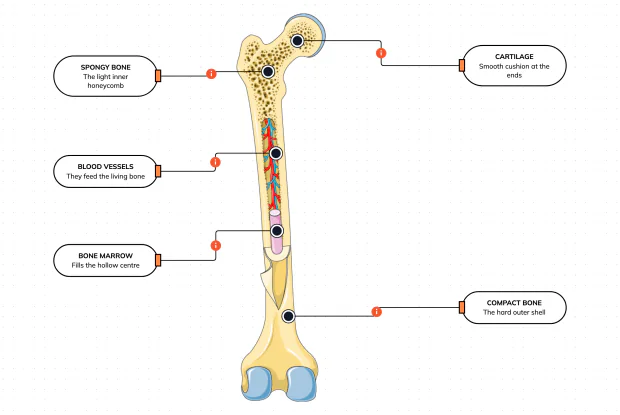
What Is a Bone Made Of?
Cut a bone open and it is nowhere near solid: a hard outer shell, a light honeycomb inside, a hollow centre full of marrow, blood vessels threading through, and a smooth cushion at each end. Learn what each part does — then label them yourself in an interactive playground.
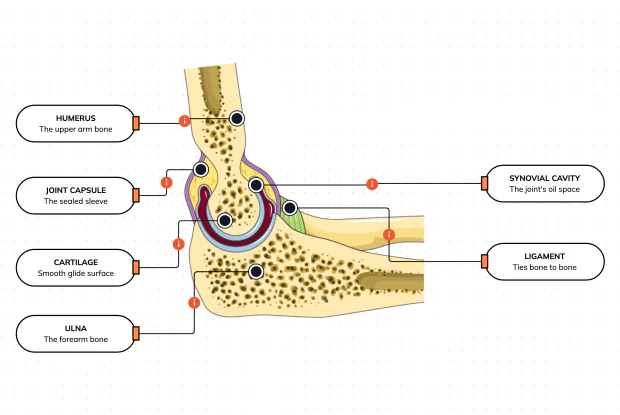
What Is Inside Your Elbow Joint?
A joint is where two bones meet and move — and it is far more than just the bones. Cut open the elbow and you find smooth cartilage caps, a sealed capsule of slippery fluid, and tough ligaments holding it all together. Learn what each part does, then label them yourself in an interactive playground.
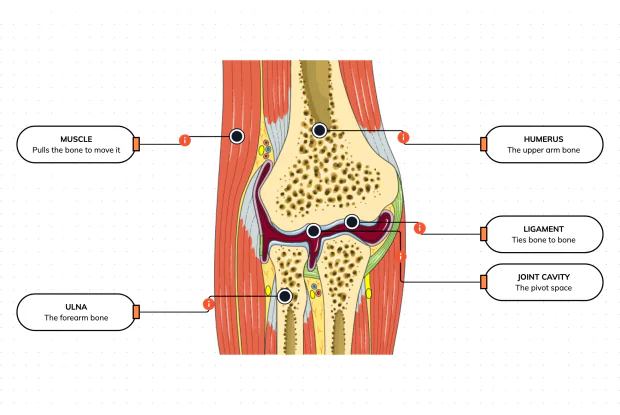
What Makes Your Elbow Bend?
Bones and joints are just the hardware; nothing moves until a muscle pulls. Label the elbow to see the parts that turn a joint into movement — the muscle that pulls, the ligament that holds bone to bone, the two bones it links, and the space they pivot in — then build it yourself in an interactive playground.
What Holds Your Elbow Together?
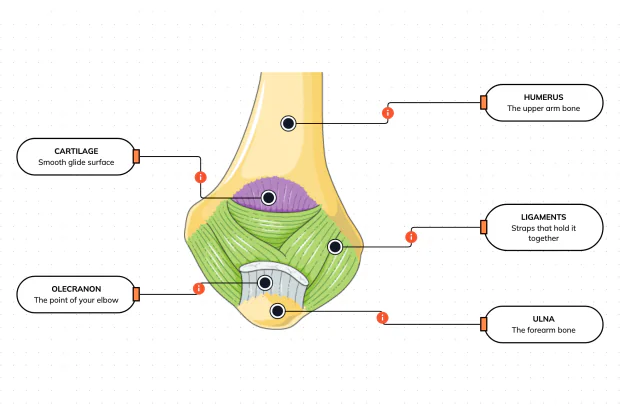
Your elbow is pulled on all day — by gravity, by every bag you carry, by every time you hang or push. So what stops the two bones from simply coming apart? Look at the back of the elbow and label the ligaments, the bony point, the cartilage and the two bones — and learn what holds the whole joint together.
What Are the Main Bones of the Skull?
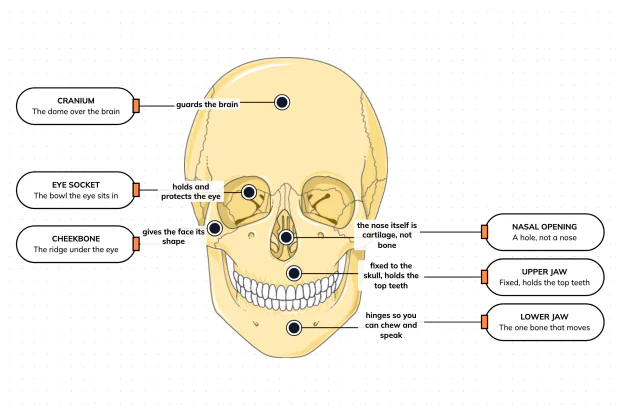
The skull looks like a single bone, but it is really about twenty-two locked together — with just one left free to move. Learn what each main part does, then label a skull yourself in an interactive playground.
What Are the Parts of Your Ear?
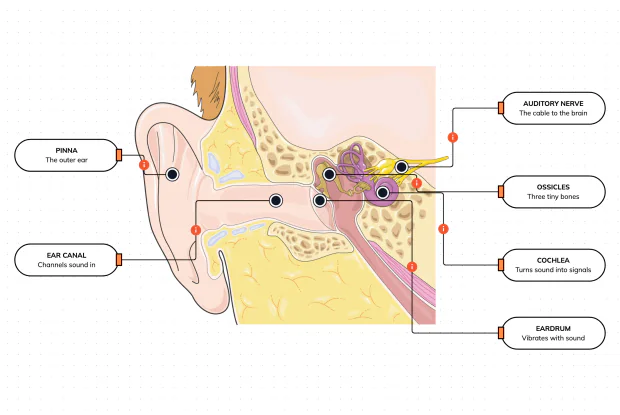
Hearing is a chain of parts passing a sound along, each handing it to the next. Label the pinna, ear canal, eardrum, ossicles, cochlea and auditory nerve, and follow a sound all the way from the air outside to a signal your brain can read — in an interactive playground.
How Does Your Ear Keep You Balanced?
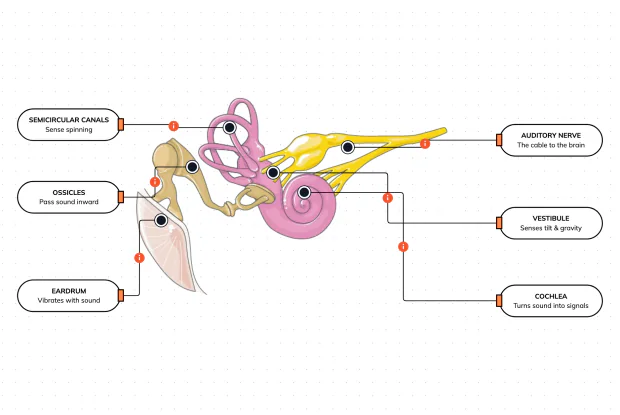
Your ear does a second, hidden job: balance. Inside it sit fluid-filled loops that sense spinning and a chamber that senses tilt and gravity. Label the semicircular canals, vestibule, cochlea, ossicles, eardrum and nerve, and learn how one organ both hears and keeps you upright — in an interactive playground.
What Are the Parts of the Eye You Can See?
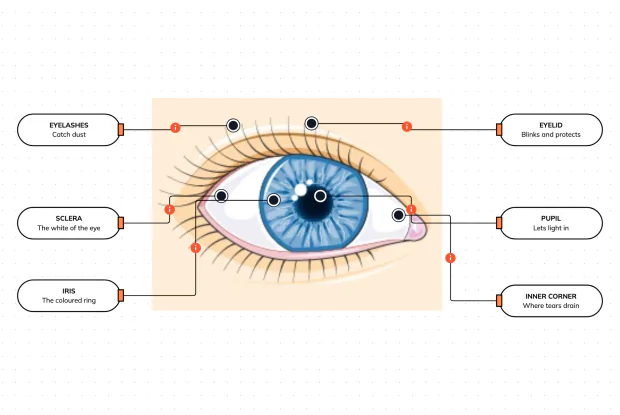
Before you look inside the eye, learn the parts you can already see in a mirror. Label the pupil, iris, sclera, eyelid, eyelashes and the tear-duct corner, and learn what each visible part does to let in light and protect the eye — in an interactive playground.
Where Do Your Tears Come From and Go?
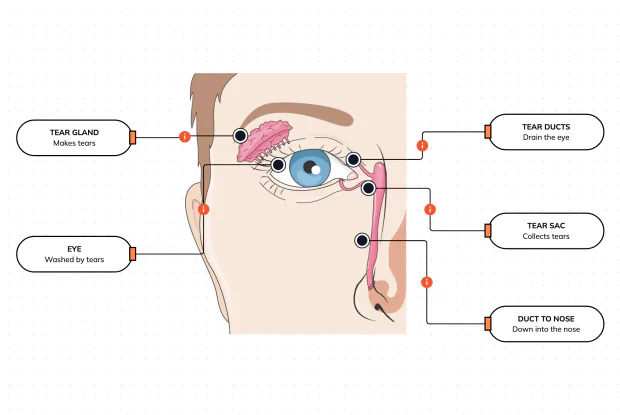
Your eyes make and drain tears all day to stay clean and wet. Label the tear gland, the eye, the tear ducts, the tear sac and the duct to the nose, and follow a tear from where it is made to where it drains — in an interactive playground.
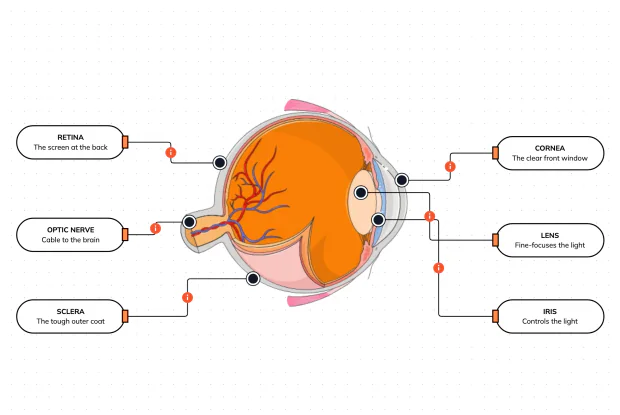
How Does Your Eye Turn Light Into a Picture?
Your eye works like a living camera. Cut it open and label the cornea, lens, iris, retina, optic nerve and sclera, and follow light as it is focused onto a screen at the back of the eye and sent to the brain — in an interactive playground.