What Are the Parts of a Kidney?
Root Concept
A kidney filters the blood and makes urine. Its outer working layer is the cortex, wrapped in a thin capsule; inside are cone-shaped renal pyramids that funnel urine into the central renal pelvis, from which the ureter carries the urine down to the bladder.
CodePLU Goal
Upgrading Human Mental Models
Learn how to think in Workflows

Concept Development By codeplu.com
A kidney cut in half — the outer cortex under its capsule, the cone-shaped pyramids, the central pelvis, and the ureter that carries urine away
How Does Your Body Clean Its Own Blood?
As your body works, it makes waste — leftover bits from the food you burn for energy and the everyday chemistry of your cells. That waste ends up in your blood, and if it just built up there it would make you very ill. So your body has a pair of built-in cleaning machines that filter the blood over and over, all day long: your kidneys.
You have two kidneys, one on each side of your back, each about the size of a fist and shaped like a bean. Blood flows into each kidney, gets cleaned, and flows back out — while the waste, along with extra water, is turned into a liquid called urine. In fact your kidneys filter all the blood in your body many times a day, keeping it clean and balanced without you ever noticing.
If you cut a kidney in half, you can see how it is built for this job. A thin capsule wraps the outside. Just inside is the cortex, where the filtering happens. Deeper in are cone-shaped renal pyramids that funnel the urine toward a central space, the renal pelvis, which collects it. From there a tube called the ureter carries the urine down to the bladder. In the playground you will label each of these parts.
How Does a Kidney Work?
What does a kidney do?
A kidney is a filter for your blood. Blood arriving from the body is full of useful things — water, salts, sugar — but also waste that needs removing. As the blood passes through millions of tiny filters packed inside the kidney, the waste and some extra water are separated out to become urine, while the clean blood, keeping the things the body still needs, flows back into circulation. Your two kidneys do this constantly, filtering your entire blood supply many times every day. They also decide how much water to keep or get rid of, which is why you make more pale urine when you drink a lot and less dark urine when you are thirsty. In short, the kidneys keep your blood clean and your body's water and salts balanced.
The parts of a kidney, from outside in
Cutting a kidney in half reveals neat layers. The very outside is wrapped in a thin, tough capsule that protects the organ, like the skin on a bean. Just inside the capsule is the cortex, the pale outer layer where most of the filtering takes place — this is where urine begins. Deeper inside are the renal pyramids, cone-shaped bundles of tiny tubes that gather the finished urine and funnel it inward, all pointing toward the centre. At the centre is a hollow, funnel-shaped space called the renal pelvis, which catches the urine draining out of the pyramids. And leaving the kidney from that central funnel is the ureter, the tube that carries the urine onward. Outside in, it is capsule, cortex, pyramids, pelvis, ureter — a filter with a built-in drain.
Where the urine goes next
The kidney does not store urine; it keeps making it, a drip at a time, all day. Once urine collects in the renal pelvis, it flows into the ureter, a long thin tube that runs down from each kidney to the bladder. There are two ureters, one from each kidney, and they gently squeeze the urine downward so it keeps moving even though you are standing up. The urine then empties into the bladder, a stretchy bag that stores it until you are ready to go to the toilet. So the kidneys are the start of a simple one-way system: blood is cleaned in the kidney, urine collects in the pelvis, the ureter carries it to the bladder, and later it leaves the body. Understanding the kidney is understanding the very first step of that journey.
Real World Example
Where Do You Notice Your Kidneys?
Your kidneys are silent workers, yet the signs of their work are everywhere. Here are three:
The colour of your urine
Pale means well-watered, dark means thirsty
One of the clearest signs your kidneys are working is right there in the toilet. When you drink plenty of water, your kidneys can afford to pass out the extra, so your urine is plentiful and pale. When you have not had much to drink, your kidneys hold on to water to keep your body topped up, so your urine is smaller in amount and darker in colour. This is your kidneys balancing your body's water minute by minute, deciding how much to keep and how much to let go. So the colour of your pee is a quick, honest report card on both how hydrated you are and how hard your kidneys are working to keep you balanced.
Why we drink water
Water helps the kidneys flush waste away
Ever been told to drink water when you are unwell? There is kidney science behind it. The kidneys use water to flush dissolved waste out of the blood as urine. If there is too little water, that waste becomes very concentrated, which can be uncomfortable and, over time, can help form painful kidney stones — small hard lumps that build up inside the kidney. Drinking enough water keeps the urine dilute and flowing, helping the kidneys wash waste away smoothly. This is why staying hydrated is not just about not feeling thirsty; it is about giving your two hard-working filters the water they need to do their job cleanly.
When kidneys need help: dialysis
A machine can filter blood when kidneys can't
Because clean blood is so vital, doctors have built a machine that can do the kidneys' job when they fail. It is called a dialysis machine, and it works by taking a person's blood out a little at a time, filtering the waste and extra water out of it, and returning the clean blood to the body — exactly what healthy kidneys do inside. People whose kidneys no longer work often go for dialysis several times a week to stay well while they wait for treatment or a kidney transplant. The fact that we had to build a whole machine to copy the kidney shows just how important, and how remarkable, this fist-sized filter really is.
FAQs
Final Words
A kidney is your body's blood filter. Wrapped in a thin capsule, its outer cortex cleans the blood and makes urine, cone-shaped pyramids funnel that urine inward to the central renal pelvis, and the ureter carries it away to the bladder. You have two of these fist-sized organs, quietly filtering your entire blood supply many times a day and balancing your water and salts.
You can see their work in something as simple as the colour of your pee, and their importance in the fact that doctors built a whole machine — dialysis — to copy them when they fail. The kidney is the start of the urinary journey: from here, the urine travels down the ureter to the bladder, the stretchy bag that stores it until you are ready to go.
Continue This Track
This concept is part 47 of The Human Body, Head to Toe.
What Is a Bone Made Of?
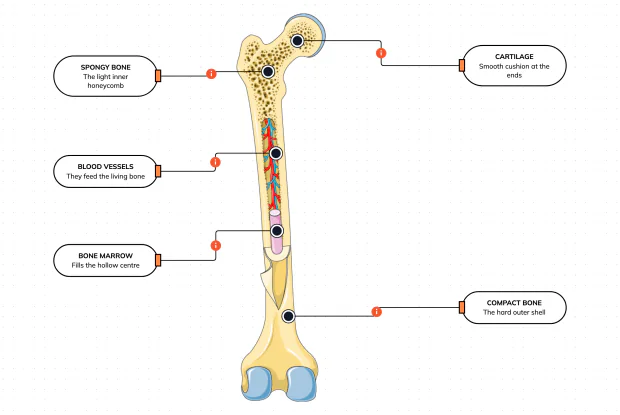
Cut a bone open and it is nowhere near solid: a hard outer shell, a light honeycomb inside, a hollow centre full of marrow, blood vessels threading through, and a smooth cushion at each end. Learn what each part does — then label them yourself in an interactive playground.
What Is Inside Your Elbow Joint?
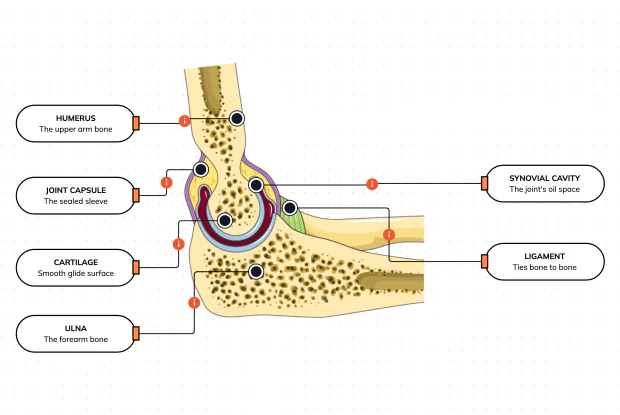
A joint is where two bones meet and move — and it is far more than just the bones. Cut open the elbow and you find smooth cartilage caps, a sealed capsule of slippery fluid, and tough ligaments holding it all together. Learn what each part does, then label them yourself in an interactive playground.
What Makes Your Elbow Bend?
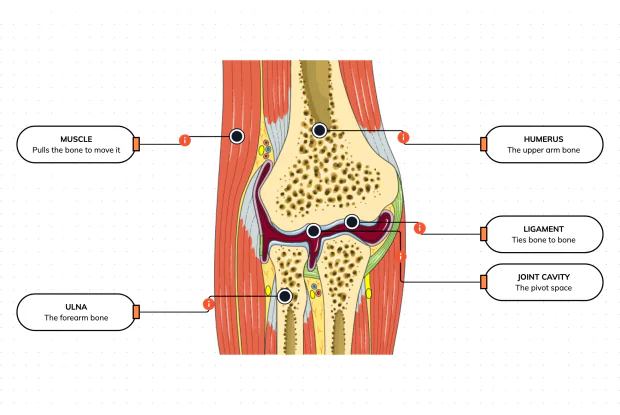
Bones and joints are just the hardware; nothing moves until a muscle pulls. Label the elbow to see the parts that turn a joint into movement — the muscle that pulls, the ligament that holds bone to bone, the two bones it links, and the space they pivot in — then build it yourself in an interactive playground.
What Holds Your Elbow Together?
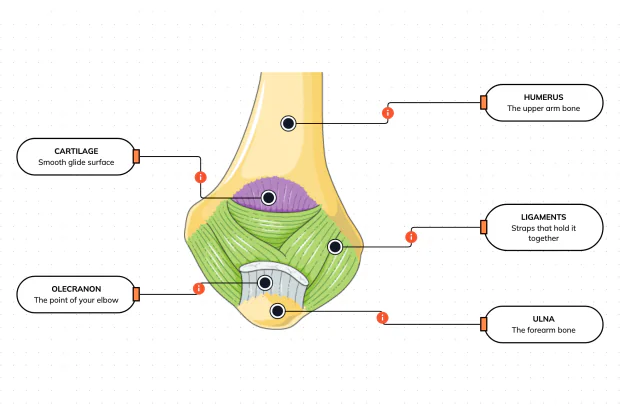
Your elbow is pulled on all day — by gravity, by every bag you carry, by every time you hang or push. So what stops the two bones from simply coming apart? Look at the back of the elbow and label the ligaments, the bony point, the cartilage and the two bones — and learn what holds the whole joint together.
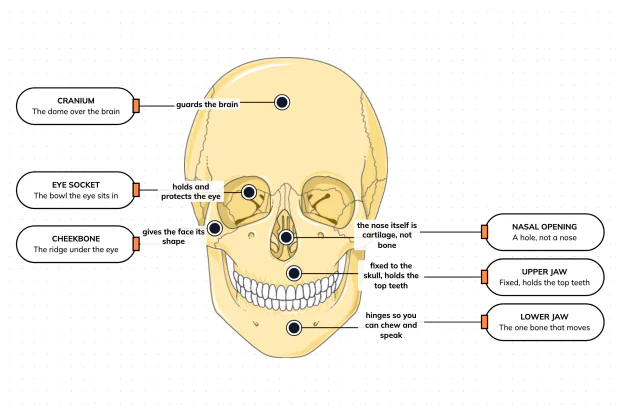
What Are the Main Bones of the Skull?
The skull looks like a single bone, but it is really about twenty-two locked together — with just one left free to move. Learn what each main part does, then label a skull yourself in an interactive playground.
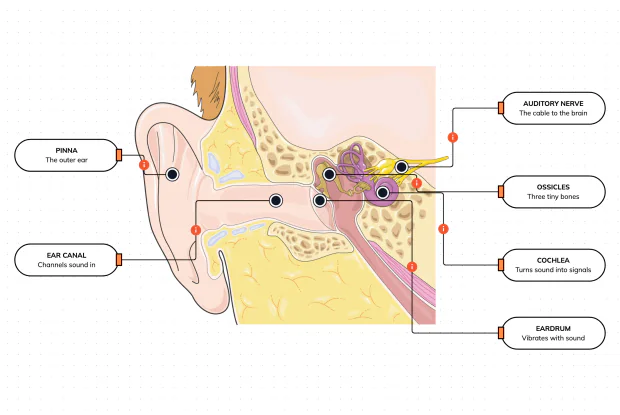
What Are the Parts of Your Ear?
Hearing is a chain of parts passing a sound along, each handing it to the next. Label the pinna, ear canal, eardrum, ossicles, cochlea and auditory nerve, and follow a sound all the way from the air outside to a signal your brain can read — in an interactive playground.
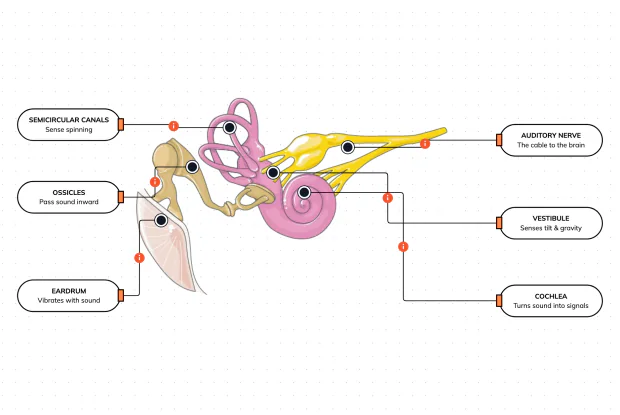
How Does Your Ear Keep You Balanced?
Your ear does a second, hidden job: balance. Inside it sit fluid-filled loops that sense spinning and a chamber that senses tilt and gravity. Label the semicircular canals, vestibule, cochlea, ossicles, eardrum and nerve, and learn how one organ both hears and keeps you upright — in an interactive playground.
What Are the Parts of the Eye You Can See?
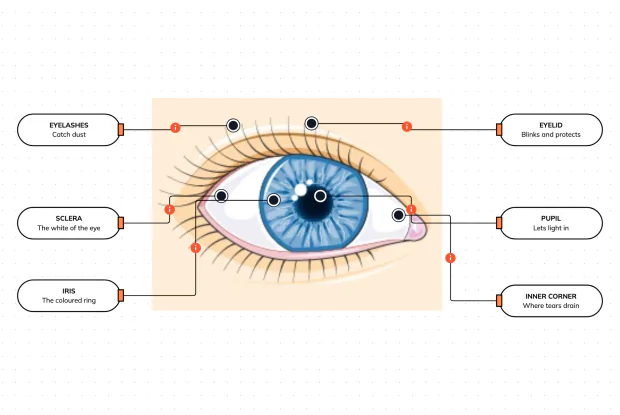
Before you look inside the eye, learn the parts you can already see in a mirror. Label the pupil, iris, sclera, eyelid, eyelashes and the tear-duct corner, and learn what each visible part does to let in light and protect the eye — in an interactive playground.
Where Do Your Tears Come From and Go?
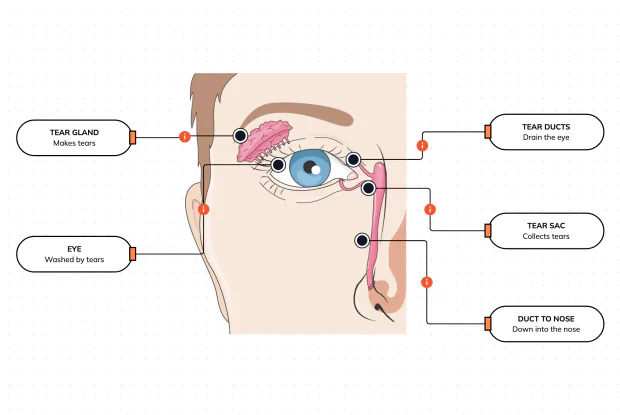
Your eyes make and drain tears all day to stay clean and wet. Label the tear gland, the eye, the tear ducts, the tear sac and the duct to the nose, and follow a tear from where it is made to where it drains — in an interactive playground.
How Does Your Eye Turn Light Into a Picture?
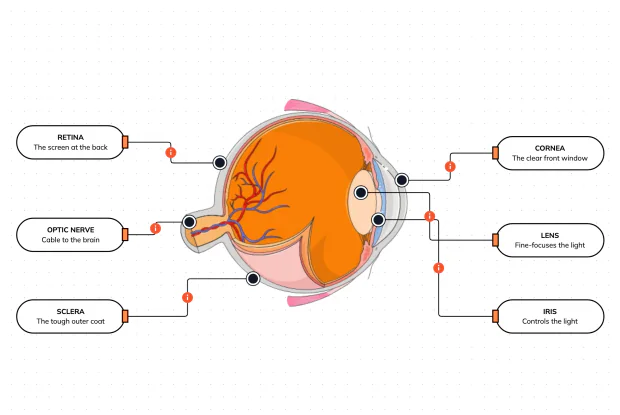
Your eye works like a living camera. Cut it open and label the cornea, lens, iris, retina, optic nerve and sclera, and follow light as it is focused onto a screen at the back of the eye and sent to the brain — in an interactive playground.