What Is a Nephron?
Root Concept
A nephron is the microscopic filtering unit of the kidney, and each kidney has about a million of them. Blood is filtered at the glomerulus, the fluid passes into the renal tubule and loop of Henle where useful water and nutrients are reclaimed by surrounding capillaries, and the finished urine drains into a collecting duct.
CodePLU Goal
Upgrading Human Mental Models
Learn how to think in Workflows

Concept Development By codeplu.com
One nephron, the kidney's microscopic filter — the glomerulus where blood is filtered, the tubule and loop that reclaim water, and the duct that carries urine away
What Actually Does the Filtering Inside a Kidney?
A kidney filters your blood — but if you zoom in, the kidney itself is not one big filter. It is built from about a million tiny filtering machines packed together, and each one is called a nephron. All the real work of cleaning blood and making urine happens inside these microscopic units, over and over, a million times at once.
One nephron works like a little processing line. It starts with the glomerulus, a tiny knot of blood vessels where blood is squeezed and its watery part, carrying waste, is pushed out to be filtered. That fluid then travels along a long, winding tube called the renal tubule, which includes a deep U-shaped dip called the loop of Henle. As the fluid flows, capillaries wrapped around the tube take back the water, sugar and salts your body still needs.
By the end of the journey, what is left is urine, and it drains into a collecting duct that carries it away toward the centre of the kidney. In the playground you will label the glomerulus, the tubule, the loop of Henle, the collecting duct and the capillaries — the five parts that turn a stream of blood into a drop of urine.
How Does a Nephron Work?
Filtering the blood: the glomerulus
Every nephron begins at a glomerulus, a tiny tangled knot of blood vessels shaped like a ball of wool. Blood is pushed into this knot under pressure, and the walls of the vessels act like an incredibly fine sieve: the watery part of the blood, carrying dissolved waste, salts and sugar, is squeezed out, while the blood cells and large proteins are too big to pass and stay behind in the blood. The fluid that gets squeezed out is not urine yet — it still contains plenty of things the body wants to keep. But this first step, filtering at the glomerulus, is where the whole process starts. Multiply it by a million glomeruli working at once, and you have a kidney filtering the entire bloodstream, again and again, all day.
Reclaiming the good stuff: the tubule and loop
The fluid squeezed out at the glomerulus flows into a long, winding tube called the renal tubule, which loops deep down in a U-shape known as the loop of Henle before winding on. This tube is where the nephron gets clever. Wrapped tightly around it are capillaries — the smallest blood vessels — and as the fluid travels along, these capillaries take back everything the body still needs: most of the water, all the useful sugar, and the right amount of salts. The loop of Henle especially helps reclaim water, which is why you do not lose litres of it every hour. So the tubule is a careful sorting stage: it started with useful things mixed in with the waste, and step by step it returns the good stuff to the blood, leaving the waste behind.
What's left: urine to the collecting duct
By the time the fluid has finished travelling through the tubule and loop, almost everything worth keeping has been reclaimed by the capillaries, and what remains is urine — mostly water plus the body's dissolved waste. This urine drains out of the nephron into a collecting duct, a wider tube that gathers urine from many nephrons at once and carries it toward the centre of the kidney, into the renal pelvis, and onward down the ureter. So a single nephron performs the whole story of the kidney in miniature: filter everything out at the glomerulus, take the good things back along the tubule, and send the leftover urine down the collecting duct. A kidney is simply a million of these tiny filters working together.
Real World Example
Why Nephrons Matter
The nephron is tiny, but understanding it explains some big things about health. Here are three:
A million filters per kidney
Huge numbers make the kidney powerful
Each of your kidneys contains roughly a million nephrons, all filtering at the same time. No single nephron could clean your whole bloodstream, but a million of them working together easily can, filtering all your blood many times a day. This is a common trick in the body: build something powerful out of huge numbers of tiny identical units, like the lungs' millions of air sacs or the brain's billions of cells. It also means the kidney has a big safety margin — with so many nephrons, it can lose quite a few and still work well, which is exactly why a person can donate a whole kidney and stay healthy on the nephrons that remain.
Why kidney damage is often permanent
Nephrons do not grow back
Here is the catch with those million nephrons: once a nephron is destroyed — by disease, injury or long-term high blood pressure — the body cannot grow a new one to replace it. The remaining nephrons work harder to make up for the loss, and the big safety margin means you may not notice for a long time. But if too many are lost, the kidney can no longer keep up, and kidney function drops for good. This is why looking after your kidneys matters, and why conditions that quietly damage nephrons over years, like untreated high blood pressure or diabetes, are taken so seriously. The filters are wonderful, but they are not replaceable.
What a dialysis machine copies
Dialysis does the nephrons' job outside the body
When too many nephrons have failed, a dialysis machine takes over. It works on the very same principle as a nephron: it passes the patient's blood along one side of a fine artificial filter, and lets waste and extra water pass out through it while keeping the blood cells and useful substances — just as the glomerulus and tubule do inside a nephron. A dialysis machine is, in effect, a large artificial nephron built out of plastic and membranes. The fact that engineers had to copy the nephron's design to save lives shows how clever this tiny natural filter really is: a million of them in each kidney, quietly doing what it takes a whole machine to imitate.
FAQs
Final Words
A nephron is the kidney's tiny filter, and each kidney holds about a million of them. In one nephron, blood is filtered at the glomerulus, the fluid travels along the renal tubule and loop of Henle where surrounding capillaries reclaim the water and nutrients the body needs, and the leftover urine drains into a collecting duct. A whole kidney is simply a million of these units working at once.
Because nephrons do not grow back, the damage from diseases like untreated high blood pressure adds up permanently — and when too many are lost, a dialysis machine has to copy their job. Zooming out, the nephron completes the kidney story: the organ (its parts), its blood supply, and now the microscopic filter that does the actual work.
Continue This Track
This concept is part 52 of The Human Body, Head to Toe.
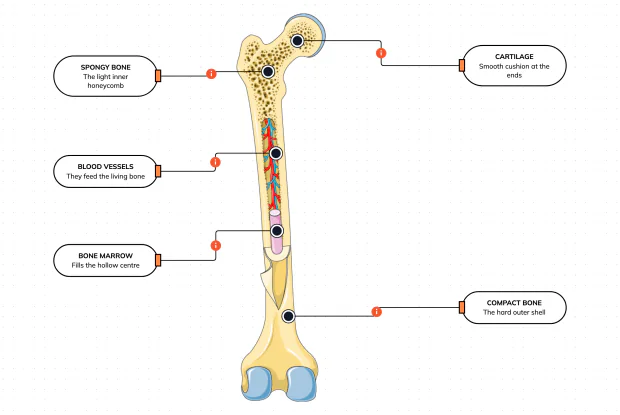
What Is a Bone Made Of?
Cut a bone open and it is nowhere near solid: a hard outer shell, a light honeycomb inside, a hollow centre full of marrow, blood vessels threading through, and a smooth cushion at each end. Learn what each part does — then label them yourself in an interactive playground.
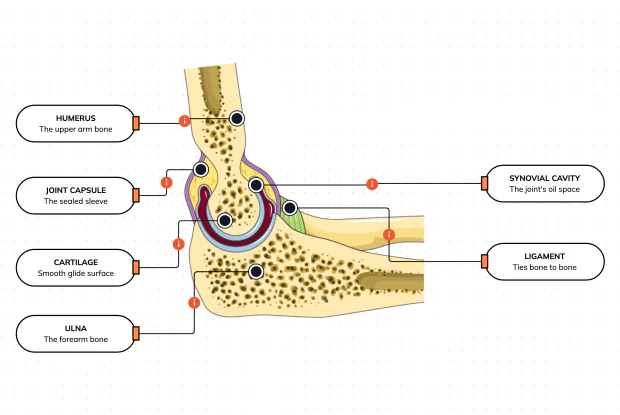
What Is Inside Your Elbow Joint?
A joint is where two bones meet and move — and it is far more than just the bones. Cut open the elbow and you find smooth cartilage caps, a sealed capsule of slippery fluid, and tough ligaments holding it all together. Learn what each part does, then label them yourself in an interactive playground.
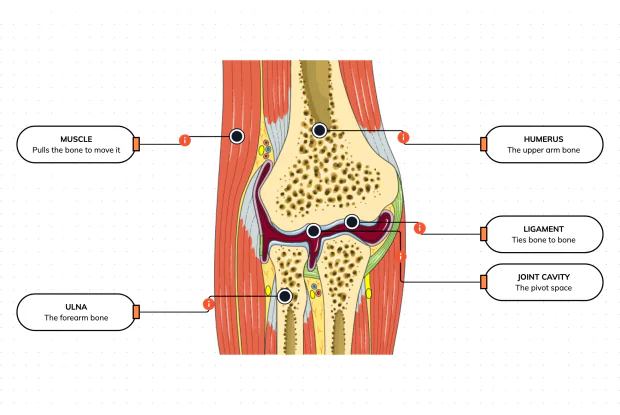
What Makes Your Elbow Bend?
Bones and joints are just the hardware; nothing moves until a muscle pulls. Label the elbow to see the parts that turn a joint into movement — the muscle that pulls, the ligament that holds bone to bone, the two bones it links, and the space they pivot in — then build it yourself in an interactive playground.
What Holds Your Elbow Together?
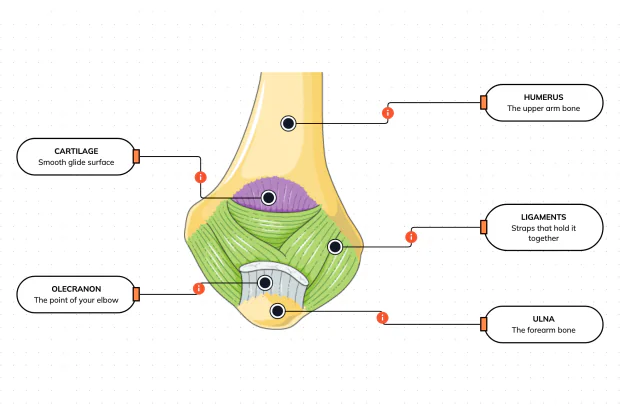
Your elbow is pulled on all day — by gravity, by every bag you carry, by every time you hang or push. So what stops the two bones from simply coming apart? Look at the back of the elbow and label the ligaments, the bony point, the cartilage and the two bones — and learn what holds the whole joint together.
What Are the Main Bones of the Skull?
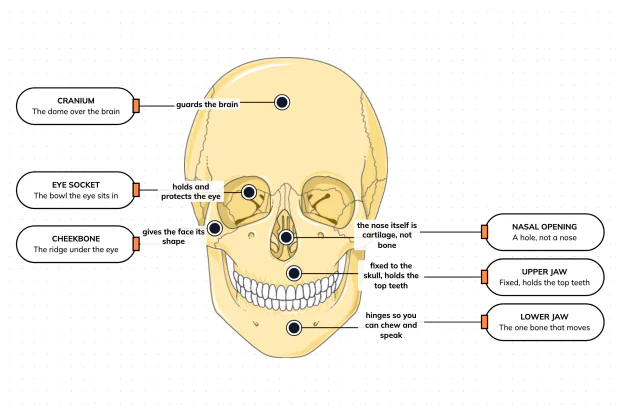
The skull looks like a single bone, but it is really about twenty-two locked together — with just one left free to move. Learn what each main part does, then label a skull yourself in an interactive playground.
What Are the Parts of Your Ear?
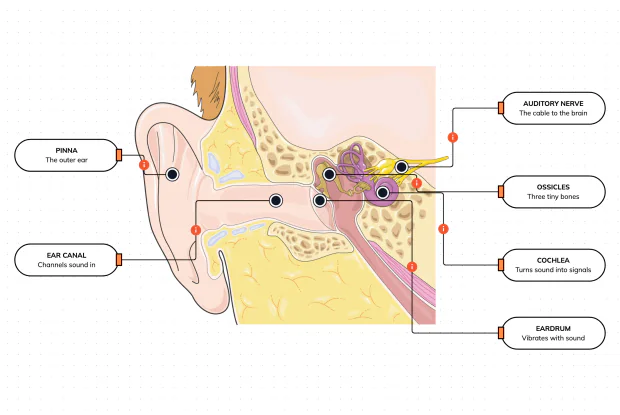
Hearing is a chain of parts passing a sound along, each handing it to the next. Label the pinna, ear canal, eardrum, ossicles, cochlea and auditory nerve, and follow a sound all the way from the air outside to a signal your brain can read — in an interactive playground.
How Does Your Ear Keep You Balanced?
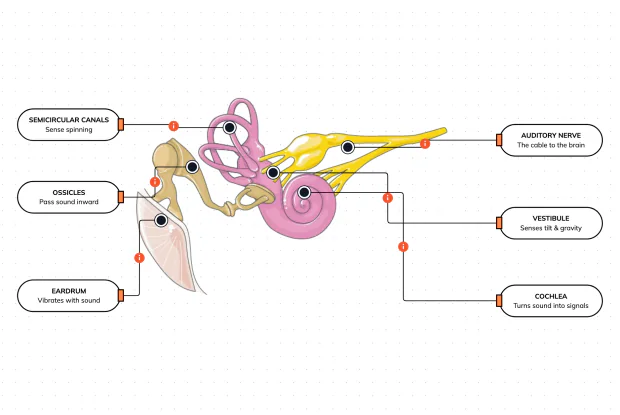
Your ear does a second, hidden job: balance. Inside it sit fluid-filled loops that sense spinning and a chamber that senses tilt and gravity. Label the semicircular canals, vestibule, cochlea, ossicles, eardrum and nerve, and learn how one organ both hears and keeps you upright — in an interactive playground.
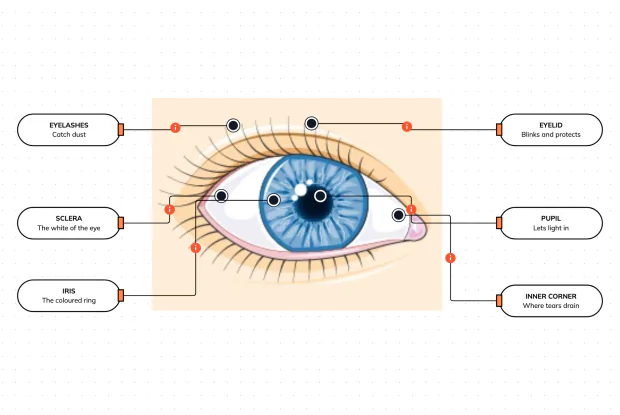
What Are the Parts of the Eye You Can See?
Before you look inside the eye, learn the parts you can already see in a mirror. Label the pupil, iris, sclera, eyelid, eyelashes and the tear-duct corner, and learn what each visible part does to let in light and protect the eye — in an interactive playground.
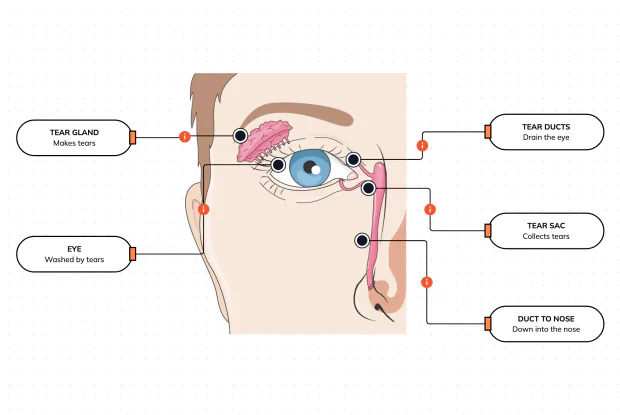
Where Do Your Tears Come From and Go?
Your eyes make and drain tears all day to stay clean and wet. Label the tear gland, the eye, the tear ducts, the tear sac and the duct to the nose, and follow a tear from where it is made to where it drains — in an interactive playground.
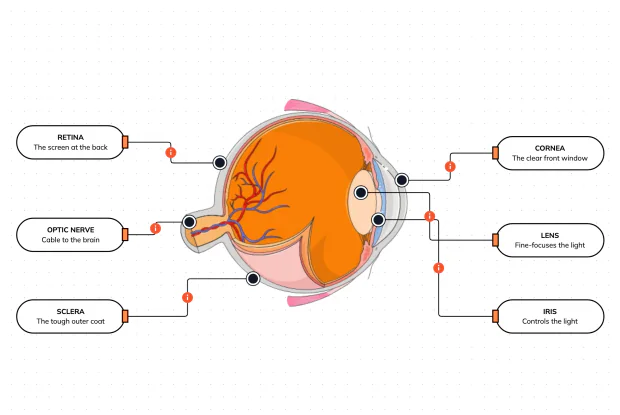
How Does Your Eye Turn Light Into a Picture?
Your eye works like a living camera. Cut it open and label the cornea, lens, iris, retina, optic nerve and sclera, and follow light as it is focused onto a screen at the back of the eye and sent to the brain — in an interactive playground.