What Is a Negative Number?
Root Concept
A negative number is a number to the left of zero on the number line. Zero sits in the middle; numbers to the right are positive and numbers to the left are negative, and a number's distance from zero is how many steps it is.
CodePLU Goal
Upgrading Human Mental Models
Learn how to think in Workflows

Concept Development By codeplu.com
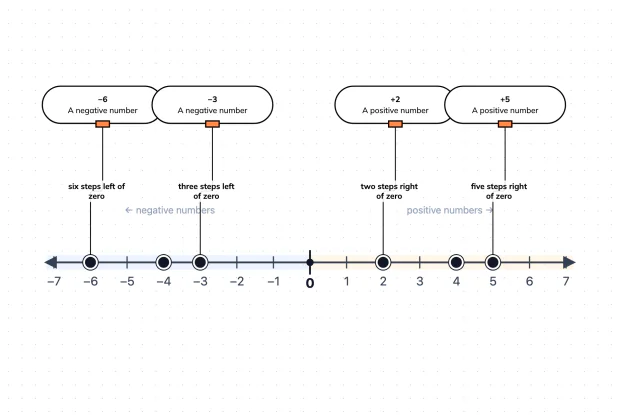
Placing numbers on the line — count steps from zero: right for positive, left for negative
Where Do Numbers Go When They Drop Below Zero?
When you first learn to count, you go 1, 2, 3, and it feels like zero is the smallest number there can be — you cannot have fewer than none of something. But numbers do not stop at zero. They carry on to the other side, below zero, and those numbers are called negative numbers. A negative number is simply a number that is less than zero.
The easiest way to see them is on a number line: a straight line with the numbers marked on it in order. Put zero in the middle. The numbers you already know — 1, 2, 3 — go to the right of zero, and we call them positive. The negative numbers go the other way, to the left of zero: −1, −2, −3, and so on. A little minus sign in front, like the one in −6, is a label that means 'this number is on the left of zero'.
So a negative number is a number to the left of zero, and the further left it is, the more negative it is. To find where a number sits, you just count steps from zero: step right for a positive number, step left for a negative one. In the playground you will do exactly that — take each number and connect it to its point on the line by counting the steps from zero.
How Does the Number Line Work?
What is the number line?
The number line is a straight line with numbers marked along it in order, evenly spaced. Zero sits in the middle. As you move to the right the numbers get bigger — 1, 2, 3 — and as you move to the left they get smaller, past zero into −1, −2, −3. The arrows on each end mean the line never stops: numbers keep going forever in both directions. It is one of the most useful pictures in all of maths, because almost every idea about numbers — which is bigger, adding, subtracting — can be shown as moving along this line. For now, the only thing to notice is the order: right is bigger, left is smaller, and zero is the point in the middle where the two sides meet.
Where do negative numbers go?
Negative numbers live to the left of zero. Starting at zero and stepping left, the first stop is −1, then −2, then −3, and so on. So −1 is one step to the left of zero, and −6 is six steps to the left. Notice something that surprises a lot of people: the more steps you take to the left, the smaller the number gets, so −6 is actually smaller than −1, even though 6 is bigger than 1. That is because −6 is further from zero on the left side. Each negative number is a mirror of a positive one: −3 sits exactly as far to the left as +3 sits to the right. The minus sign is just there to tell you which side of zero the number is on — the left side.
How do you place a number on the line?
You count steps from zero. First look at the sign. If the number is positive, step to the right; if it is negative (it has a minus sign), step to the left. Then count that many steps. For +2, start at zero and take two steps right — that is where +2 lives. For −6, start at zero and take six steps left — that is where −6 lives. The number itself tells you two things: the sign tells you the direction (left or right), and the size tells you how many steps. This is the whole skill of reading a number line, and it is what you practise in the playground: match each number to the correct point by counting its steps from zero in the correct direction.
Real World Example
Where Have You Already Seen a Number Line?
The number line is not only a maths-lesson drawing. Here are three everyday things that are really number lines with a below-zero part:
A thermometer
Below freezing is a negative temperature
A thermometer is a number line stood up on its end. Someone chose the temperature where water freezes and called it zero. Warmer temperatures are above it — 5 degrees, 20 degrees — and they are positive. Colder temperatures are below it, and they are negative: −1, −5, −10. So when a winter forecast says it will be −6°C, that means six steps below freezing on the thermometer, exactly like six steps to the left of zero on a number line lying flat. This is probably the first place you ever met a negative number, on a cold-weather forecast, and you already understood that −6 is colder than −1 — which is the same as saying −6 is further down, or further left, on the line.
The buttons in a lift
Floors below the ground are negative
Look at the buttons in a lift and you will often see a number line. The ground floor is set as zero — that is your starting point. The floors above it count up as positive numbers: 1, 2, 3. The floors below the ground, down in the basement or the car park, count the other way, and they are marked with negative numbers: −1, −2, −3. Floor −2 is two floors below the ground, just as −2 is two steps left of zero on a number line. When you press −2 and the lift goes down, you are moving in the negative direction. It is a real, everyday number line that you ride up and down, with the ground floor as its zero in the middle.
Steps forward and back
Steps backward count as negative
Imagine playing a game where you stand on a starting spot and a dice tells you to move. Rolling a 'forward 3' sends you three steps ahead; rolling a 'back 3' sends you three steps behind the start. If forward is positive, then the start is zero and going backward is negative: three steps back lands you on −3. Take two more steps back and you are on −5. This is a number line drawn on the floor with your own feet, and it makes the idea of a negative number very physical: positive means forward (right), negative means backward (left), and the number tells you how many steps. Board games, hopscotch and playground games are full of these hidden number lines.
FAQs
Final Words
A negative number is just a number to the left of zero on the number line. Zero is the middle, positive numbers go right, and negative numbers go left — and to find any number's place you count steps from zero: right if it is positive, left if it is negative. The minus sign is only a label telling you which side of zero the number is on.
You have seen this line before — a thermometer, a lift's buttons, steps forward and back — so negative numbers are not new, only newly named. Now that you can place a number on the line, the next question is the one that catches everyone out at first: when you have two negative numbers, which one is actually bigger?
Continue This Track
This concept is part 1 of Making Sense of Negative Numbers.
What Is a Negative Number?
A negative number is a number to the left of zero on the number line. Meet the number line — zero in the middle, positives to the right, negatives to the left — and practise placing negative numbers by counting steps from zero, in an interactive playground.
What Is the Absolute Value of a Number?
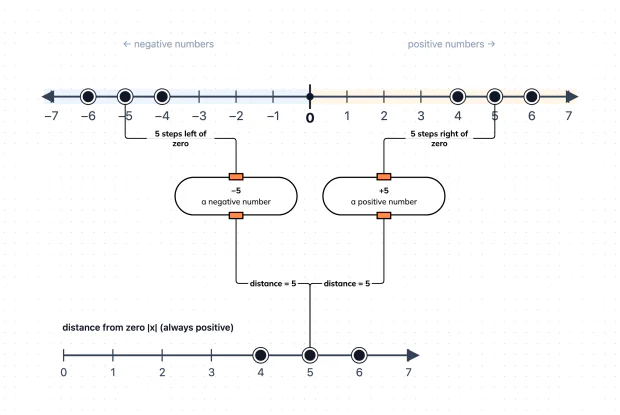
The absolute value of a number is its distance from zero, so it is never negative and −5 and +5 are both 5. Learn the fold-at-zero idea, then match each number to its distance in an interactive playground.
How Do You Add a Negative Number?
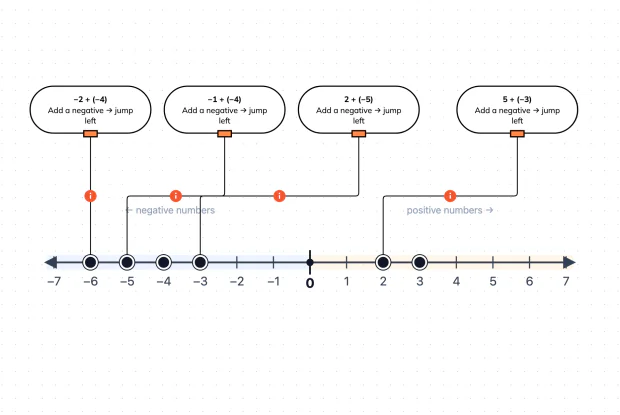
Adding a negative number moves you to the left on the number line. Learn the jump-left rule, then solve four sums by jumping to the answer in an interactive number-line playground.
How Do You Subtract a Negative Number?
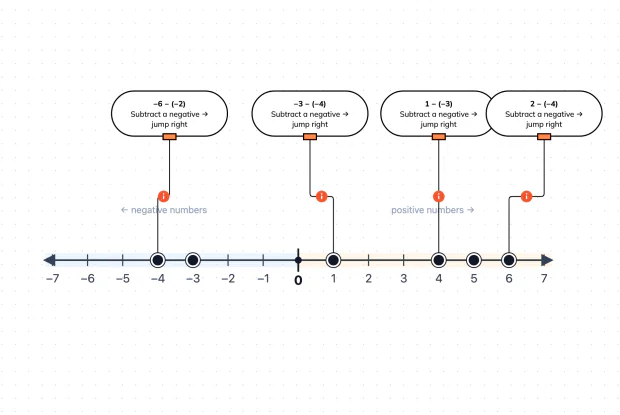
Subtracting a negative number moves you to the right on the number line — two minuses make a plus. Learn the rule, then solve four sums by jumping to the answer in an interactive number-line playground.
Why Does a Negative Times a Negative Make a Positive?
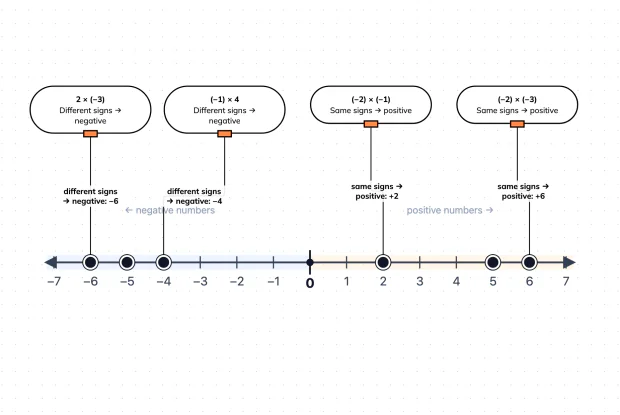
Multiplying negative numbers follows two sign rules: different signs make a negative, same signs make a positive. Learn why a negative times a negative comes out positive, then land four products on the number line.
How Do You Divide Negative Numbers?
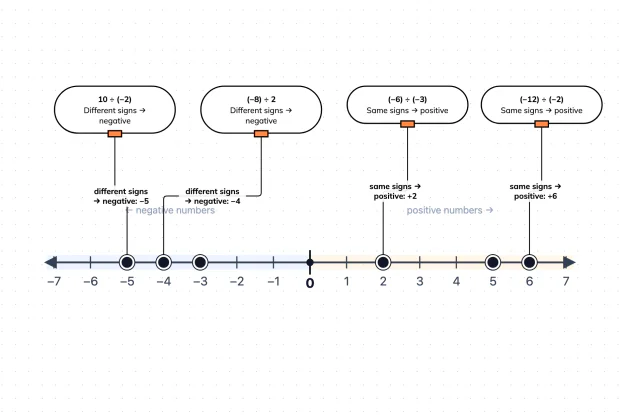
Dividing negative numbers uses the same two sign rules as multiplying: different signs make a negative answer, same signs make a positive one. Land four divisions on the number line to practise.
Order of Operations With Negative Numbers
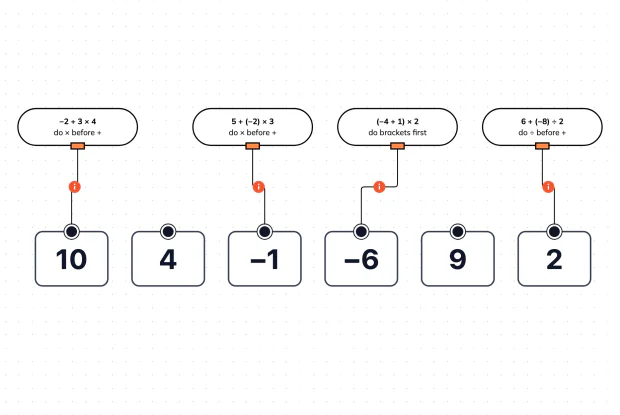
The order of operations does not change with negatives: brackets, then ×÷, then +−. Work out four expressions with negatives in the right order in an interactive playground.
Multiplying and Dividing Negative Fractions
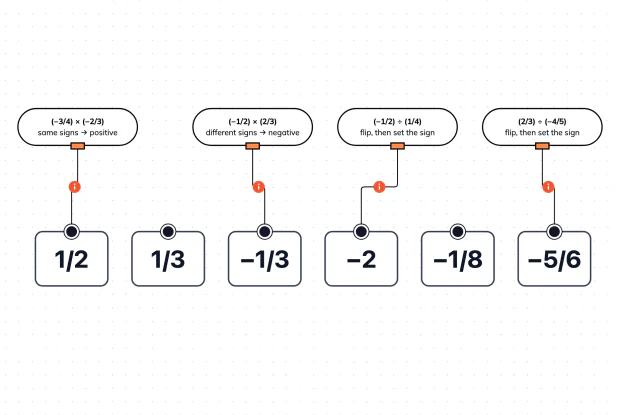
Combine the fraction method with the sign rules: do the fraction, then set the sign (same signs positive, different signs negative). Practise four problems in an interactive playground.