How the Eye Works
Seven parts following light from the front of the eye to the brain. It opens on the outside — the white, the coloured iris and the hole in the middle that is not a part at all but a gap — and on the tear system that keeps the surface clear, because an eye that dries out stops working within minutes. Then inside, where the lens focuses and the retina converts light into nerve signals, with a zoom into the retina itself to see the layers doing it. The fourth part follows a focused image to a sharp picture, the fifth the six muscles that aim both eyes at the same point so you see one world instead of two, and the last the pathway from eye to brain — where half the signal crosses to the other side.
CodePLU Goal
Upgrading Human Mental Models
Learn how to think in Workflows
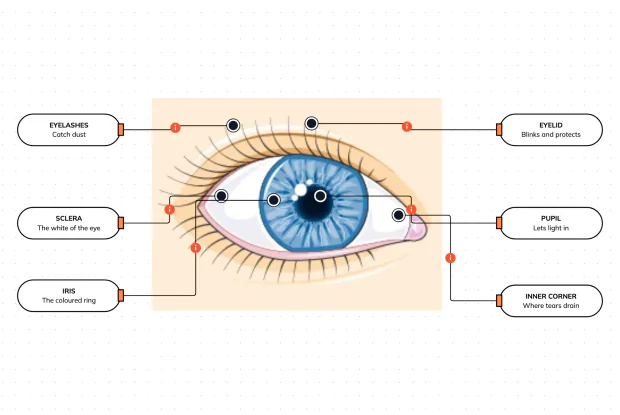
What Are the Parts of the Eye You Can See?
Before you look inside the eye, learn the parts you can already see in a mirror. Label the pupil, iris, sclera, eyelid, eyelashes and the tear-duct corner, and learn what each visible part does to let in light and protect the eye — in an interactive playground.
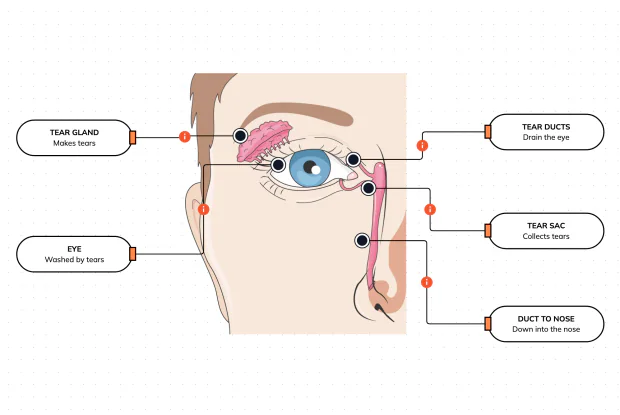
Where Do Your Tears Come From and Go?
Your eyes make and drain tears all day to stay clean and wet. Label the tear gland, the eye, the tear ducts, the tear sac and the duct to the nose, and follow a tear from where it is made to where it drains — in an interactive playground.
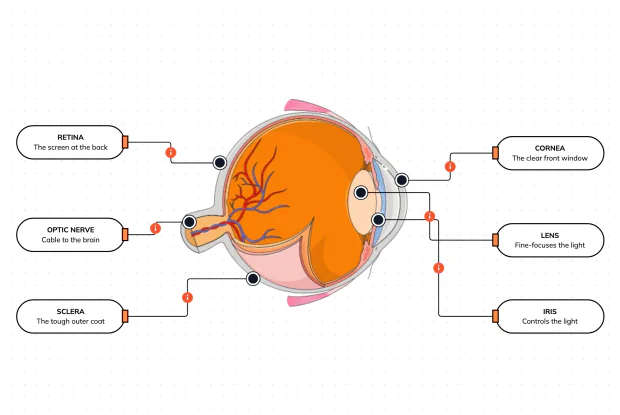
How Does Your Eye Turn Light Into a Picture?
Your eye works like a living camera. Cut it open and label the cornea, lens, iris, retina, optic nerve and sclera, and follow light as it is focused onto a screen at the back of the eye and sent to the brain — in an interactive playground.
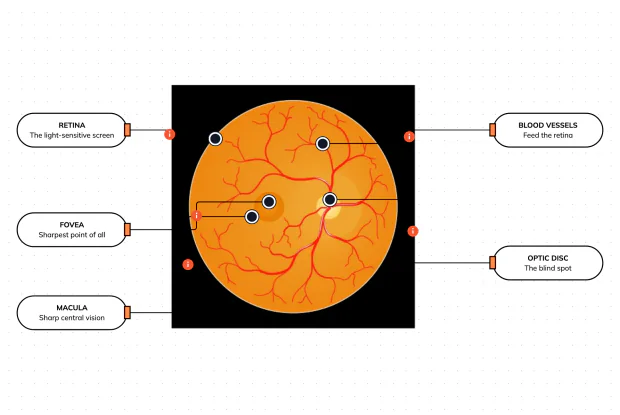
What Does the Back of Your Eye Look Like?
The retina is the screen at the back of your eye — but it is not the same all over. Label the retina, optic disc, macula, fovea and blood vessels on the real view a doctor sees, and learn where your sight is sharpest, where your blind spot is, and how the retina is fed — in an interactive playground.
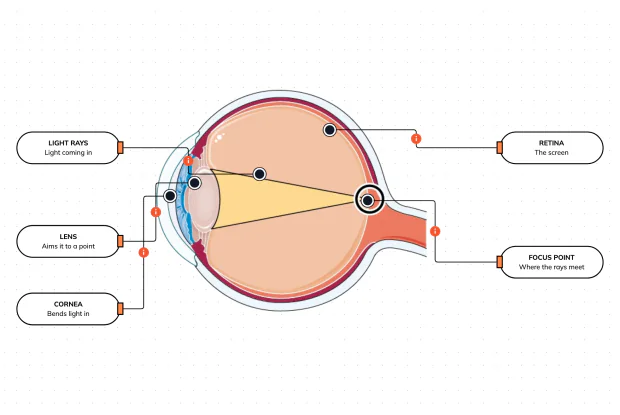
How Does Your Eye Bring the World Into Focus?
Being 'in focus' means the light from what you look at is bent to meet at one sharp point on the retina. Label the cornea, lens, light rays, focus point and retina, and see how the eye focuses light like a camera — in an interactive playground.
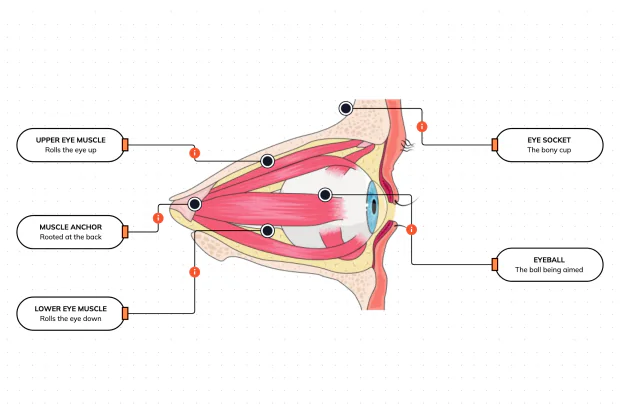
What Muscles Move Your Eyes?
Every glance is a set of muscles at work. Look inside the eye socket and label the eyeball, the muscles that roll it up and down, the point where they anchor, and the bony socket that holds them — and learn how these little straps aim your gaze, in an interactive playground.
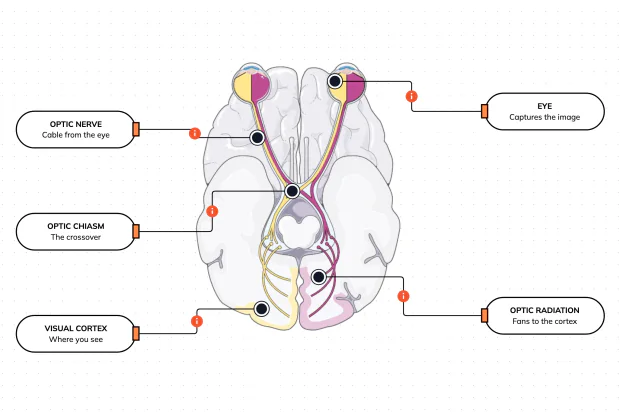
How Do Signals Travel From Your Eyes to Your Brain?
Seeing happens in the brain, not the eye. Label the eye, optic nerve, optic chiasm, optic radiation and visual cortex, and follow the signals from both eyes — through the crossover where they swap sides — all the way to the back of the brain, in an interactive playground.