The Pelvis and the Legs
Six parts carrying the weight to the ground. The pelvis is where the whole upper body is handed to two legs, a ring of fused bone built to take the load and shaped differently in a body that may have to deliver a baby through it. Then the leg, with the femur — the longest and strongest bone there is — examined on its own for the angled neck that lets the hip be a ball joint and is also where it most often breaks. Two parts take the knee from the front and from behind, a hinge holding more load than any other joint with no bony socket to help it. The last reaches the foot, where twenty-six bones make an arch that works as a spring.
CodePLU Goal
Upgrading Human Mental Models
Learn how to think in Workflows
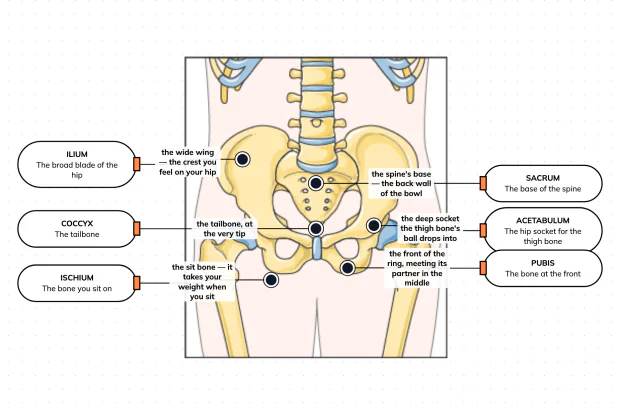
What Are the Parts of the Pelvis?
Each hip bone is really three bones fused into one, meeting at a deep socket. Learn the parts of the pelvis — the blade, the sit bone, the front bone and the hip socket — then label them yourself in an interactive playground.
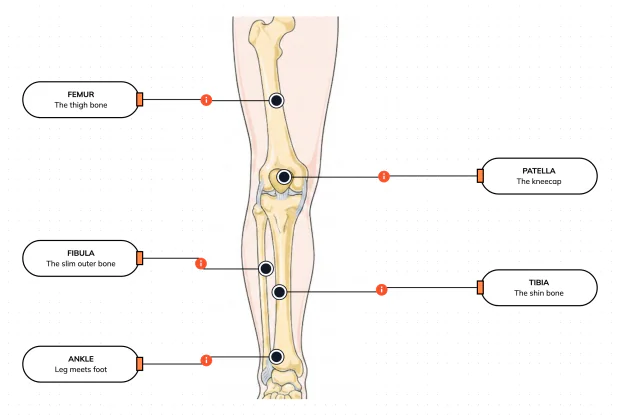
What Are the Bones of the Leg?
The leg is built like the arm turned to a heavier job: one thick bone in the thigh, two below the knee, and a kneecap in front. Learn what each bone does — why the tibia bears the weight and the fibula barely does — then label them yourself in an interactive playground.
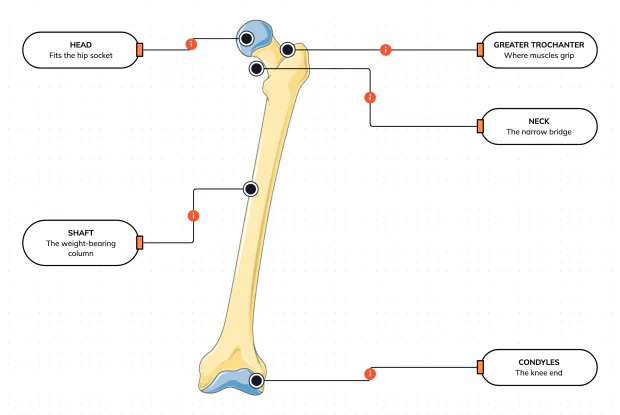
What Are the Parts of the Femur?
The femur is your thigh bone: the longest, strongest, heaviest bone in your body, and the one that carries your whole weight every step. Learn its five key parts — the head, neck, greater trochanter, shaft and condyles — then label them yourself in an interactive playground.
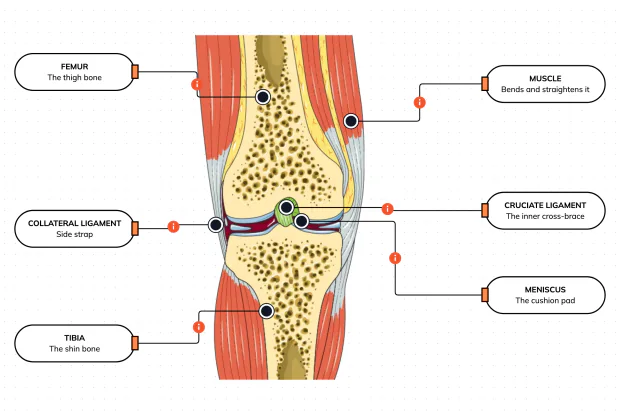
What Are the Parts of Your Knee?
The knee is the largest and most complex joint in your body — and the one people injure most. Cut it open from the front and label its six key parts: the femur and tibia, the muscle that moves it, the collateral and cruciate ligaments that hold it, and the meniscus that cushions it — all in an interactive playground.
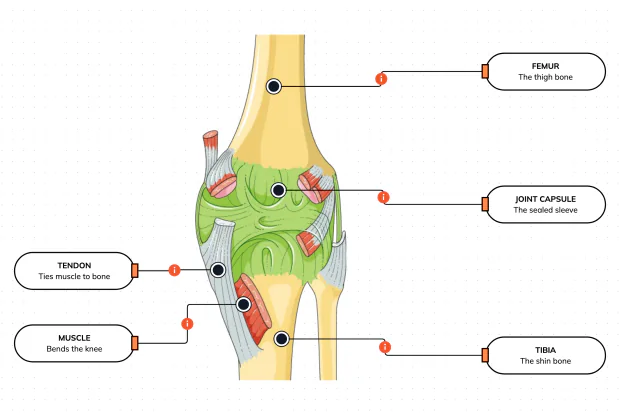
What's at the Back of Your Knee?
The front of the knee shows the bones and ligaments; the back tells the other half of the story. Look behind the knee and label the femur and tibia, the joint capsule that seals the whole joint, and the muscle and tendon that cross behind it to bend your leg — all in an interactive playground.
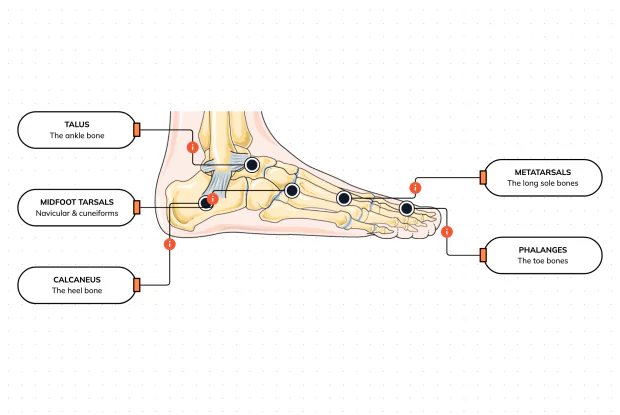
What Are the Bones of the Foot?
The foot packs twenty-six bones into three groups: ankle-and-heel tarsals, the long metatarsals, and the toe phalanges. Learn what each does — how the talus takes your weight and the arch springs you forward — then label them yourself in an interactive playground.