The Kidneys and the Urinary Tract
Six parts on the organ that decides what stays in you. A kidney is not a filter in the sense of a sieve — it throws almost everything out of the blood and then takes back what it wants, which sounds wasteful and is what makes the control so fine. The track opens on the kidney and the bladder, then sets them in the whole tract, twice, because the plumbing is easier to hold once you have seen it both in isolation and in place. It closes on the nephron, the unit a kidney contains a million of, where the throwing out and the taking back actually happen.
CodePLU Goal
Upgrading Human Mental Models
Learn how to think in Workflows
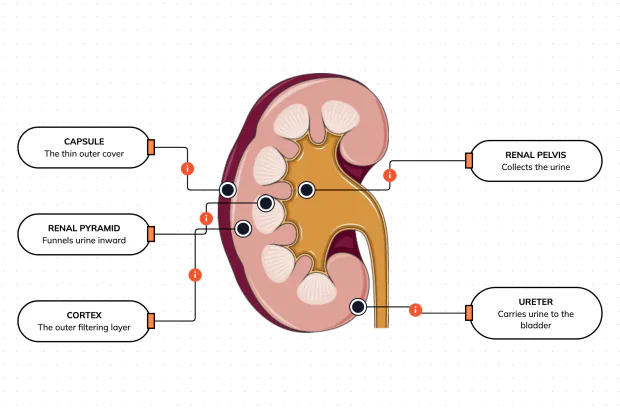
What Are the Parts of a Kidney?
Each kidney filters blood into urine. Label the capsule, cortex, renal pyramid, renal pelvis and ureter on a cut-open kidney, in an interactive playground.
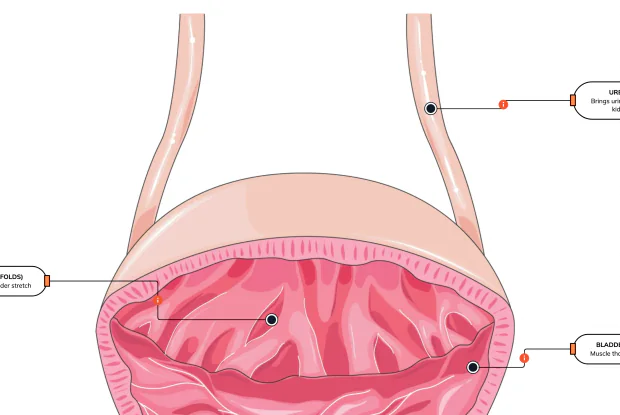
How Does Your Bladder Store Urine?
The bladder is a stretchy muscular bag that stores urine. Label the ureters, ureter opening, muscular wall, the folds (rugae) and the urethra, in an interactive playground.
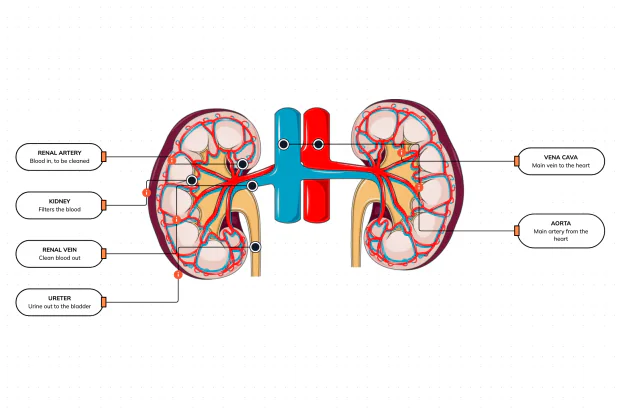
How Does Blood Reach Your Kidneys?
Kidneys clean the blood, so they need a huge blood supply. Label the renal artery, renal vein, aorta, vena cava, kidney and ureter, in an interactive playground.
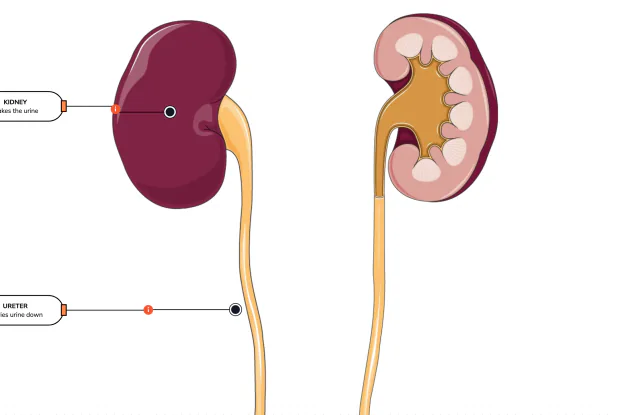
What Is the Urinary System?
The urinary system makes and removes urine along a one-way path: kidney, ureter, bladder, urethra. Label each part in an interactive playground.
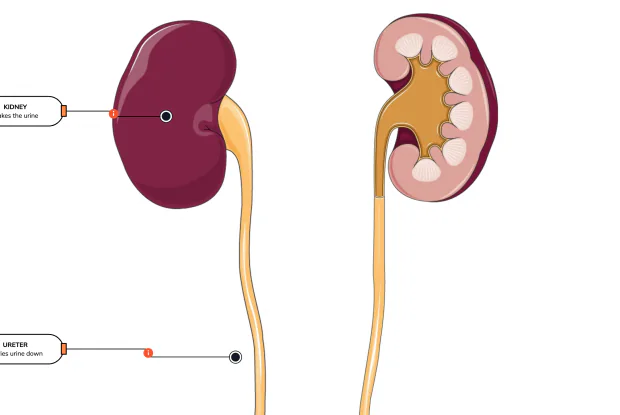
How Is the Male Urinary Tract Different?
The male urinary tract shares the same kidneys, ureters and bladder, but has a longer urethra passing through the prostate. Label each part in an interactive playground.
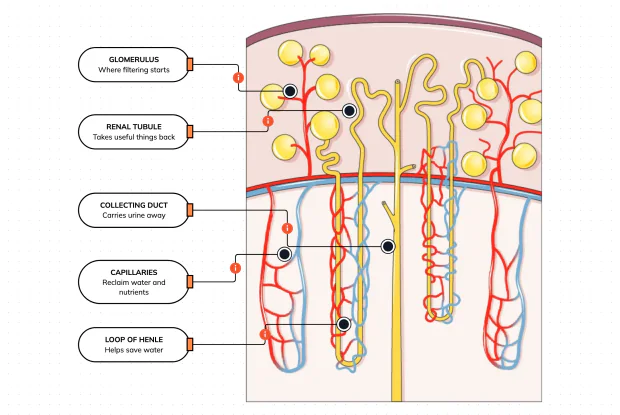
What Is a Nephron?
A nephron is the microscopic unit that does the kidney's filtering. Label the glomerulus, renal tubule, loop of Henle, collecting duct and capillaries in an interactive playground.