The Glands of the Body
Six parts on the organs whose entire job is to make something and release it. The difference that organises them: some deliver through a duct to a surface, and some release into the blood and reach the whole body at once. It opens with the salivary glands, which are the duct kind, then the islets scattered through the pancreas, which are the other kind and control blood sugar. Two parts take the adrenal gland — one organ, two tissues, two unrelated sets of hormones — from the whole gland down to the cells. The fifth is the breast, a gland that is dormant for most of a life, and the last the thyroid, which sets the pace everything else runs at.
CodePLU Goal
Upgrading Human Mental Models
Learn how to think in Workflows
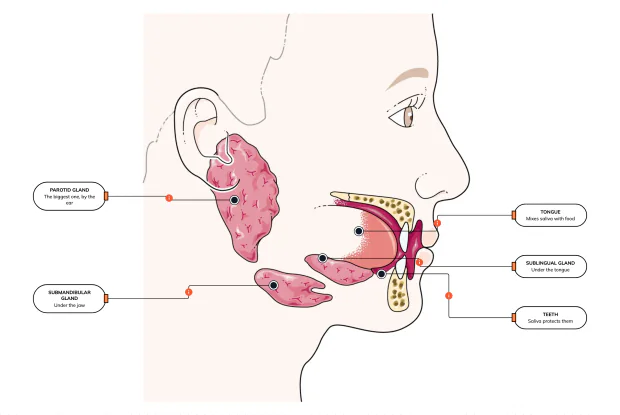
What Are Your Salivary Glands?
Saliva is made by three pairs of salivary glands — parotid, submandibular and sublingual. Label each gland, the tongue and the teeth, and learn what spit does, in an interactive playground.
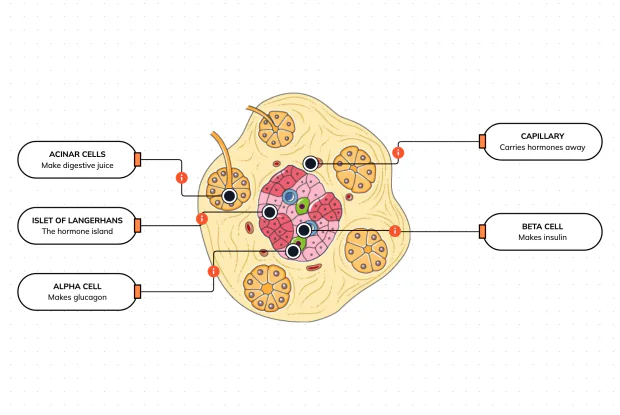
What Is an Islet of Langerhans?
Tiny clusters in the pancreas make insulin and glucagon. Label the islet, its beta and alpha cells, the digestive-juice cells and a capillary, and learn how blood sugar stays balanced.
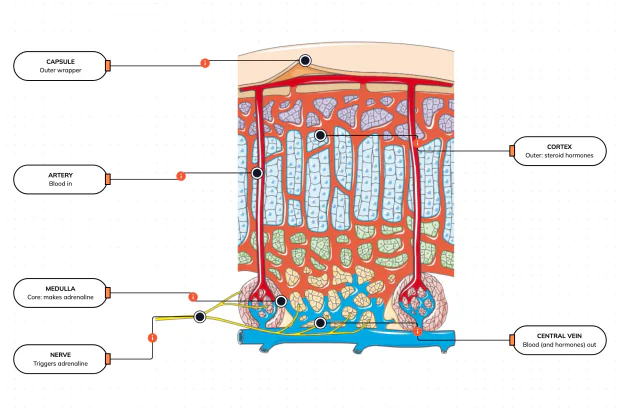
How Is the Adrenal Gland Built?
Each adrenal gland has a capsule, a cortex that makes cortisol and a medulla that makes adrenaline. Label the capsule, cortex, medulla, artery, central vein and nerve.
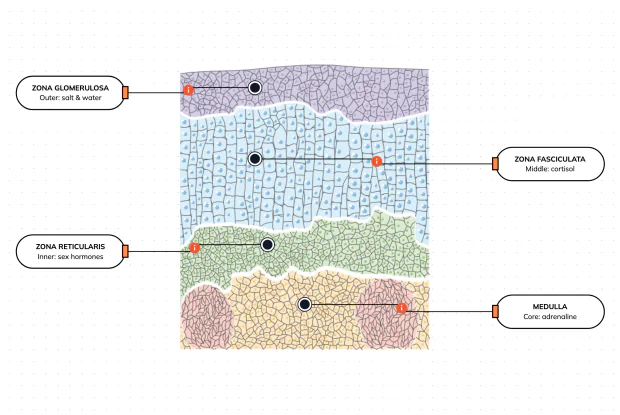
What Are the Layers of the Adrenal Gland?
Up close the adrenal gland is layered: three cortex zones over the medulla, each making a different hormone. Label the four layers and match each to its hormone.
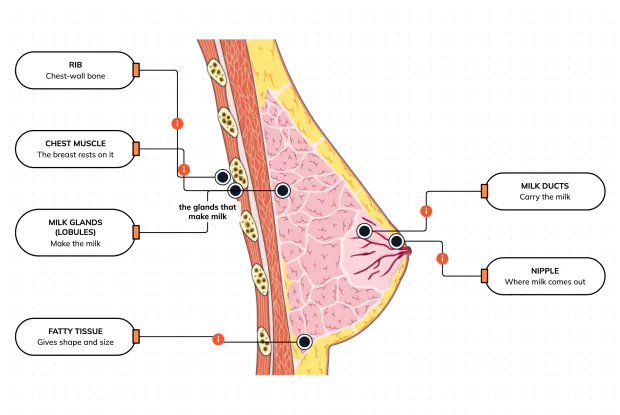
What Are the Parts of the Breast?
The breast is a mammary gland: milk-making lobules, ducts to the nipple, and fat for shape, on the chest muscle and ribs. Label each part and learn how the breast makes milk.
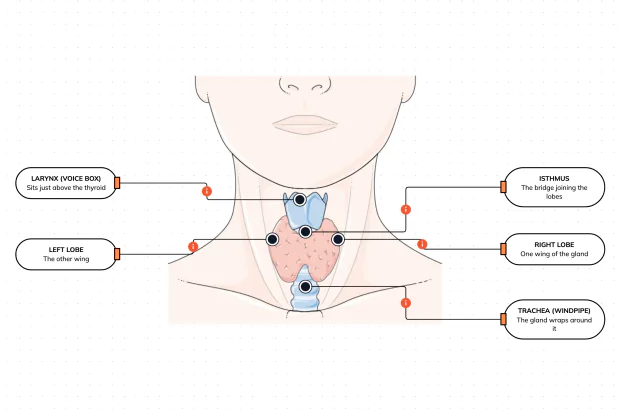
What Does Your Thyroid Gland Do?
The thyroid is a butterfly-shaped neck gland that makes a hormone controlling how fast your body works. Label its two lobes and isthmus, the voice box and the windpipe, in an interactive playground.