Your First Steps in Algebra
Algebra starts by answering a question nobody usually asks out loud: what is a letter for? This series builds the answer in book order — why a rule needs a letter at all, what that letter stands for, how to write a rule as a formula and work out what it comes to, and finally what an equals sign claims and how to solve for the letter on a balance scale.
CodePLU Goal
Upgrading Human Mental Models
Learn how to think in Workflows
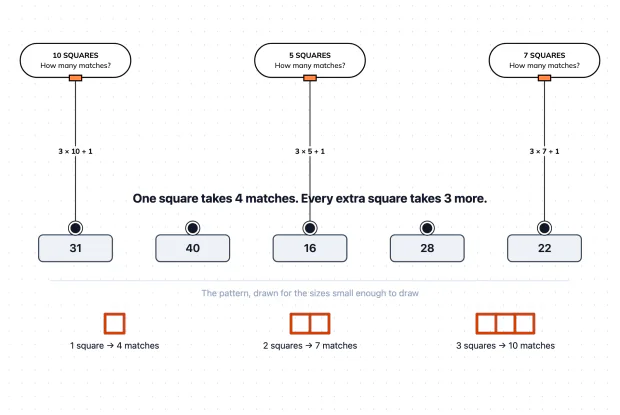
Why Does Maths Use Letters Instead of Numbers?
Letters are not there to make maths harder. They are there because some rules have to cover every number at once, and you cannot write them all down. Build the rule for a growing pattern in an interactive playground.
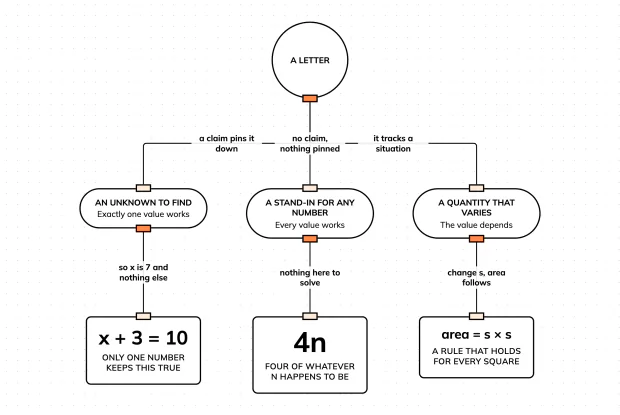
What Is a Variable, and Why Use Letters?
A letter in maths is not a mystery or a code — it is a number you have not pinned down yet. Learn the three jobs letters do, and build a letter down into each in an interactive playground.
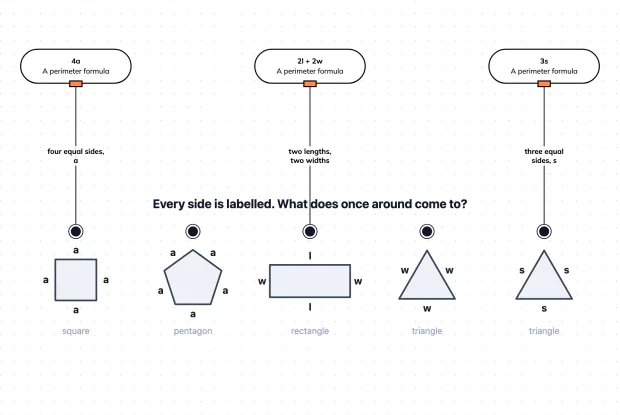
How Do You Turn a Rule Into a Formula?
A formula is a rule about a quantity, written with letters so it can be used rather than just read. Learn how to build one, and match formulas to the shapes they describe in an interactive playground.
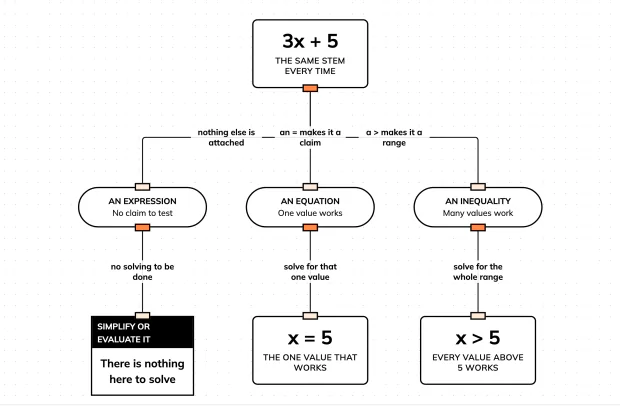
What's the Difference Between an Expression and an Equation?
One can be simplified, one can be solved, and one gives you a range rather than an answer. Learn to tell them apart by building one stem into all three in an interactive playground.
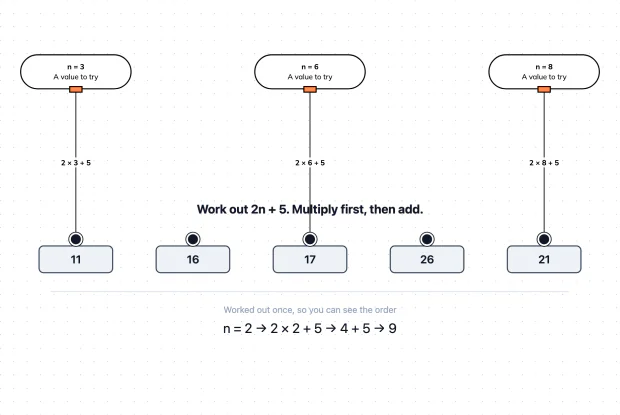
How Do You Find the Value of an Expression?
An expression only becomes a number once you choose what the letter stands for. Learn how to substitute a value safely, and work out an expression for several numbers in an interactive playground.
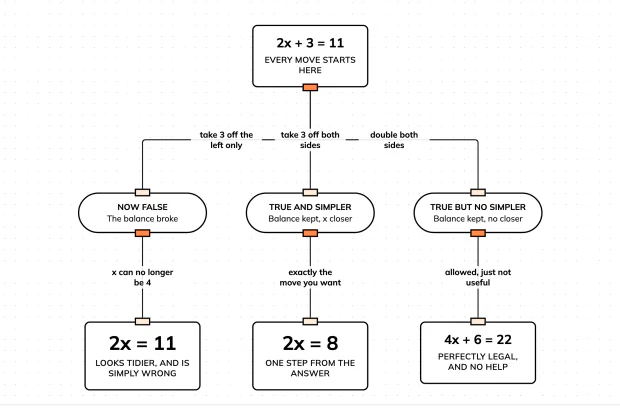
Why Must You Do the Same Thing to Both Sides?
An equation is a claim that two sides are equal, so any change to one side alone makes it false. Learn which moves keep the balance and which ones actually help.
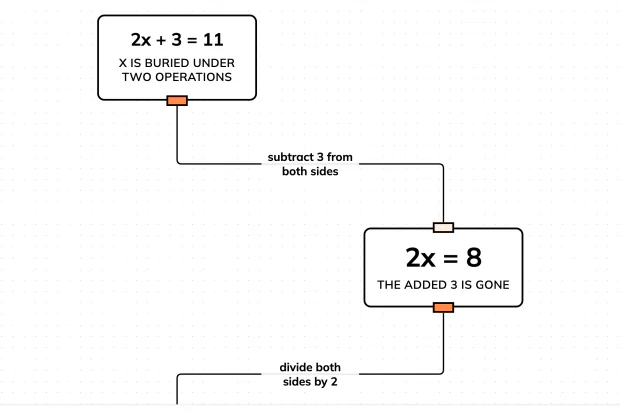
How Do You Solve for x, Step by Step?
Solving is undoing, in reverse order. Learn why the last thing done to x is the first thing you remove, and build the whole solution yourself.