What It Takes to Change Motion
Five parts joining force, mass and acceleration into the single relationship the motion track pointed at and could not yet state. It opens in a supermarket, where the same push sends an empty trolley off quickly and a loaded one slowly — which is not the heavy trolley refusing to move but accepting the motion at a lower rate, and pushing it twice as hard brings the acceleration straight back. The second part separates two words everyday English treats as one: mass counts the matter in you and never changes, weight is the pull of gravity on that mass and is six times smaller on the Moon, and the distinction finally explains why a hammer and a feather land together in a vacuum, because gravity is the one force that grows with the very quantity resisting it. The third asks what makes something hard to stop and rules out both obvious answers — a parked lorry is not hard to stop and a served tennis ball is not either — before building momentum from mass and velocity together. The fourth puts two objects in contact and finds a total that refuses to move: equal and opposite forces lasting the same time mean one object gains exactly what the other loses, which is why two cars meeting head-on can stop dead without anything being destroyed except the energy. The last turns all of it into the reason a modern car is designed to fall apart, because the momentum a crash must remove is fixed before it begins and stretching the stop is the only way left to shrink the force.
CodePLU Goal
Upgrading Human Mental Models
Learn how to think in Workflows
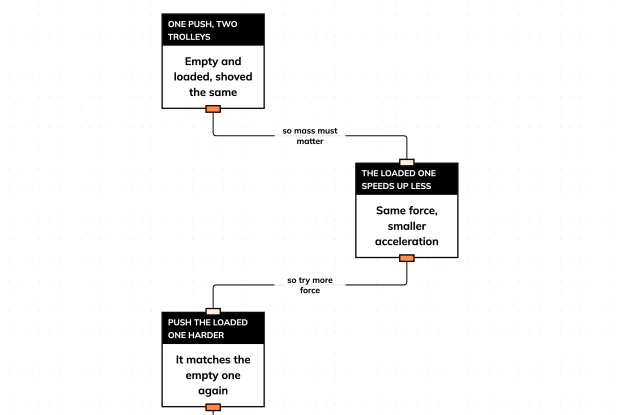
Why a Heavier Object Is Harder to Speed Up
The same push moves an empty trolley easily and a loaded one barely at all. Find out why force sets acceleration rather than speed, and assemble the relationship step by step in an interactive playground.
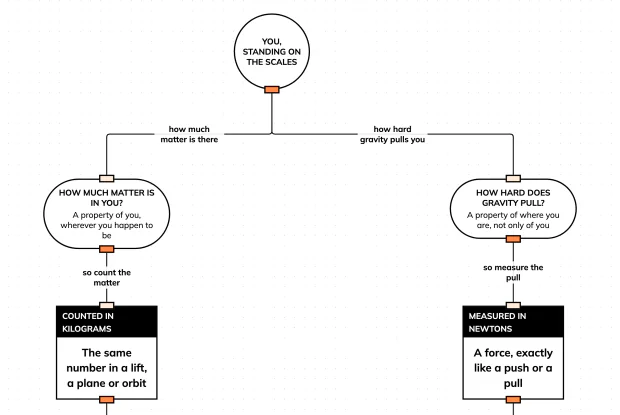
Why Your Weight Changes but Your Mass Does Not
Bathroom scales say kilograms, and physics says that is the wrong unit for a weight. Find out what each quantity really measures, and sort the two apart in an interactive playground.
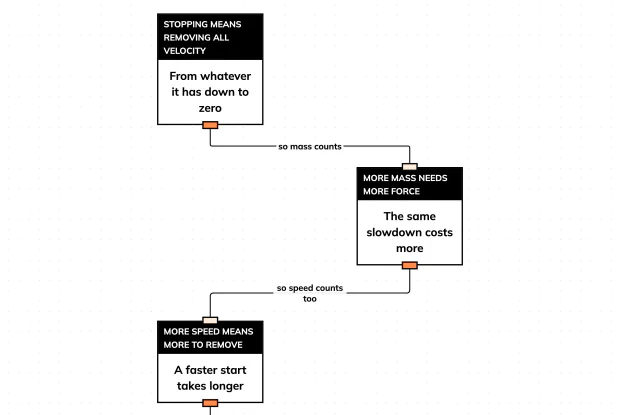
Why a Slow Lorry Is Harder to Stop Than a Fast Bicycle
Is a heavy slow thing or a light fast thing harder to stop? Neither mass nor speed answers it alone. Build momentum step by step and find the number that settles it, in an interactive playground.
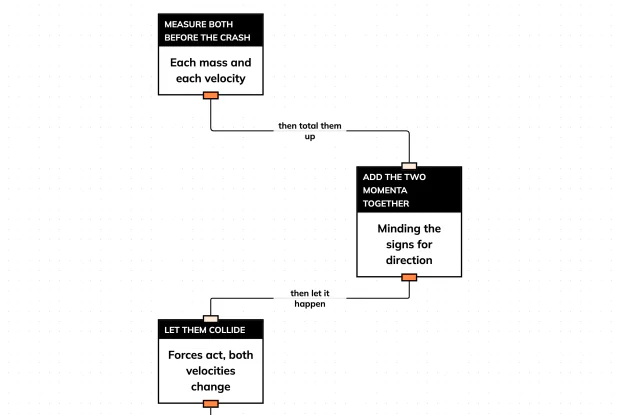
What Stays the Same When Two Things Collide
In a collision both objects change speed, yet one number refuses to move. Find out why momentum is swapped rather than lost, and work through a collision in the right order in an interactive playground.
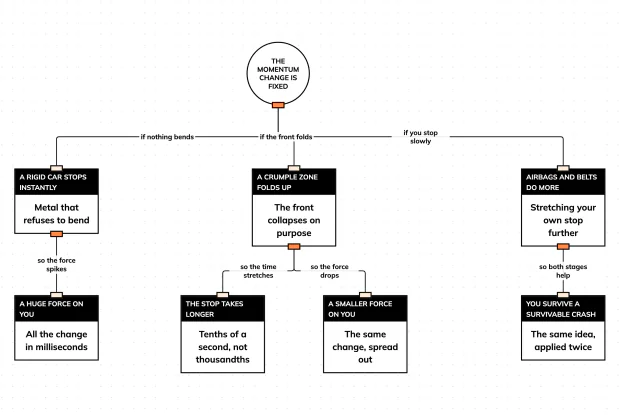
Why Cars Are Built to Crumple
A car that falls apart in a crash protects you better than one that survives intact. Find out why stretching the stop reduces the force, and trace the consequences in an interactive playground.