The Airways and the Lungs
Five parts on getting air to the blood. It opens on the conducting zone — the branching pipework from nose to the smallest tubes, which carries air without exchanging any of it, and warms and cleans it on the way. Two parts then take the larynx from the front and cut open, an organ doing two jobs at once: guarding the entrance to the airway, and making the sound of your voice from a pair of folds under tension. The fourth part is the lungs themselves, lobed differently on the two sides because the heart takes up room on the left. The last follows blood through them, which is the only circuit in the body where the artery carries the deoxygenated blood.
CodePLU Goal
Upgrading Human Mental Models
Learn how to think in Workflows
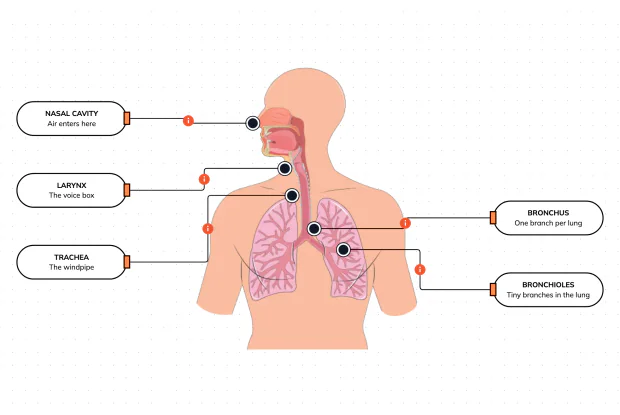
How Does Air Travel to Your Lungs?
Every breath travels down branching airways — nasal cavity, larynx, trachea, bronchi and bronchioles. Label the breathing path in an interactive playground.
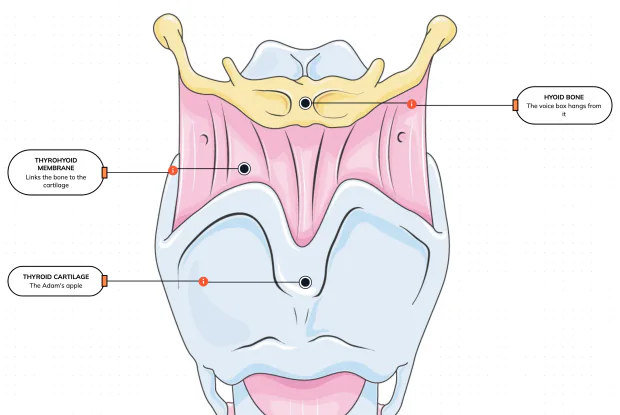
What Is Your Voice Box Made Of?
The larynx is built from cartilage. Label the hyoid bone, thyroid cartilage (Adam's apple), cricoid cartilage and trachea in an interactive playground.
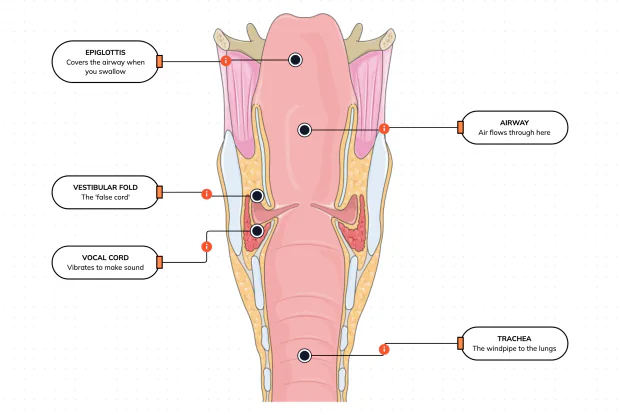
How Does Your Voice Box Make Sound?
Your voice is made by vocal cords vibrating as air passes through the larynx. Label the vocal cords, vestibular fold, epiglottis and airway in an interactive playground.
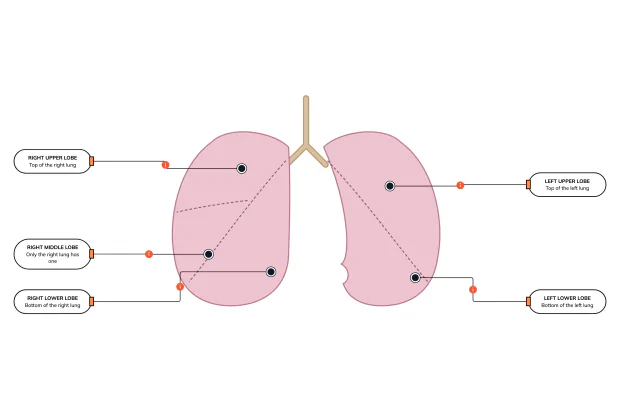
What Are the Lobes of the Lungs?
Each lung is divided by fissures into lobes: the right has three (upper, middle, lower), the left has two (upper, lower). Label all five lobes in an interactive playground.
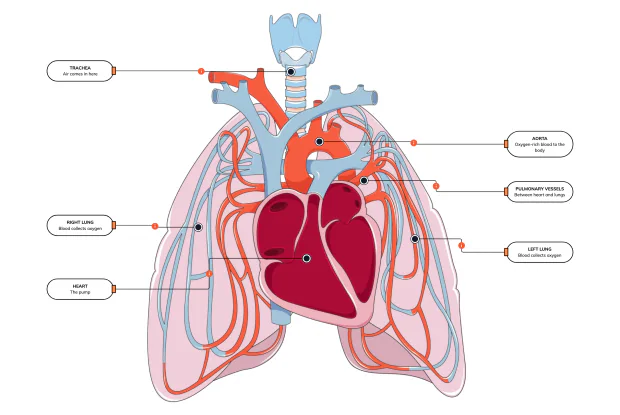
What Is Pulmonary Circulation?
Pulmonary circulation is the loop where the heart pumps blood to the lungs for oxygen and back. Label the heart, lungs, pulmonary vessels, trachea and aorta in an interactive playground.