Area Beyond the Basics
Rectangles, squares, triangles and circles were handled early in this chapter. This track covers everything else, and almost all of it comes from one move: turning an awkward shape into a shape already solved. A parallelogram is a rectangle that has been pushed over, which is why its area is base times perpendicular height and why its slanting side plays no part. A trapezium has two different parallel sides, so it uses the average of them — a formula that falls out of fitting two copies of the shape together into a parallelogram. Rhombuses and kites leave base and height behind entirely and are measured by their diagonals, because a shape whose diagonals cross at right angles fills exactly half the rectangle drawn round them. Then come the shapes with no formula at all, which need none: cut them into pieces that have one and add. The last tutorial adds a slice of a circle to that toolkit, with a warning — unlike arc length, a sector's area uses the radius exactly as given.
CodePLU Goal
Upgrading Human Mental Models
Learn how to think in Workflows
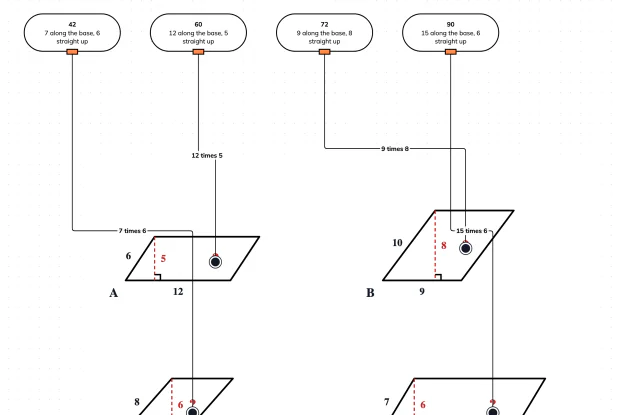
How Do You Find the Area of a Parallelogram?
A parallelogram's area is its base multiplied by its perpendicular height, and the reason is a single cut: slice a triangle off one end, slide it to the other, and you have a rectangle. The one thing to get right is which number is the height. Practise in an interactive playground.
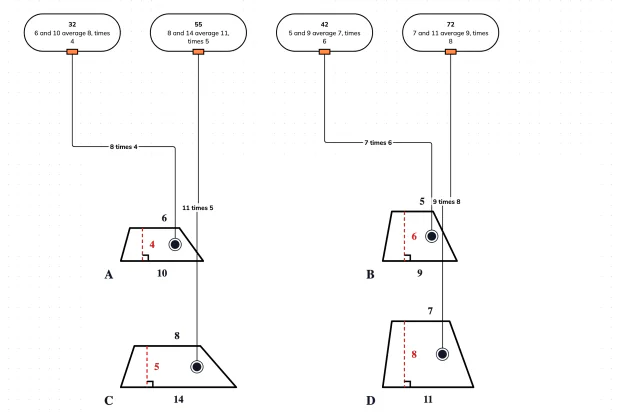
How Do You Find the Area of a Trapezium?
A trapezium's parallel sides are different lengths, so it has no single width — but the average of the two behaves exactly like one. Add them, halve, and multiply by the perpendicular height. See why that works and practise it in an interactive playground.
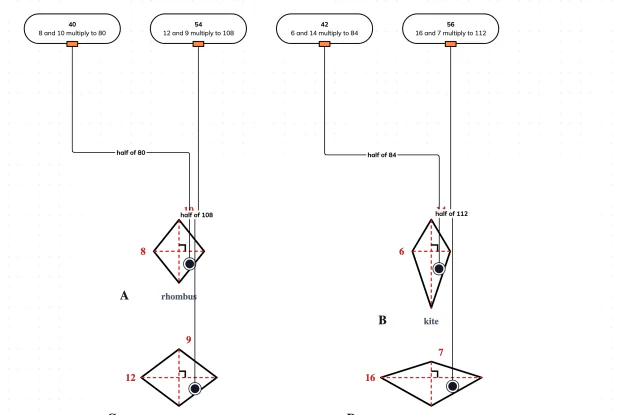
How Do You Find the Area of a Rhombus or a Kite?
Rhombuses and kites are awkward to measure by base and height, but both have diagonals that cross at right angles — and that gives a simpler route. Multiply the two diagonals and halve. See why one rule covers both shapes, in an interactive playground.
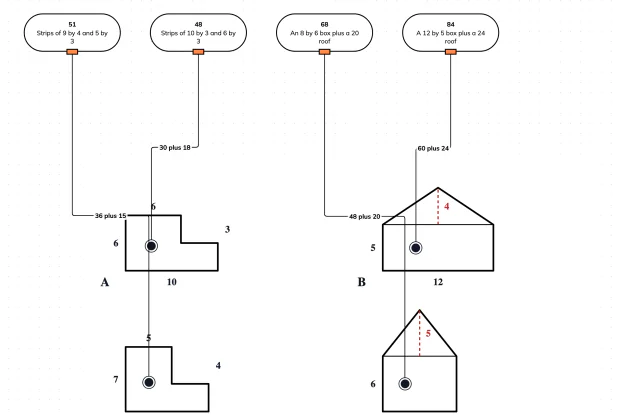
How Do You Find the Area of a Compound Shape?
Most real shapes have no area formula at all. They do not need one: cut them into rectangles and triangles, find each piece, and add. The skill is choosing the cut and working out the lengths the drawing does not give you directly. Practise both in an interactive playground.
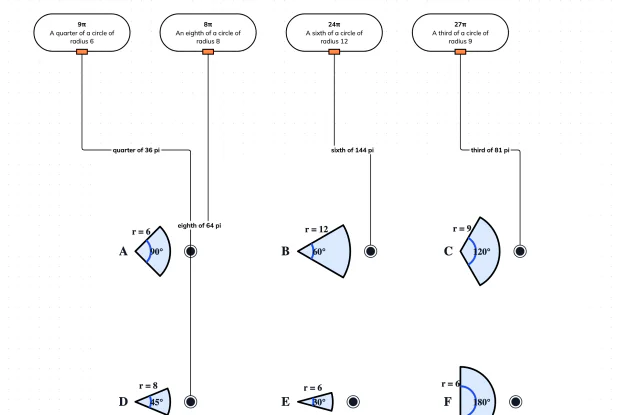
How Do You Find the Area of a Sector?
A sector is a slice of a circle, and its area is that same slice of the circle's area. Find the fraction from the angle, then take that fraction of πr². The trap is different from the arc-length one: here the radius is used as it stands. Practise in an interactive playground.