Reactions That Go Both Ways
Five parts paying off the double arrow that the reactions track drew and deliberately left unexplained. Most reactions, as they are first taught, run one way and stop; a few run back again, and heating blue copper sulfate white and then adding water to turn it blue once more is the version you can hold in your hand. The second part is the one that changes what the word means: a reaction at equilibrium has not stopped at all. Both directions are still running, at the same rate, which is why nothing appears to change — and that needs the rates track, which is why this one waited for it. From there the behaviour becomes predictable. Change a concentration, a temperature or a pressure and the balance moves in whichever direction opposes what was done to it, including the result nearly everybody gets backwards: heating a reversible exothermic reaction gives less product, not more. The fourth part puts a catalyst against that and finds it shifts nothing, because it speeds both directions equally — the sharpest available test of whether rate and position have been told apart. And the last spends all of it on one reactor, where the conditions that favour the yield and the conditions that favour the speed want opposite temperatures and the plant has to choose.
CodePLU Goal
Upgrading Human Mental Models
Learn how to think in Workflows
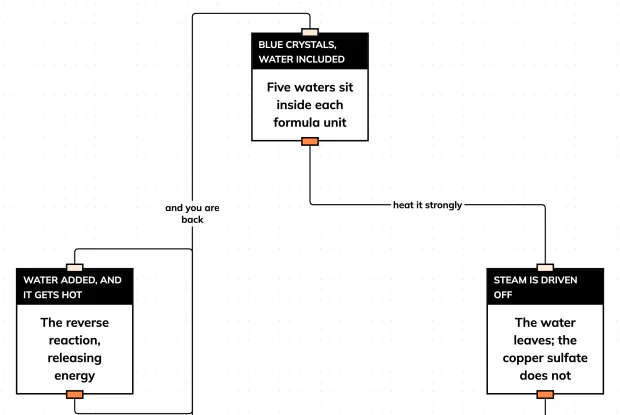
A Reaction You Can Run Backwards, and Watch
Heat blue copper sulfate and it turns white. Add water and it turns blue again, and gets hot. Follow a reaction round a closed loop in an interactive playground.
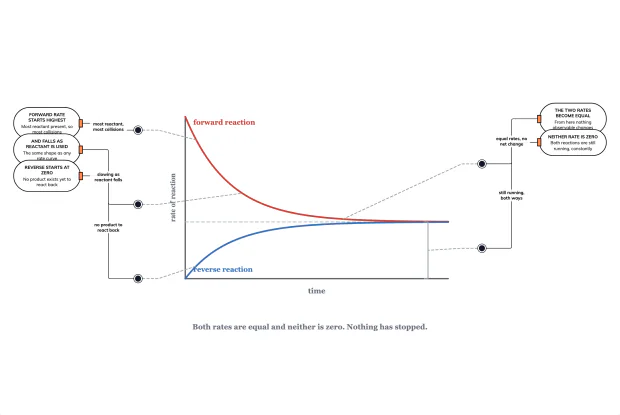
What Is Dynamic Equilibrium? Nothing Has Stopped
A reaction at equilibrium looks finished and is not — both directions are running at equal rates. Read it off a graph of rates in an interactive playground.
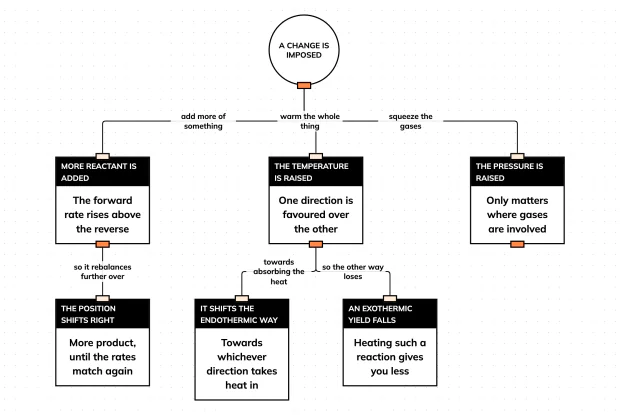
What Shifts an Equilibrium? Push It and See
An equilibrium that is disturbed settles somewhere new, and which way it moves can be predicted. Trace three kinds of change and their consequences in an interactive playground.
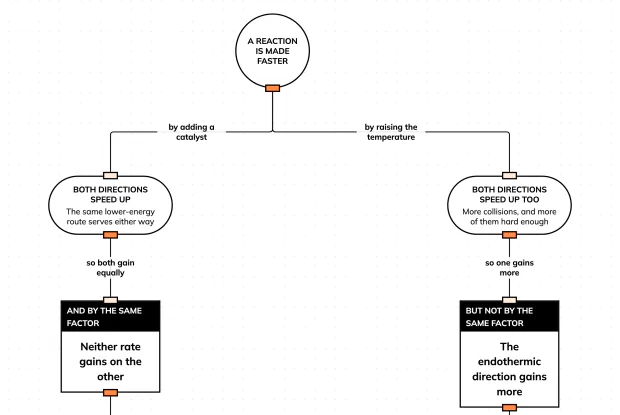
Does a Catalyst Shift an Equilibrium? No — Here Is Why
A catalyst and a temperature rise both speed a reversible reaction up, and only one changes where the balance sits. Follow both routes from one starting point in an interactive playground.
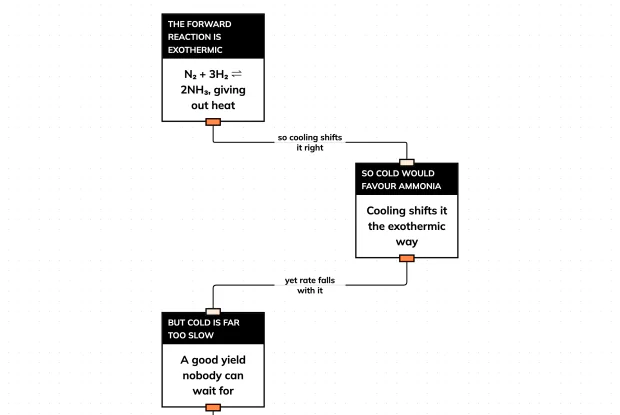
Why Is the Haber Process a Compromise? Rate vs Yield
The conditions that favour ammonia yield and the conditions that favour speed pull in opposite directions. Follow the argument to the figure a real plant uses, in an interactive playground.