Pulling Compounds Apart With Electricity
Five parts paying a debt three earlier tracks ran up. Electrolysis is leaned on whenever a metal is too reactive to be freed by carbon, and it was never explained. It starts with a fact that needs no apparatus: solid salt conducts nothing and molten salt conducts well, with nothing added. The ions were always there — melting is simply what lets them move, which is why an electrolyte has to be a liquid. The second part follows them to the electrodes, where positive ions gain electrons and negative ions lose them, and takes the chance to define oxidation and reduction properly by electrons rather than by oxygen. The third is where the topic gets hard: dissolve something in water and the water supplies two more ions, so each electrode becomes a competition — which is why electrolysing salt solution gives hydrogen rather than sodium. The fourth opens the aluminium cell the metals track said was needed, where the step that made the metal cheap was not electrical at all but finding a solvent. And the last asks what the technique is for, which turns out to be two different things: splitting compounds nothing else can split, and moving metal through a liquid without splitting anything at all.
CodePLU Goal
Upgrading Human Mental Models
Learn how to think in Workflows
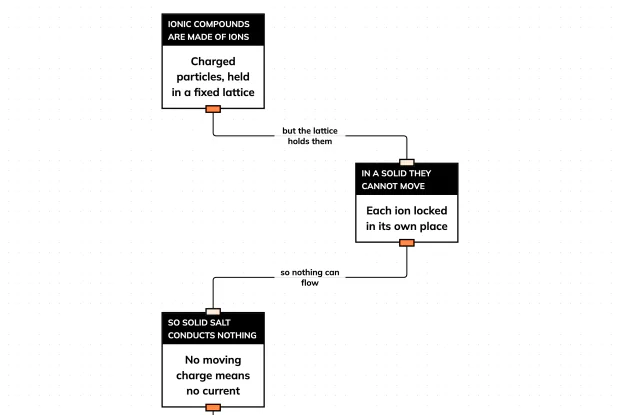
Why Does Electrolysis Need a Liquid?
Solid salt will not conduct electricity, and molten salt will. Nothing has been added — follow the argument that explains the difference, in an interactive playground.
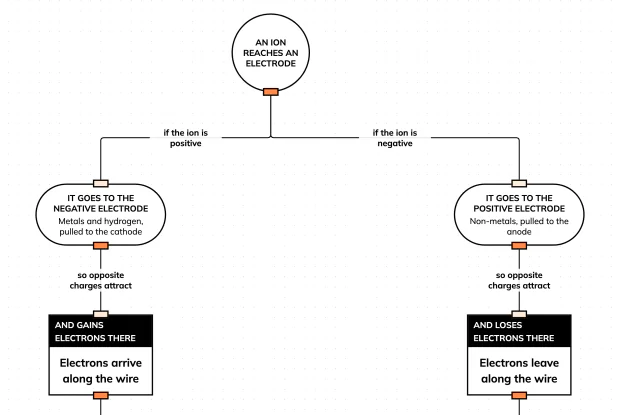
What Happens at Each Electrode? Oxidation and Reduction
Positive ions go one way and negative ions the other, and what happens when they arrive is the opposite in each case. Follow both routes in an interactive playground.
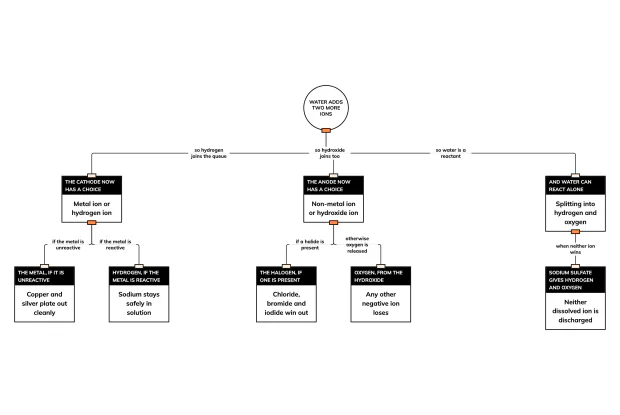
Which Ion Reacts in a Solution? The Water Complication
Electrolysing a molten compound gives its two elements. Electrolysing a solution often gives something else entirely, because the water joins in. Work out which ion wins, in an interactive playground.
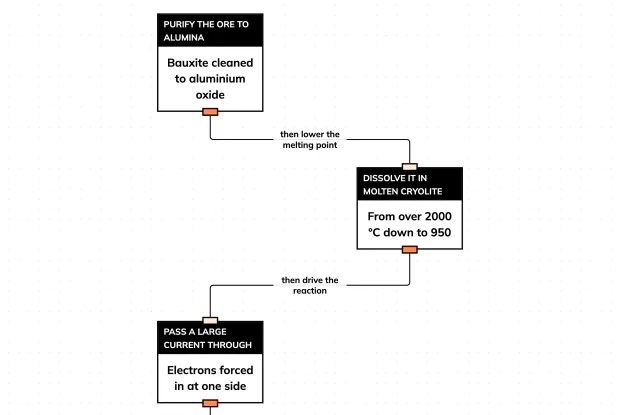
How Is Aluminium Extracted by Electrolysis?
Aluminium is the commonest metal in the Earth’s crust and was once more valuable than gold. Follow the five steps that changed that, in an interactive playground.
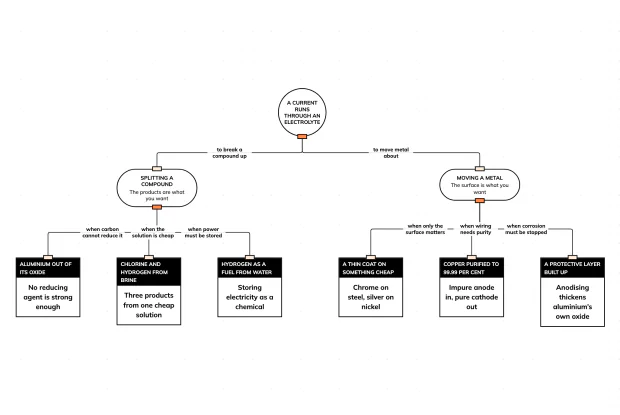
What Is Electrolysis Used For? Six Jobs It Does
Electrolysis splits compounds, but half of what it is used for is moving metal from one place to another without splitting anything. Sort the six main jobs in an interactive playground.