Families in the Periodic Table
Five parts on what a column of the periodic table actually tells you, and the one place the rule gives up. The atom track established that a group is its outer electrons and left it there; this track asks what follows. Group 1 gets more reactive going down, because each step puts the outer electron further from the nucleus with another full shell screening the pull, so it is held weakly and given away easily. Group 7 gets LESS reactive going down, from exactly the same cause — and that pairing is the point of the track, because a weak grip helps an atom that is letting an electron go and hinders one that has to capture it. Hold the cause and neither trend can be got backwards; remember the trends alone and one of them will be. The third part pays a debt the periodic table tutorial left open, explaining the middle block, where electrons fill an inner set of positions rather than the outer shell — which is why one metal forms several ion charges, why the compounds are coloured, why so many are catalysts, and why these are the hard metals everything is built from. The fourth runs the whole thing backwards, placing an unknown element from how it behaves, with colour as the clue that means two different things. And the last takes the family that left no trace at all: argon is nearly one per cent of every breath and went unnoticed for a century, until somebody refused to round away half of one per cent.
CodePLU Goal
Upgrading Human Mental Models
Learn how to think in Workflows
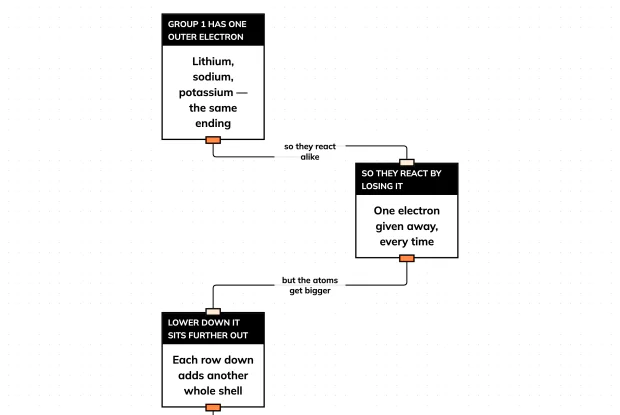
Why Does Group 1 Get More Reactive Down the Group?
Lithium fizzes, sodium darts about, potassium bursts into flame — and all three have exactly one outer electron. Follow the argument that explains the difference, in an interactive playground.
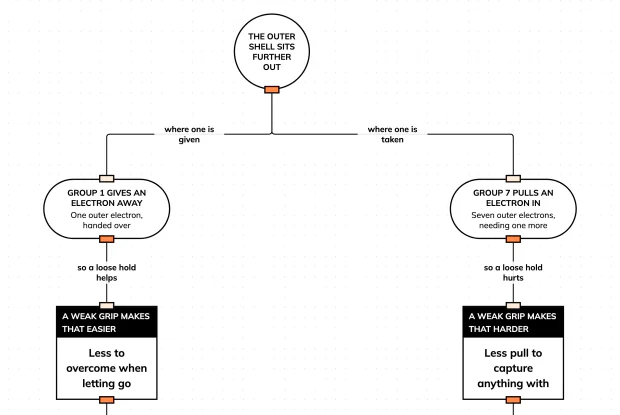
Why Does Group 7 Get Less Reactive Down the Group?
Group 1 gets more reactive going down and group 7 gets less, for exactly the same reason. Work out why one trend runs backwards, in an interactive playground.
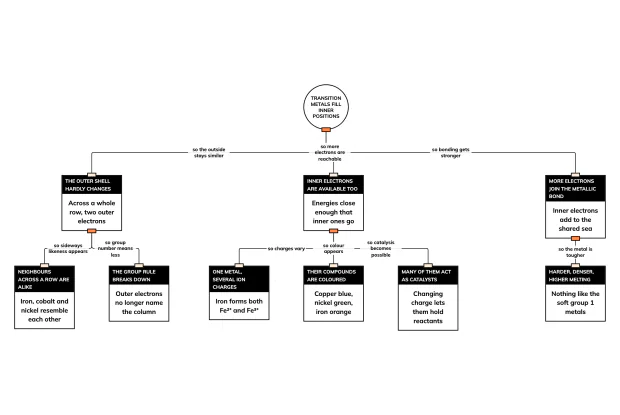
What Makes a Transition Metal Different?
Iron is nothing like sodium, and the periodic table’s simple group rule does not work on the middle block. Find the one fact that explains all of it, in an interactive playground.
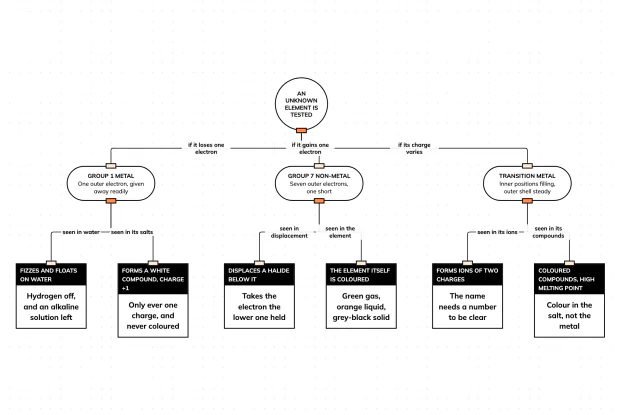
Which Family Does an Element Belong To?
Given how an unknown element behaves, work out which part of the periodic table it came from — and why "it is coloured" is the one clue that means two different things. An interactive playground.
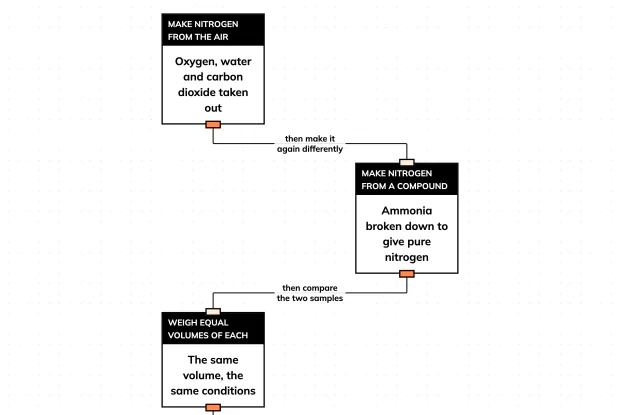
Why Were the Noble Gases Found Last?
Argon makes up almost one per cent of the air and nobody noticed it until 1894. Follow the weighing that gave it away, in an interactive playground.