The Mouth and Swallowing
Four parts where food starts. A tooth is layered — enamel outside, softer dentine beneath, and a living pulp with nerves and blood vessels at the centre, which is why a deep cavity hurts and a chip does not. The tongue is a muscle that moves in every direction, and the part on it that most people are taught wrongly: taste is not mapped in zones across the surface. The third part zooms into a taste bud to see how a dissolved molecule becomes a signal. The fourth is the most dangerous routine thing the body does — swallowing, where food passes the opening to the airway and a flap has to close in time.
CodePLU Goal
Upgrading Human Mental Models
Learn how to think in Workflows
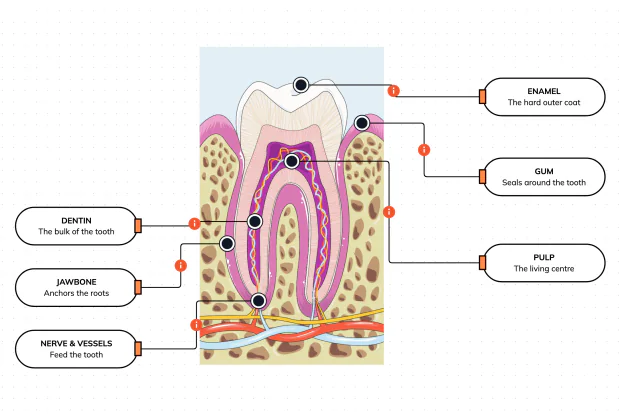
What Are the Parts of a Tooth?
A tooth is far more than the white bit you brush. Cut one open and label the enamel, dentin, pulp, gum, jawbone and the nerve that feeds it — and learn what each part does, and why a cavity starts painless but ends agonising, in an interactive playground.
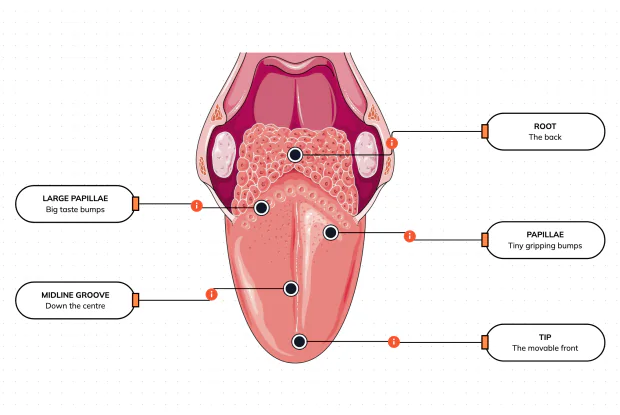
What Are the Parts of the Tongue?
The tongue is a muscle whose surface is covered in tiny bumps that hold your taste buds. Label the tip, root, papillae, the large taste bumps and the midline groove, and learn what each part does, in an interactive playground.
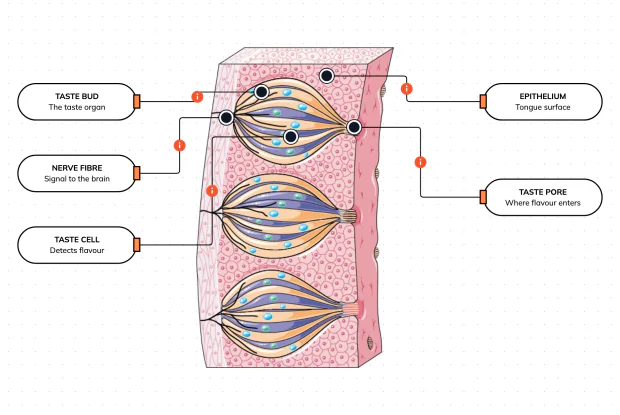
How Do Your Taste Buds Work?
Taste happens inside tiny onion-shaped taste buds packed into the tongue. Label the taste bud, its taste cells, the taste pore, the nerve fibre and the surrounding surface, and learn how dissolved food becomes a flavour signal to the brain, in an interactive playground.
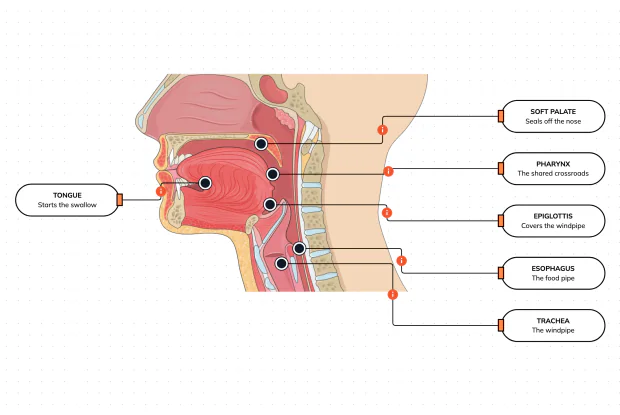
How Do You Swallow Without Choking?
In your throat, the path for food and the path for air cross over — so swallowing has to route food safely past the windpipe. Label the tongue, soft palate, pharynx, epiglottis, windpipe and food pipe, and learn how the swallow protects your airway, in an interactive playground.