Similar Shapes and Scale
Congruence, back in the triangle track, asked when two shapes are identical. This track asks the looser question: when is one shape an exact enlargement of another? The answer is strict — matching angles equal and every pair of matching sides in the same ratio — and two rectangles can look thoroughly alike and fail it, which is why a photograph never quite fits a phone screen. The ratio the test produces is the scale factor, one number describing a whole enlargement, and it can perfectly well come out below 1, since every map and model is a reduction. On triangles that single number turns one known pair of sides into every other length, which is how a tree gets measured from its shadow. The track closes on the fact almost everyone gets wrong first: lengths are multiplied by the scale factor, but areas are multiplied by its square, so doubling a shape gives four times as much of it.
CodePLU Goal
Upgrading Human Mental Models
Learn how to think in Workflows
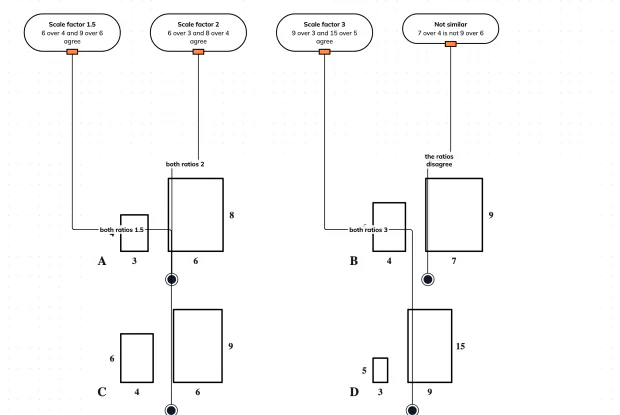
When Are Two Shapes Similar?
Similar shapes have equal angles and sides in the same ratio: one is an exact enlargement of the other. Two rectangles can look very alike and fail the test outright. Sort the genuine enlargements from the near-misses in an interactive playground.
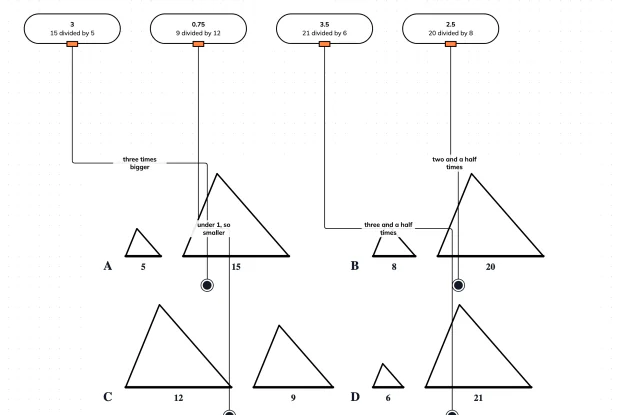
How Do You Find a Scale Factor?
The scale factor is the number every length is multiplied by when a shape is enlarged. Find it by dividing a new length by the matching old one — and expect an answer below 1 when the shape has shrunk. Practise both directions in an interactive playground.
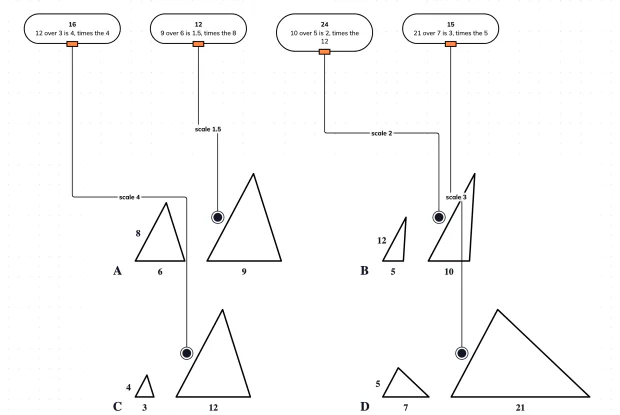
How Do You Find a Missing Side in Similar Triangles?
Similar triangles share one scale factor across every pair of matching sides, so one complete pair is enough to find any other length. Work out the factor, then multiply. Practise the two steps — and the matching up that comes before them — in an interactive playground.
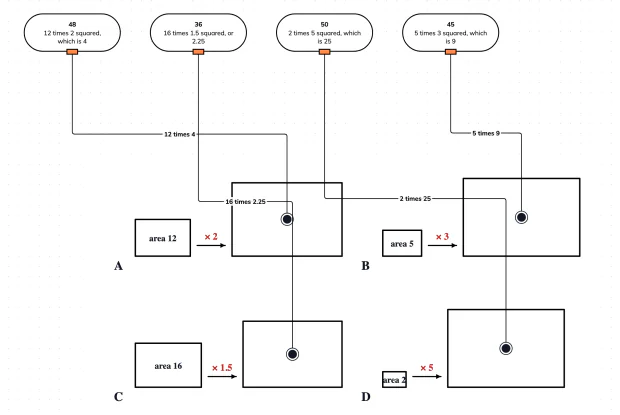
What Happens to Area When a Shape Is Enlarged?
Enlarging a shape by a scale factor multiplies every length by that factor — but the area goes up by the factor squared. Double a shape and it holds four times as much. See why, and why it explains a great deal about pizza and paint, in an interactive playground.