The Skull, and How You Hear
Three parts opening the head. The skull is not one bone but a case assembled from many, fused along seams, built to protect the one organ the body cannot repair — and shaped around the holes that everything entering and leaving the head has to pass through. Then the ear, traced the whole way: the funnel outside, the drum, the three smallest bones in the body amplifying the push, and the coiled cochlea that turns a vibration into something a nerve can carry. The last part is the half of the ear most people never learn they have — the loops and sacs that report which way up you are, which is why an ear infection can take your balance with it.
CodePLU Goal
Upgrading Human Mental Models
Learn how to think in Workflows
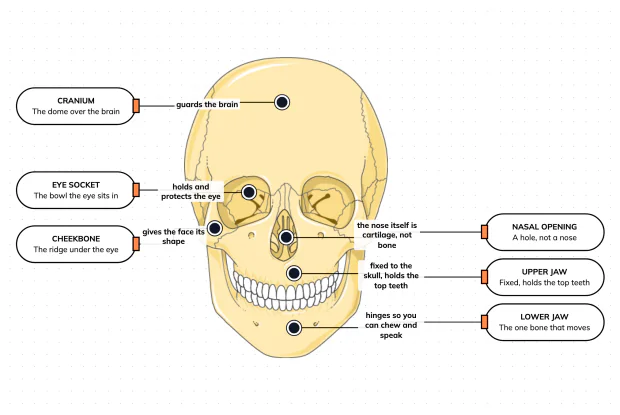
What Are the Main Bones of the Skull?
The skull looks like a single bone, but it is really about twenty-two locked together — with just one left free to move. Learn what each main part does, then label a skull yourself in an interactive playground.
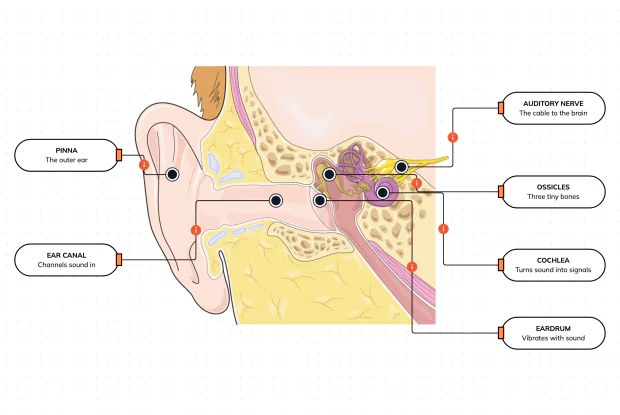
What Are the Parts of Your Ear?
Hearing is a chain of parts passing a sound along, each handing it to the next. Label the pinna, ear canal, eardrum, ossicles, cochlea and auditory nerve, and follow a sound all the way from the air outside to a signal your brain can read — in an interactive playground.
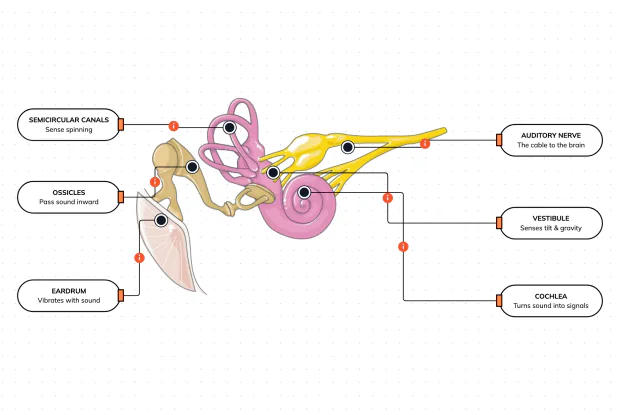
How Does Your Ear Keep You Balanced?
Your ear does a second, hidden job: balance. Inside it sit fluid-filled loops that sense spinning and a chamber that senses tilt and gravity. Label the semicircular canals, vestibule, cochlea, ossicles, eardrum and nerve, and learn how one organ both hears and keeps you upright — in an interactive playground.