How Your Body Keeps You Going
Three systems that only make sense once you stop trusting the obvious answer. It opens on digestion, where the useful correction is that your gut is a tube running through you — so food is not inside your body until it crosses the wall, which happens further down than almost anyone guesses and not in the stomach at all. The second part follows what happens to that fuel once it is in the blood, and why blood passes through the heart twice per lap: lungs need a barrier too thin to survive the pressure a whole body requires, so the design refuses to compromise and re-pressurises in between. The third part asks what makes you breathe harder when you run, where the popular answer is wrong in a way that has killed strong swimmers. Each part hands its output to the next.
CodePLU Goal
Upgrading Human Mental Models
Learn how to think in Workflows
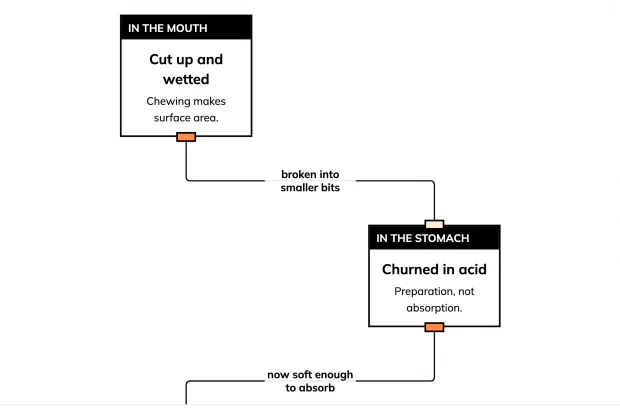
How Does Food Become Fuel?
Digestion is often pictured as the stomach doing the work. It is not — the stomach prepares, and absorption happens further down. Follow the five stages from mouthful to working cell and build the sequence yourself in an interactive playground.
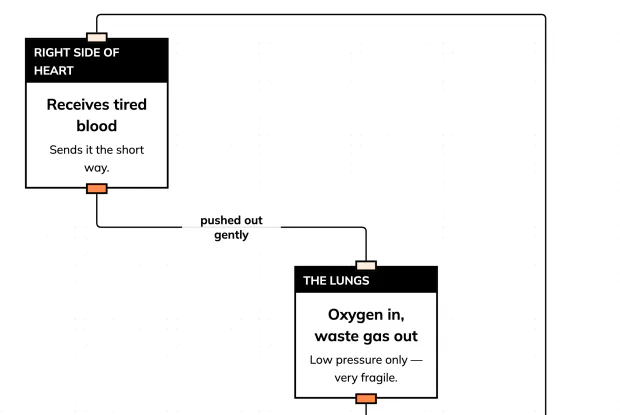
Why Does Blood Go Round Twice?
Blood does not do one lap of the body. It does a short loop to the lungs and a long loop to everywhere else, passing through the heart between them. Learn why that costs less than it seems and close the loop yourself in an interactive playground.
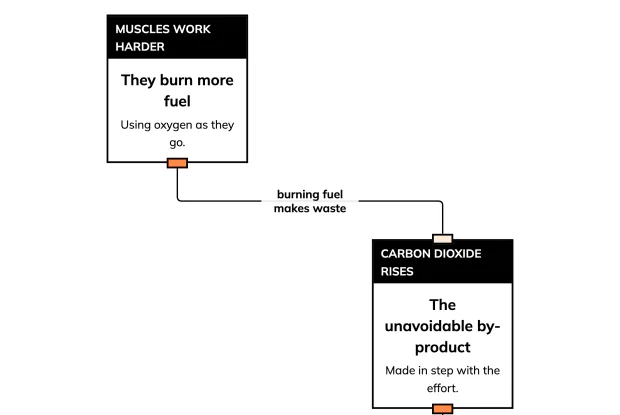
Why Do You Breathe Faster When You Run?
The obvious answer is that running uses oxygen so your body asks for more. That is not what triggers it. Follow the actual causal chain from working muscle to gasping breath, and build it yourself in an interactive playground.