Building a Sentence From Its Parts
Grammar taught as definitions to memorise is grammar that collapses on the first unfamiliar sentence, so this track teaches it as jobs and tests instead. It opens on the four things a word can be doing and the removal test that tells them apart — take the word out, and what disappears identifies it. The second part uses the one word you cannot remove as an anchor: find the verb, then ask who did it and who it was done to, and label those three parts on a real sentence. The third part takes one event and reports it both ways, which exposes the reason the passive voice matters — lead with the receiver and the person responsible becomes optional. By the end you have a procedure for untangling any sentence, including the ones written to be untangled slowly.
CodePLU Goal
Upgrading Human Mental Models
Learn how to think in Workflows
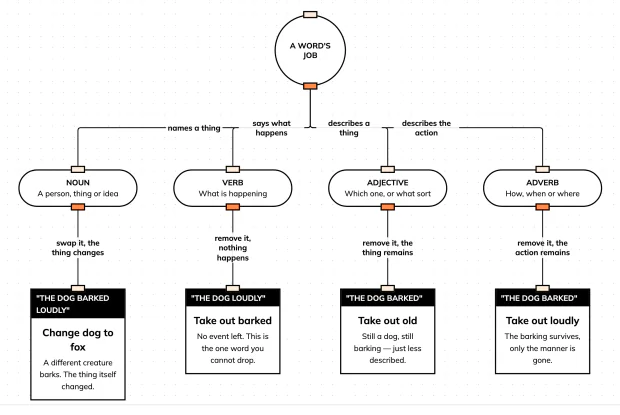
What Job Does Each Word in a Sentence Do?
Word classes are usually taught as definitions to memorise, which is why they slip. Learn the four main jobs a word can do, and the removal test that identifies each one, then match the jobs yourself in an interactive playground.
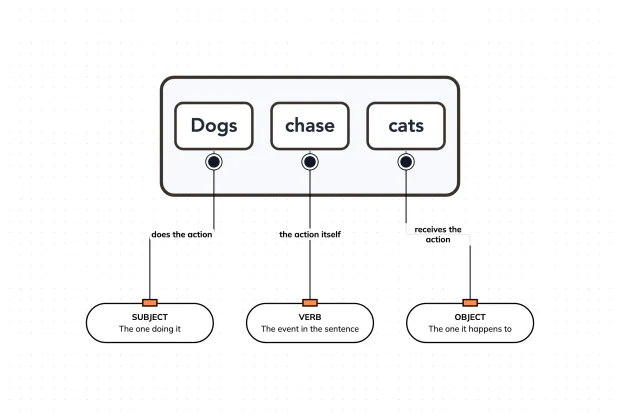
What Are the Parts of a Sentence?
A sentence is not a line of words with equal status — three of them do the structural work. Learn to find the verb, the subject and the object, then label a real sentence yourself in an interactive playground.
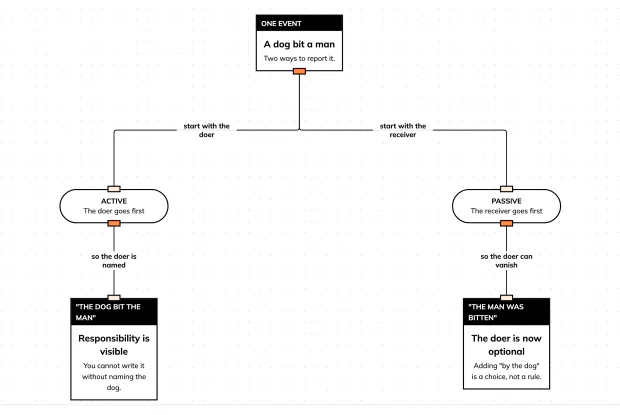
Active or Passive: Who Is Doing the Action?
Active and passive are not good and bad writing. They are two ways to report one event, and they differ in which part goes first — which is why one of them can leave out who did it. Build both versions yourself in an interactive playground.