How Do Programmers Solve Problems?
Root Concept
Programming is not typing code that works — it is understanding a problem, planning it in plain words, writing a first attempt, and then looping through test-and-fix until it genuinely does.
CodePLU Goal
Upgrading Human Mental Models
Learn how to think in Workflows
Concept Development By codeplu.com
Understand, plan, write, test — and the fix loop that does most of the work
What Does Solving a Problem With Code Actually Look Like?
Here is the picture most beginners have: a programmer stares at the screen, thinks hard, types fluent code, and it runs perfectly. Here is what actually happens: they read the problem twice, scribble steps on paper, write something clumsy, run it, watch it break, fix it, run it again, watch it break differently, and repeat until it holds. Nobody writes working code first time — not beginners, not people with twenty years of experience.
That matters because of how it feels. When your program fails, it is easy to conclude you are not cut out for this. In reality you have just reached the normal part of the job. The difference between a beginner and an experienced programmer is not that one writes broken code and the other does not; it is how calmly and methodically each one handles the breaking.
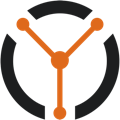
So the workflow has four steps and one loop: understand the problem, plan it in plain words, write the code, test it — and when the test fails, go back and fix. In the playground above you will build that shape, including the edge that goes backwards, because that edge is where most real programming happens.
What Happens at Each Step?
Why does understanding the problem come before any code?
Because the most expensive mistake in programming is solving the wrong problem correctly. Before touching the keyboard, get concrete: what information do you start with, what exactly should come out, and what should happen in the awkward cases? If the task is 'work out the average score', you need to know what happens when the list is empty, or when someone has no score at all. A useful test of understanding is whether you could do the task by hand for one small example. If you cannot do it by hand, no amount of code will rescue you — you do not yet know what you are asking the computer to do.
Why plan in plain words instead of code?
Because plain words let you think about the logic without also fighting the language's rules. Write the steps as if instructing a careful but literal person: take the list of scores, add them all up, count how many there are, divide the total by the count, and if the list is empty say 'no scores yet'. Beginners often skip this and start typing, then get lost halfway because they are solving the problem and wrestling with syntax simultaneously. Separating the two makes both easier — and if you cannot write the steps in your own language, the problem is not ready for code yet.
How do you turn a plan into code?
Step by step, and smaller than feels necessary. Each line of your plan becomes one small piece of code, and the sensible habit is to run the program after every few pieces rather than writing it all and hoping. That way, when something breaks you know it came from the handful of lines you just added — instead of hunting through fifty. This is also where you should expect to look things up constantly. Nobody remembers every command, and professional programmers search for syntax dozens of times a day. Forgetting the exact wording is normal; not knowing what you are trying to do is the real problem.
What does testing properly mean?
It means deliberately trying to break your own program, not just checking that it works once. Run the normal case, then hunt for the awkward ones: empty input, a single item, negative numbers, text where a number was expected, something enormous. These are the edges, and edges are where programs fail in the real world. A good habit is deciding what the right answer should be before you run the test, because otherwise it is uncomfortably easy to see whatever output appears and think 'yes, that looks about right' when it is quietly wrong.
Why is the fix loop the real skill?
Because that is where the hours go, and where the thinking is. When something fails, resist the urge to change lines at random until the error disappears — that is guessing, and it produces code you cannot trust. Instead work like an investigator: what exactly did it do, what did you expect, and where do those two stories first diverge? Print out the values along the way, or trace them by hand, and narrow it down until you find the one place reality parts company with your plan. Every loop through test-and-fix teaches you something about the problem, which is why experienced programmers treat a failing test as information rather than an insult.
Real World Example
How Would You Write a Program to Split a Restaurant Bill?
The task sounds trivial: split a bill between friends, adding a tip. Watch how much of the work happens after the code is first written.
Understand it, and find the hidden questions
In: the total, the number of people, the tip percentage. Out: what each person pays. Then the awkward questions surface — should the amount be rounded, and to whose advantage? What if someone enters zero people? Two minutes of thinking here saves an hour later.
Plan it in plain words
Work out the tip as a percentage of the total. Add it to the total. Divide by the number of people. Round up to the nearest penny so the restaurant is never short. If the number of people is zero, say so instead of dividing. No code yet — and already the tricky decisions are made.
Write it, running as you go
Each planned step becomes a line or two, and the program is run after each addition. When something breaks it is obvious where: the mistake lives in the lines just typed. This is the habit that separates a frustrating afternoon from a calm one.
Test it, and watch it fail
A hundred pounds between four people works fine. Then zero people crashes it. Then a bill of ten pounds between three gives 3.333333333333, which nobody can pay. Two real failures, neither of them visible in the first successful run.
Loop back and fix, one problem at a time
Add the check for zero people. Add rounding to the nearest penny. Re-run all the earlier tests to be sure the fixes broke nothing else. Now the program handles the ordinary case and the awkward ones — and you know why it works, which is what makes it trustworthy.
FAQs
Final Words
Programming is not typing code that works. It is understanding a problem properly, planning it in plain words, writing a first attempt, and then looping through test-and-fix until the thing genuinely holds up. In the playground you built exactly that shape, including the backwards edge that beginners are surprised to find is normal.
Two ideas will serve you for years. If you cannot do the task by hand for one small example, you do not understand it well enough to code it. And a failing test is information, not an insult — it is the loop doing its job. Next comes the smallest unit that loop is usually applied to: designing a single function and checking it by hand before you ever run it.
Related Concepts
What Is a Function, and How Do You Dry Run It?
A function is a box with a promise: give it these inputs, get that output. Learn to design one and then dry run it — tracing every value by hand before you ever press run.
How Are Real AI Systems Built?
People imagine building AI means training a model. In real products the model is a small piece surrounded by data plumbing, an interface, guardrails, and monitoring — and each missing piece is how AI projects fail.
Why Is Python Everywhere in AI?
Python is famously slow, yet almost all AI is written in it. The answer is layers: your Python is the steering wheel, and underneath it fast compiled code does the actual heavy lifting.
How Do You Choose the Right Programming Language?
There is no best programming language — only languages that fit particular jobs. Learn what each popular language is genuinely good at, and how professionals actually choose.
What Is HTML?
HTML is not about how a page looks — it is how you tell the browser what each piece of content actually is. Get that distinction and everything about web pages makes more sense.