What Is the Machine Learning Workflow?
Root Concept
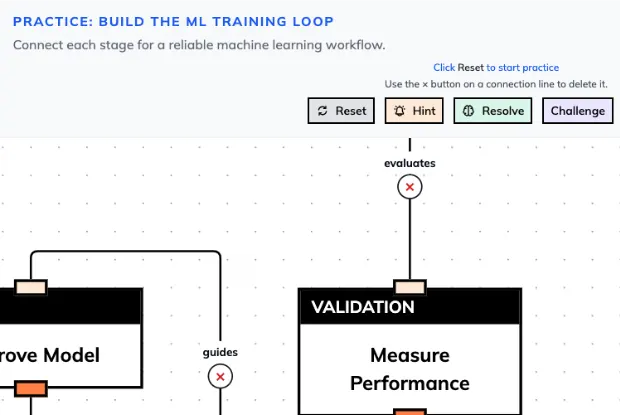
Every machine learning system is built in five disciplined steps — collect, prepare, train, evaluate, deploy — with a quality gate in the middle: fail the evaluation, and you loop back to improve and retrain.
CodePLU Goal
Upgrading Human Mental Models
Learn how to think in Workflows

Concept Development By codeplu.com
The machine learning workflow: five steps plus the retrain loop that runs when the model fails its exam
What Is the Machine Learning Workflow, in Plain Words?
Imagine opening a small bakery. You would not invent a cake and start selling it the same afternoon. You would gather good ingredients, prepare them properly, bake a trial batch, taste it — and only if it tastes right would you put it in the shop window. If the trial batch tastes wrong, you would not sell it anyway; you would fix the recipe and bake again.
Building a machine learning system works exactly like that. There are five steps: collect the data, prepare it, train the model, evaluate it, and finally deploy it into the real world. And there is one rule that separates professionals from beginners: evaluation is a quality gate, not a formality. A model that fails its exam never goes live — the work loops back, the data gets improved, and the model is trained again.
In the playground above you will build this whole workflow yourself, including the loop-back edge that most beginners forget. By the end, you will know not just the five steps but also why real projects almost never walk through them in a straight line.
How Is a Machine Learning System Actually Built?
Where does every machine learning project start?
Every project starts with collecting data — real examples of the thing you want the model to learn. A model that should spot spam needs real emails; one that should predict house prices needs real past sales. The examples come from databases, websites, sensors, or simple records people have kept. Here is the misconception to drop early: beginners often think a clever algorithm is what makes a project succeed. In practice, the amount and quality of the data matter far more. A simple model fed with plenty of good examples beats a fancy model fed with poor ones — just as a skilled baker with fresh ingredients beats a genius baker with spoiled flour.
Why does the data need cleaning before training?
Raw data from the real world is always messy — missing entries, duplicates, typos, dates written five different ways. Preparation means cleaning all of this up and converting it into the tidy numbers a model can digest: filling or removing gaps, dropping duplicates, making every record follow the same format. It is the least glamorous step and, surprisingly, the biggest one — ask people who build these systems for a living and most will tell you data work eats more of their time than everything else combined. The golden rule explains why: garbage in, garbage out. A model trained on messy data will faithfully learn the mess.
What actually happens during training?
Training is where the learning happens, and the rhythm is simple: guess, check, adjust. The model takes an example, guesses the answer, compares its guess with the real answer, and nudges its internal settings to do slightly better next time. Repeat this thousands or millions of times, and the guesses stop being random and start being skillful. Note what the humans are doing during this step: mostly waiting and watching. Nobody types in rules. The patterns come out of the examples — which is exactly why the two steps before this one, collecting and cleaning, decide most of the final quality.
Why is evaluation the most important checkpoint?
After training, the model takes a final exam — and the exam questions must be examples it has never seen before, held back on purpose from the start. Why so strict? Because a model can score perfectly on its own training examples by simply memorizing them, the way a student who stole the answer key aces the practice test and fails the real one. Testing on unseen data is the only way to tell whether the model truly learned the pattern or just memorized answers. Many beginners believe a high score during training means the model is good. It means nothing of the sort — only the unseen-data exam counts.
What happens when the model fails the exam?
Here is the step that turns the straight line into a loop: when a model fails evaluation — and first versions usually do — it does not go live, and the team does not give up. The work loops back. Usually the cure is better data: collect more examples, fix gaps, add the situations the model got wrong. Then prepare, train, and take the exam again. Real machine learning is this cycle running until the gate opens. Only then comes deployment: the model goes live and starts predicting on brand-new cases. Even then the workflow never fully ends — the world keeps changing, so teams keep watching the model's accuracy and loop back whenever it starts to slip.
Real World Example
How Does a Bank Build a Loan-Approval Model?
Follow a bank's team building a system that predicts whether a loan application is safe to approve. Notice where the straight line becomes a loop.
Collect: dig out the bank's own history
The team gathers thousands of past loan applications — the applicant's income, their credit history, and most importantly, whether they actually paid the loan back. Every past customer becomes one solved example for the model to learn from.
Prepare: clean up years of messy records
The records span years and systems: salaries in different currencies, missing entries, duplicate applications. The team spends weeks cleaning and structuring — unglamorous work, but they know a model trained on messy records learns messy rules.
Train: the model studies who repaid and who didn't
The clean examples flow into training. Guess by guess, the model tunes itself until it can spot the quiet patterns that separate reliable borrowers from risky ones — combinations no employee ever wrote down as a rule.
Evaluate: the exam catches a dangerous flaw
On held-back applications the model has never seen, the truth comes out: it approves far too many risky loans from recent years, because most of its training examples came from older, calmer economic times. The exam fails. The model does not go live.
Loop back, retrain, pass — then deploy
The team loops back: they add thousands of recent applications, rebalance the data, and retrain. This time the exam scores hold up. Only now does the model go live — scoring new applications in seconds, while the team keeps watching its accuracy month after month.
FAQs
Final Words
You now have the full blueprint in your head: collect, prepare, train, evaluate, deploy — plus the edge that beginners forget and professionals live by, the loop back from a failed exam to better data. In the playground you built it exactly as real teams run it: a straight line with a quality gate, and a circle whenever the gate stays shut.
Keep two lessons above all: the data steps decide most of the final quality, and no model goes live without passing an exam on examples it has never seen. With the workflow mastered, you are ready to meet the different kinds of learning a model can do — the next concept in this track.
Continue This Track
This concept is part 3 of How Machines Learn From Data.
What Is Machine Learning?
Discover how machine learning flips traditional programming on its head: instead of writing rules for the computer, you show it examples and it works out the rules itself.
What Are the Types of Machine Learning?
Machines learn in three different ways — from examples with answers attached, from data with no answers at all, or by trying things and being rewarded. Learn which kind suits which job.
What Is the Machine Learning Workflow?
Walk through the five steps every machine learning project follows — collect, prepare, train, evaluate, deploy — and the loop-back that saves projects when the model fails its exam.
What Happens Inside the Machine Learning Training Loop?
Step inside the training loop — the repeating guess-check-adjust cycle that turns a clueless model into a skillful one, one tiny correction at a time.